
PROS:
455 hp with 32-35 miles of EV range – Strong plug-in hybrid performance covers daily commutes on electric power while delivering sports sedan acceleration when needed
Air suspension delivers outstanding ride comfort – The Ultra’s adaptive suspension absorbs road imperfections while maintaining composed handling at highway speeds
Timeless Scandinavian design – Clean lines and understated styling will age gracefully, avoiding the dated look that trend-chasing designs often develop
Comprehensive standard equipment – Features like premium audio, advanced driver assistance, and the panoramic roof come included where competitors charge extra
CONS:
Premium pricing approaches $80k optioned – The T8 Ultra’s as-tested price positions it against well-equipped German rivals with stronger brand prestige
The luxury compact SUV segment has become an arms race of aggressive styling, oversized grilles, and angular creases that shout for attention. Volvo refuses to participate. The 2026 XC60 T8 AWD Ultra arrives as a deliberate counterpoint, a vehicle that communicates confidence through restraint rather than visual aggression. This is Scandinavian design philosophy made tangible: every surface, every proportion, every material choice serves a purpose beyond mere aesthetics. The result is a plug-in hybrid that feels like a quiet room in a noisy building. Where competitors deploy sharp edges and exaggerated haunches, Volvo deploys calm.
Designer: Volvo
The XC60 occupies an interesting position in automotive design language. It neither chases trends nor ignores them entirely. Instead, it filters contemporary expectations through a distinctly Nordic lens, one that values negative space as much as positive form. The T8 AWD Ultra represents the fullest expression of this philosophy, combining Volvo’s highest specification levels with a powertrain that delivers 455 horsepower while maintaining the ability to commute silently on electric power alone. This duality, performance capability wrapped in visual serenity, defines the vehicle’s character. The tension between these elements creates something more compelling than either would achieve independently.
What makes the XC60 significant from a design perspective extends beyond surface treatment. The vehicle represents a mature interpretation of what luxury means in an era of environmental awareness and digital saturation. Rather than adding complexity, Volvo has systematically removed it.
Exterior Form Language
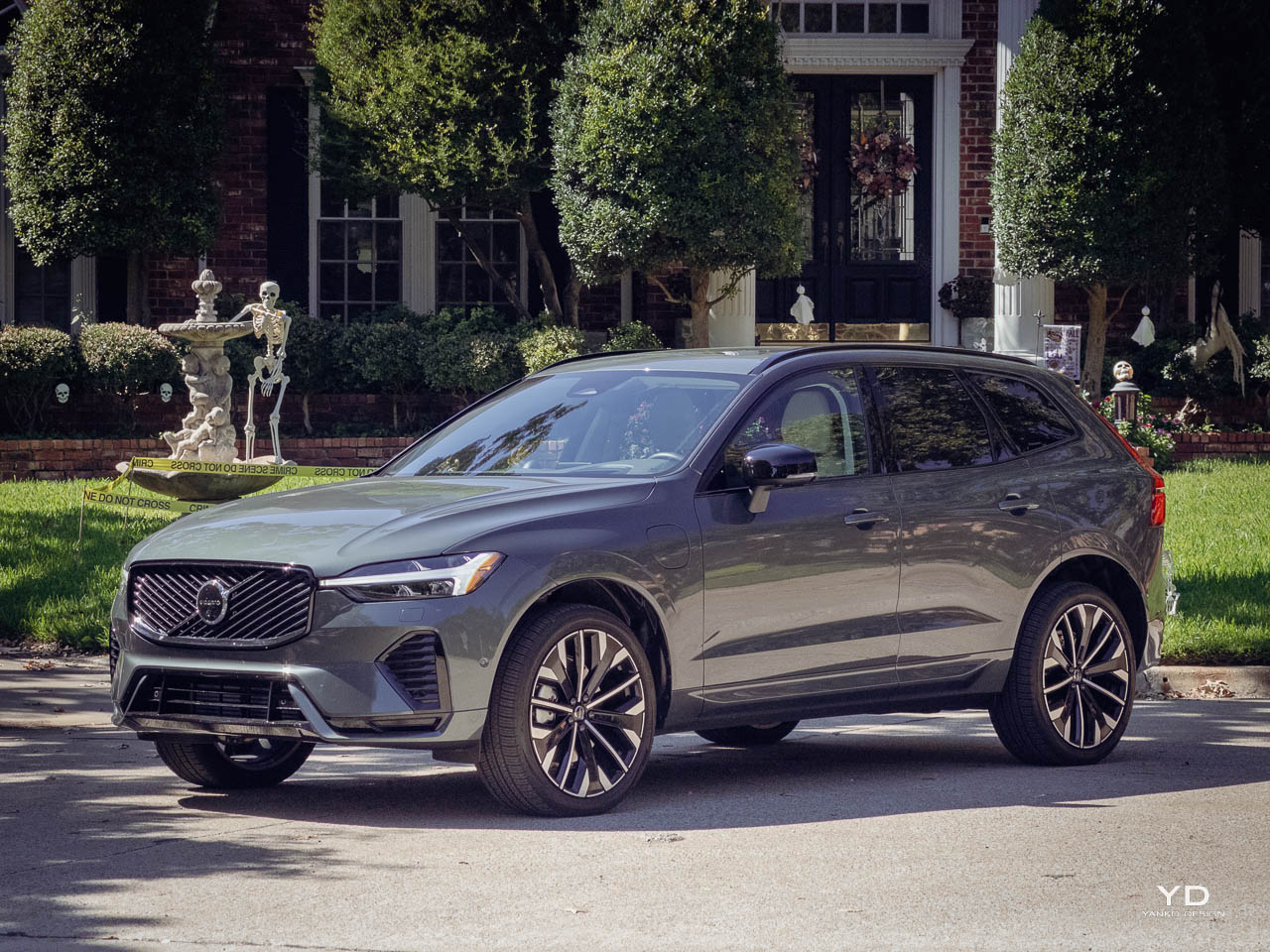
The XC60’s silhouette reads as a refined two-box shape with short overhangs and an upright tail. This proportion feels deliberately conservative compared to the swooping fastbacks and coupe-like rooflines that dominate the segment. The shoulder line runs cleanly from the Thor’s Hammer headlights to the vertical taillights, creating visual length without dramatic surfacing. Wheels ranging from 20 to 21 inches fill the arches appropriately without overwhelming the body. The overall effect suggests competence rather than performance, substance rather than flash.
Volvo’s signature lighting elements anchor the design. The Thor’s Hammer LED headlights have become as recognizable as BMW’s kidney grilles or Audi’s rings.
The 2026 refresh brings a cleaner grille treatment that echoes the larger XC90, with diagonal bar elements replacing previous iterations. Black internal housings within the headlight assemblies add depth and modernity without requiring additional brightwork. The lower fascia integrates real airflow openings at the corners, avoiding the fake vent epidemic that plagues the segment. Parking sensors and the forward camera system disappear into the design rather than appearing as afterthoughts. The front face communicates premium positioning through execution quality rather than aggressive styling, a distinction that matters as the vehicle ages. Designs that rely on current trends date quickly. Designs that prioritize proportion and finish quality remain relevant longer.
In profile, the XC60 reveals its proportional confidence. The greenhouse maintains a traditional three-box rhythm with proper A, B, and C pillars rather than the floating roof illusions that have become common. Window surrounds in chrome or black depending on specification provide subtle accent without excessive ornamentation. Roof rails sit low and functional. The overall side view could almost be mistaken for a wagon at certain angles, a reference to Volvo’s estate car heritage that feels intentional rather than accidental.
The rear design employs tall, smoked LED taillights that climb the D-pillars in a signature pattern. VOLVO block lettering spans the tailgate cleanly. T8, Recharge, and AWD badging identifies the powertrain without cluttering the surface. A subtle diffuser-style lower bumper treatment with integrated reflectors replaces visible exhaust outlets, acknowledging the plug-in hybrid’s ability to operate without combustion. The paint palette reinforces the design philosophy: Crystal White Metallic, Onyx Black Metallic, Denim Blue, and Vapour Grey. These colors reward close inspection rather than demanding attention from across a parking lot.
Interior Architecture
Opening the door reveals the XC60’s primary design statement. Where the exterior whispers, the interior speaks clearly about Volvo’s priorities. The immediate impression is of a cocoon, a space designed for occupants rather than spectators. Surfaces flow horizontally across the dashboard, creating visual width and calm.
The Ultra trim layers Nappa leather across the seating surfaces with substantial bolstering and careful stitching. Available colorways include Charcoal for those who prefer darker, more enveloping environments and Blond for an airier, more open feel. Both options demonstrate restraint in their application, avoiding the contrasting piping and excessive quilting that some competitors use to signal luxury. Material transitions occur at logical boundaries rather than arbitrary decorative lines. Real open-pore wood, metal mesh, and textured inlays provide tactile variety without visual chaos. The surfaces invite touch rather than discouraging it.
The center console demonstrates Scandinavian minimalism in practice. A portrait-oriented 9-inch touchscreen dominates the interface.
Below it, a small number of physical controls remain for frequently used functions. The volume knob uses a knurled metal finish that rewards tactile interaction. On higher specifications, an Orrefors crystal-style shifter replaces the standard gear selector, introducing a jewelry-like element that catches light without demanding attention. The panoramic moonroof, standard or widely available depending on market, brings natural light into what might otherwise feel cave-like in darker trim configurations. This interplay between enclosed comfort and external connection runs throughout the interior design.
Seating architecture prioritizes long-distance comfort over sports car support. The front seats offer heating, ventilation, and massage functions in Ultra specification, with adjustable lumbar support and thigh extenders for taller occupants. The seats themselves provide substantial cushioning without feeling soft, maintaining shape and support over extended drives. This is furniture designed for hours of use rather than showroom photography. Rear accommodations follow suit with a gently reclined backrest and support that favors two adults comfortably over three-across capacity. The cabin is honest about its size: this is a compact luxury SUV, not a full-size family hauler.
Storage solutions appear throughout the cabin without disrupting the visual calm. A larger-than-previous center console bin holds items out of sight. Cupholders position logically. Door pockets accommodate bottles and smaller items. Bag hooks and nets behind the front seats provide additional organization in some configurations. The cargo area maintains a broad, square opening with practical load floor height. Split-folding rear seats create a flat surface when more capacity is needed. The plug-in hybrid packaging, often a compromise in other vehicles, preserves useful cargo space without major intrusion.
Material Composition
Material selection in the XC60 Ultra reveals Volvo’s understanding of tactile luxury. Soft-touch surfaces cover the dashboard and upper door panels, providing warmth that cold leather cannot. The leather appointments on the seats use proper grain texture rather than the over-processed smoothness that signals synthetic origin. Stitching appears precise and consistent, following design lines rather than merely holding materials together. The contrast between different textures, matte leather, polished metal, open-pore wood, creates visual interest through material honesty rather than applied decoration. Each surface communicates what it is made from without pretense.
Lower cabin areas use plastics that feel dense and well-fitted rather than hollow and cost-reduced. Panel gaps remain tight and consistent throughout.
The metal trim elements, appearing on speaker grilles, door handles, and climate control surrounds, use actual aluminum rather than chrome-look plastic. These details matter because they accumulate into an overall impression of quality that either supports or undermines the purchase price. At this specification level, the details support the price consistently. The XC60 Ultra feels expensive because expensive materials have been used in places where human contact occurs.
Volvo’s approach to material selection extends to environmental considerations without compromising luxury perception. Leather alternatives appear in some configurations using recycled materials and more sustainable processing. Wood trim sources from responsible forestry programs. Metal finishes use processes that reduce environmental impact. These choices remain largely invisible to occupants but align with the brand’s stated values and appeal to buyers who consider lifecycle impact alongside immediate tactile experience.
Technology Integration
The XC60 T8 Ultra runs a Google-based infotainment system that represents Volvo’s commitment to simplicity over complexity. Google Assistant provides voice control. Google Maps handles navigation with traffic-aware routing. The Google ecosystem allows app access without requiring phone mirroring, though wireless Apple CarPlay remains available for those who prefer it. The 9-inch portrait touchscreen displays information clearly with quick response to inputs.
A 12-inch digital instrument cluster ahead of the driver offers configurable views including a large navigation map, trip data, and driver assistance status. Information hierarchy follows logical priorities: speed and essential warnings remain prominent while secondary data occupies peripheral positions. An available head-up display projects key information onto the windshield, reducing the need to look away from the road. The display can read speed limits and traffic signs, overlaying them in the driver’s line of sight. These technologies serve practical purposes rather than existing as specification sheet items. The question Volvo seems to have asked is not “what can we add” but “what should we show.”
Some functions require menu navigation that feels deeper than necessary. Odometer readings and certain vehicle settings live multiple taps into the interface.
Audio options include Harman Kardon and an available Bowers and Wilkins system depending on package and market. The latter delivers clarity and richness that transforms the cabin into a listening environment worth experiencing. The sound system represents genuine acoustic engineering rather than speaker count marketing. For a vehicle designed around calm and comfort, high-quality audio integration aligns with the overall philosophy. Poor sound reproduction would undermine the cabin’s premium character.
The technology package demonstrates appropriate restraint alongside capability. Rather than introducing features that require user adaptation, Volvo has implemented systems that work in expected ways. Climate controls respond logically. Navigation provides sensible routes. The instrument cluster communicates without confusion. This sounds like a low bar, but the automotive industry regularly introduces interfaces that prioritize novelty over usability. The XC60’s technology feels like it was designed by people who actually use cars rather than by teams seeking differentiation through complexity.
Powertrain Character
The T8 plug-in hybrid powertrain pairs a turbocharged 2.0-liter four-cylinder with an electric motor on the rear axle and a starter-generator between the engine and 8-speed automatic transmission. Combined output reaches approximately 455 horsepower and 523 pound-feet of torque, according to Volvo’s estimates and independent testing. Acceleration to 60 mph arrives in 4.4 to 4.5 seconds, figures that seem incongruous with the vehicle’s reserved styling. This is substantial performance delivered without visual announcement. The vehicle looks calm and moves quickly when requested.
The 18.8 kWh battery provides electric-only range of approximately 32 to 35 miles. This distance covers typical daily commuting for many drivers, allowing pure electric operation for routine trips.
When the battery depletes, combined efficiency settles around 28 mpg. Hybrid operation achieves approximately 63 MPGe. Multiple drive modes, including Hybrid, Pure/EV, Power, and configurable settings, allow drivers to prioritize electric operation, preserve charge for later use, or access maximum combined output. The powertrain flexibility means the XC60 can behave as a quiet urban electric vehicle or a responsive highway cruiser depending on circumstance and driver preference.
The driving experience prioritizes refinement over excitement. Throttle response feels progressive rather than aggressive. The transmission shifts smoothly in normal operation and responds quickly when more power is demanded. The engine remains quiet unless pushed hard, which the vehicle’s character rarely encourages. With the available air suspension on Ultra trim, ride quality emphasizes comfort over sporting sharpness. Body motions stay controlled without feeling harsh. Road imperfections disappear into the suspension rather than transmitting through the structure. Steering provides adequate feedback for confident placement without sporting precision. The XC60 T8 Ultra drives like it looks: composed, capable, and disinclined toward drama.
Daily Reality
Living with the XC60 T8 Ultra reveals strengths that matter more than specification numbers. The cabin’s noise isolation creates a quiet environment at highway speeds, making conversation easy and audio systems worth using. The seats remain comfortable over extended drives, maintaining support without creating pressure points. Climate controls work effectively, and the available air quality monitoring adds practical value in urban environments where exterior air quality varies.
The air suspension’s height adjustment proves useful beyond ride quality. Raising the vehicle provides additional ground clearance for rough roads or driveway approaches.
Lowering it at highway speeds improves aerodynamics and eases entry in low parking structures. The system operates automatically based on conditions, removing the need for driver intervention in most situations. The 360-degree camera system and parking sensors make placing the vehicle in tight spaces manageable despite dimensions that require awareness. The rearview camera displays clearly and inspires confidence during reversing maneuvers.
Some compromises exist within the daily experience. The infotainment system, while functional, lacks the polish of certain German competitors. Response is good but not instant. The interface is logical but not intuitive. This represents adequate execution rather than impressive achievement. Fuel economy, when operating in hybrid mode after battery depletion, requires more frequent stops than three-row crossovers or smaller luxury SUVs. The premium fuel requirement adds cost over regular-grade alternatives. Pricing for the T8 Ultra specification sits in the low to mid 70,000 dollar range before options, with well-equipped examples approaching 80,000 dollars. This positions the XC60 against mid-specification German rivals with established prestige and strong dealer networks.
The vehicle serves specific needs exceptionally well. Commuters with charging access at home or work can operate primarily on electric power, reducing fuel consumption dramatically. Families who prioritize cabin quality over maximum cargo flexibility will appreciate the material choices and seating comfort. Buyers seeking luxury without visual aggression will find the XC60’s restraint appealing rather than disappointing.
Competitive Context
The XC60 T8 Ultra competes against established German plug-in hybrids and traditional luxury crossovers. The BMW X3, Mercedes-Benz GLC, and Audi Q5 offer similar dimensions with different design philosophies. German competitors typically prioritize sharper styling, sportier dynamics, and more tech-forward cabins.
Volvo’s approach differs fundamentally. Where German brands emphasize cockpit-like driver focus with large screen arrays and aggressive surfacing, the XC60 creates a lounge-like environment that serves passengers equally to drivers. Material quality matches or exceeds German alternatives at similar price points. Design vocabulary speaks a different language entirely, one of restraint rather than assertion. The XC60 often offers a modest EV range advantage over many German plug-in rivals, providing practical benefit for drivers who can charge regularly. The power output, approximately 455 horsepower combined, exceeds most segment rivals while the acceleration times remain competitive with dedicated performance variants.
Value within the segment depends on buyer priorities. The XC60 T8 Ultra includes features that cost extra on some competitors: air suspension, premium audio, advanced driver assistance systems. Buyers who value standard equipment over brand prestige may find the Volvo offers more content for comparable money. Those who prioritize established luxury badge recognition or sportier driving dynamics may prefer the German alternatives. The competitive landscape rewards Volvo for differentiation rather than imitation.
The Design Verdict
The 2026 Volvo XC60 T8 AWD Ultra represents a coherent design philosophy executed with consistency and restraint. Every element, from exterior surfacing to interior materials to powertrain calibration, supports the same message: luxury does not require aggression. The vehicle proves that calm confidence communicates premium positioning as effectively as visual drama. This is design maturity applied to the luxury compact SUV segment, a category that often rewards excess over editing.
For buyers who recognize that vehicles shape daily experience through accumulated small interactions, the XC60 offers compelling value. The material quality supports years of use. The technology serves rather than complicates. The powertrain provides capability without demanding attention. The design will age gracefully rather than dating quickly. These qualities matter because vehicles occupy significant portions of our lives and our attention. The XC60 T8 AWD Ultra creates space for calm within transportation. In a segment defined by competition for visual attention, that restraint becomes its own form of statement. Volvo has built a vehicle that trusts its quality to communicate luxury without requiring volume. The execution justifies that trust.
The post Volvo XC60 T8 AWD Ultra Review: Scandinavian Calm in a Segment That Prefers to Shout first appeared on Yanko Design.