
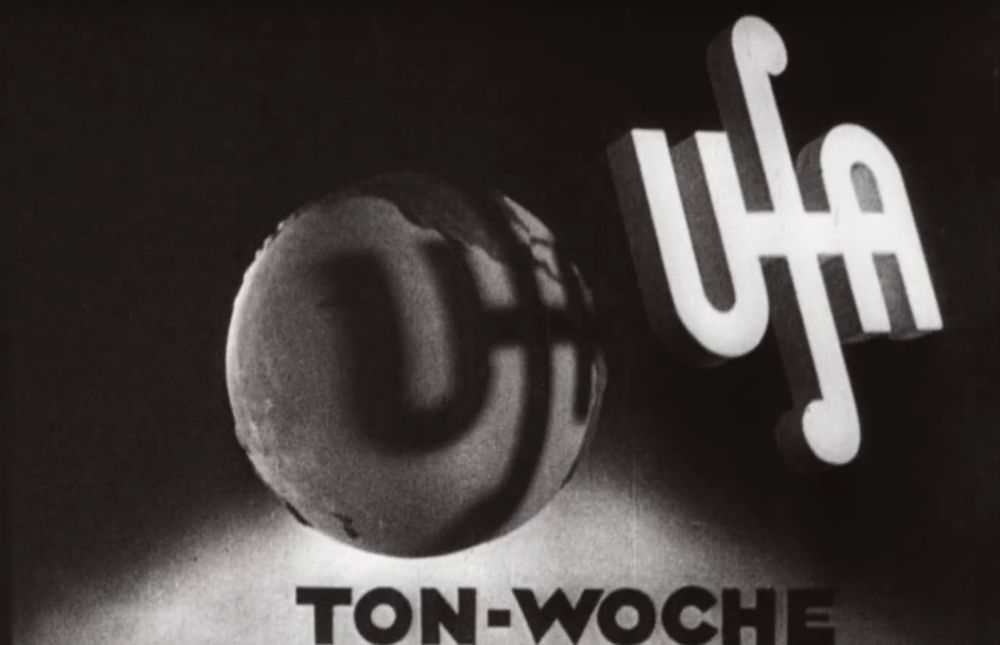
The documentary format has gained in popularity during these uncertain times when AI is competing with fact-based media. I spent much of my time during the holidays surfing through docs, and Hitler’s Hollywood caught my eye, then captured my attention. Released by Kino Lorber—a distribution company that can be relied upon to find the best foreign cinema—this 2018 film focuses on UFA, the influential Nazi-supported producer of fiction and nonfiction films sanctioned by Joseph Goebbels’ Ministry of Propaganda and Enlightenment of the Third Reich.
It has been known that Hollywood’s Jewish studio moguls, concerned with losing large German audience shares and profits, collaborated with the Nazi consul stationed in Los Angeles. When the Ministry lodged complaints to Motion Picture Production Code Administration enforcers, they were often allowed to dictate that anti-Nazi films be edited, censored or banned in large markets like Chicago, Philadelphia and San Francisco, wherever there were large German-American populations—or powerful America First chapters. This kowtowing continued until 1936, when Warner Brothers, the lone wolf among the major studios, shuttered their operations in Germany. By 1936, Columbia, RKO, Disney and Universal had joined their lead. Partly to counter the increasing number of critical American pictures, and in addition to producing propaganda spectaculars like Triumph of the Will—Leni Riefenstahl’s depiction of Adolf Hitler’s 1934 Nuremberg rally—UFA was well-funded as the sole purveyor of Nazi information, enlightenment and entertainment.
For more UFA films.
Hitler’s Hollywood (in German and English) explains how UFA films made Germany into a wellspring for European cinema. Narrator Udo Kier and director Rüdiger Suchsland make clear that under the strict gaze of Goebbels (influenced by the Fuhrer’s tastes concerning “Aryan” art, music, drama and culture in general), films were tightly controlled by the ideological machinery of the state. Goebbels allowed space for comedy, romance, music, dance, drama, mystery, fantasy and historical spectaculars at the UFA, but always with the understanding that film was uber alles unsurpassed in subversively and overtly influencing the collective German mind.
Kolberg (1945, directed by Veit Harlan)
One particularly interesting fact in Hitler’s Hollywood is a brief segment about the 1938 drama Die vier Gesellen (The Four Companions), with a plot that involved four girlfriends who, after graduation from art school, attempted to open their, female owned gebrauchsgrafik (graphic design) agency in a chauvinistic uber-male-dominated commercial art field. One of the four stars was Swedish-born Ingrid Bergman, who by 1946 had captured the hearts of American audiences when she and Cary Grant starred in Alfred Hitchcock’s thriller Notorious as an anti-Nazi Mata Hari. You could say that Hollywood won the film war …
The post The Daily Heller: Entertainment, Propaganda and Enlightenment on the Silver Screen appeared first on PRINT Magazine.