
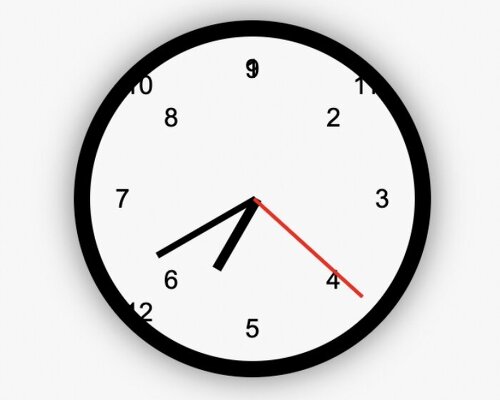
AI gets the correct time less than one out of four times
Artificial intelligence can fulfill several requests except generating and drawing the correct analog clocks to tell time. It seems strange since clocks are everywhere, and they look simple to produce even digitally. AI systems have also seen millions of clock pictures and read lots of explanations about how clocks work using their own language models, but still, when scientists test AI to produce images and working correct analog clocks, the results are poor.
In many tests, AI gets the correct time less than one out of four times. Based on the studies, a common mistake when scientists use AI to generate the correct analog clocks is mixing up the hour hand and the minute hand. Sometimes the system imagines hands that are not really there, hence creating awry-looking and displaced hands. They also tend to show the time as 10:10, even when that is clearly wrong. This happens because many clocks in ads and photos are set to 10:10, so the AI learns to copy that pattern instead of actually reading the clock.
all images courtesy of AI World Clocks by Brian Moore
Why can’t AI generate the correct analog clocks?
The main problem why AI can’t generate the correct analog clocks is that it doesn’t truly see clocks the way people do. When a person looks at a clock, they understand that the hands move in circles and that their positions are connected to time passing. AI does not understand this movement or the idea of time in a physical sense. It only recognizes patterns from pictures and words it has seen before. Some studies have noted that the software also understands clocks through language, not real experience. It has read sentences like ‘the minute hand points to 12,’ but it does not understand angles, rotation, or how gears work inside a clock.
So when it tries to create or read a clock, it guesses based on what looks familiar, not on how a clock works. This is why AI often draws clocks with numbers in the wrong places or letters that look like messy symbols instead of real numbers, as shown in this project by Brian Moore, inspired by the idea of the programmer Matthew Rayfield. On the site, the creative director displays clocks that have been generated by nine different AI models, which change every minute. These generated time-telling tools can prove that AI can’t always produce the correct analog clocks, just accurate-looking ones, and even so, they come out quite rarely and downgrade again after a minute.
AI can fulfill several requests except generating and drawing the correct analog clocks
AI is good at copying, not understanding
Another big reason for these mistakes is that AI does not have a ‘world model,’ meaning it cannot imagine how things change over time. It cannot think, ‘if one minute passes, the minute hand moves a little.’ Instead, it treats each image as a still picture. Because of this, it sometimes creates clocks that could never exist in real life. Researchers see this clock problem as an important lesson.
It shows that AI is good at copying appearances but not at understanding how things function. Some scientists are trying to fix this by teaching AI rules, using math or code to draw clocks correctly, or giving it guides that show where the hands and numbers should go. For now, producing correct analog clocks remains a tough challenge for AI, a reminder that just because a machine can recognize a pattern doesn’t mean it can truly understand it.
in many tests, AI gets the correct time less than one out of four times
a common mistake is mixing up the hour hand and the minute hand
sometimes the system imagines hands, numbers, and signs that are not there
other times, the numbers appear at different positions
the main problem is that AI doesn’t truly see clocks the way people do
AI also doesn’t have a ‘world model’
project info:
name: AI World Clocks
design: Brian Moore | @lanewinfield
idea: Matthew Rayfield | @realmatthewrayfield
The post AI can’t generate correct analog clocks to tell time, and here’s why appeared first on designboom | architecture & design magazine.