
This 80-Square-Metre Terrace Has A Space-Saving Secret
Architecture
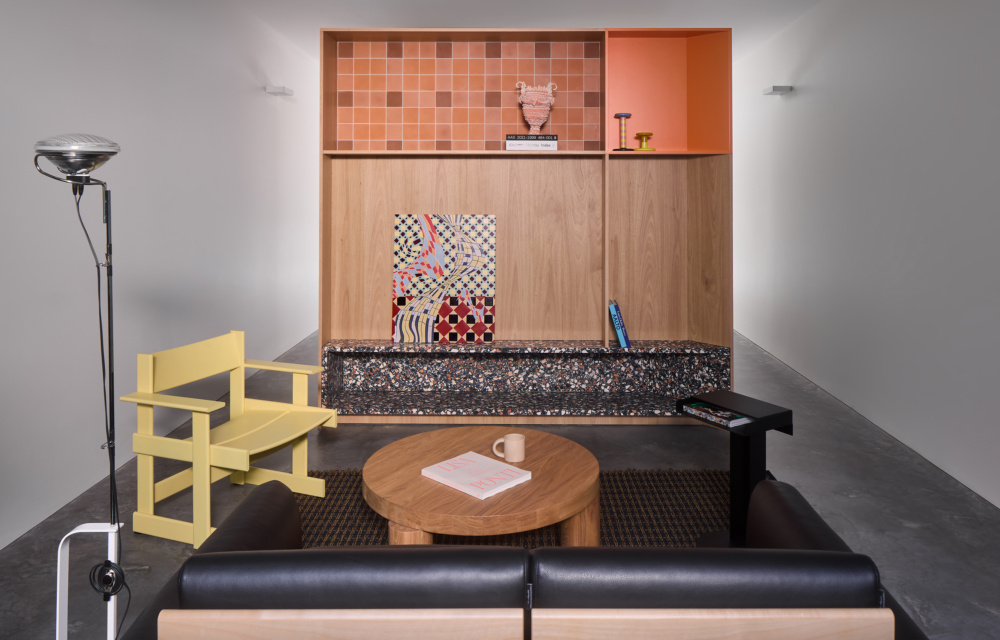
One side of the innovative free-standing cube in House Gretchen by Lintel Studio houses the entertainment unit for the lounge.
A bar and storage makes up another face.
The third face of the cube holds the kitchen.
Just beyond the bar, you’ll find doors that open up to the laundry inside the cube.
The new layout ensures the main living areas have ample natural light.
One of the bedrooms features a pink and blue palette with a pop of terrazzo.
The customised bath was hand-formed and finished by a skiled shipbuilder.
Orange is a theme throughout the home.
Landscaping by Dangar Barin Smith ensures the home feels settled in its location.
From the facade, the home’s bold renovation goes unnoticed.
Playful tiles are the only nod to what lies inside.
House Gretchen by Studio Lintel is tucked quietly into a row of turn-of-the-20th-century terraces.
From the street, its heritage façade remains respectfully intact: a modest veranda dotted with planting, a painted brick fence, and a bifold garage door that echoes neighbouring rear-lane vernaculars.
The geometric, pastel tiles on the front steps are the only hint at what lies inside this 1907 terrace, which has been entirely rethought for contemporary life.
The homeowners — a creative couple and their teenage son — had already lived in the house for several years before embarking on a renovation. The brief called for an improvement on how the house felt to live in — healthier, brighter, and more generous — while embracing the family’s eclectic tastes.
As with many early-1900s terraces, the home came with its fair share of challenges. Layers of ad hoc rear extensions had accumulated over time, creating a long, tunnel-like floor plan plagued by darkness and damp.
During demolition, a major issue was uncovered: a century-old terracotta stormwater pipe from a neighbouring property had been directing water beneath the house for decades, causing extensive rot and moisture damage. Addressing this wasn’t just about repair, but about re-engineering the house to breathe again.
The renovation retained and restored the original heritage frontage, with subtle adjustments to the proportions of the front bedrooms.
Everything beyond that point was cleared away and reimagined. In place of an open-plan layout, the new scheme centres on a freestanding cube — an ‘in-the-round’ approach inspired by practitioners like Lina Bo Bardi, David Chipperfield and Sou Fujimoto.
This central volume houses the kitchen, bar, storage and entertainment across three faces, with a pivoting door on the fourth face revealing the laundry inside.
The cube cleverly activates the darkest part of the site — with the help of skylights — freeing the ends of the home for light-filled living and dining spaces that open onto a rear garden and internal courtyard.
Materially, House Gretchen is unapologetically bold. The clients’ request for an ‘unflinchingly orange’ kitchen set the tone, leading to a home punctuated by playful hues and patterns: with an equally unflinching orange and blue bathroom, pale pink bedroom, and a backyard lined with green tiles.
Recycled Australian hardwood floors — salvaged from a demolished high school gym once frequented by one of the clients — run through the restored front rooms, still marked with faint court lines; while insulation upgrades, polished concrete slabs, operable skylights, and north-facing openings improve thermal performance and passive ventilation.
There’s little that’s subtle about this house — and that’s exactly the point. House Gretchen is a joyful, expressive reimagining of the terrace typology, one that nourishes creativity while making everyday life brighter.