
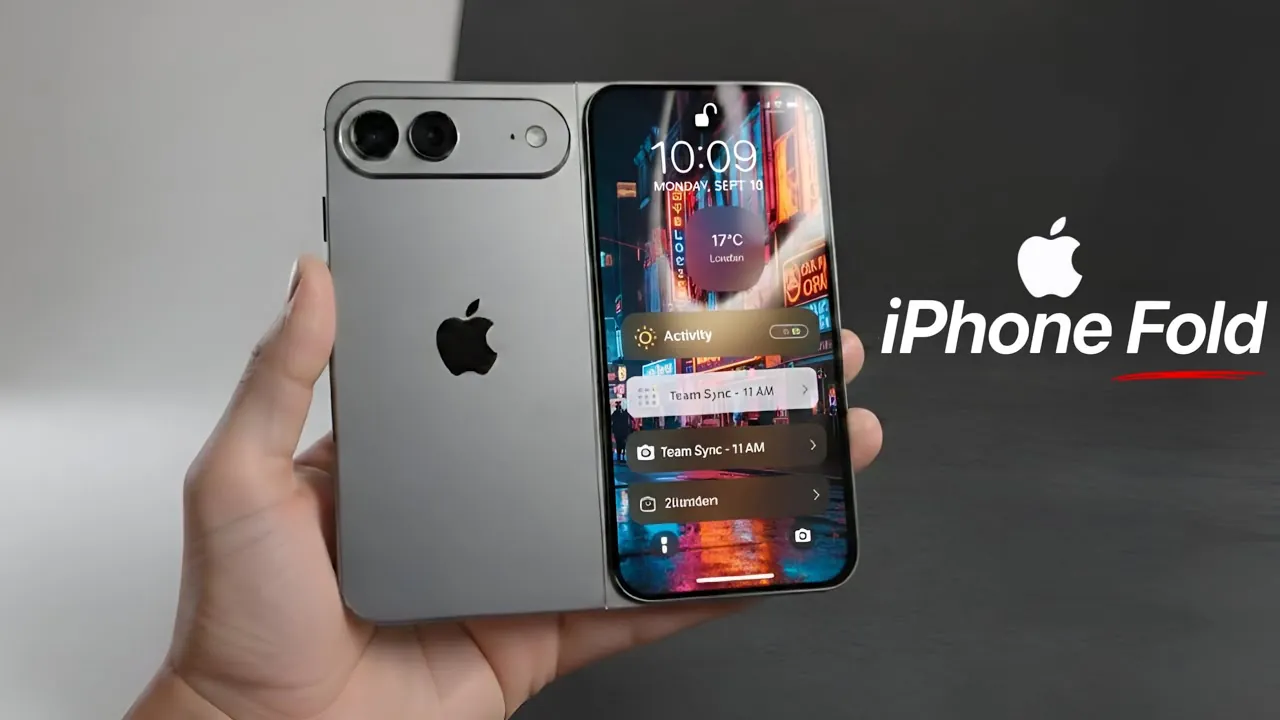
If someone told you in 2019 that we’d see seven generations of Samsung Galaxy Folds before Apple released a single foldable iPhone, you’d probably have believed them because that’s exactly how Apple operates. Wait, watch, then swoop in like they just invented the whole concept. Well, 2026 might finally be the year, assuming these leaks are legit and not just wishful thinking from analysts who’ve been predicting the iPhone Fold since the Obama era.
The rumor mill is churning out some pretty specific claims right now. We’re talking actual dimensions, chip specs, and price points that’ll make your wallet weep. But more interesting than the what is the how and why. Apple’s supposedly been tackling the exact problems that have kept foldables from going mainstream, which either means they’ve cracked the code or they’re about to learn the same expensive lessons Samsung already learned. Let’s unpack what we actually know versus what’s tech journalism fan fiction.
Designer: Apple
The specs coming out of supply chain analyst Jeff Pu’s investor briefings paint a picture of a device Apple’s positioning right alongside the iPhone 18 Pro lineup. September 2026 launch date, which means they’re treating this as a flagship product rather than some experimental side quest. The inner display clocks in at 7.8 inches when you unfold it, putting it in direct competition with Samsung’s Galaxy Z Fold 8. The outer screen sits at 5.3 inches, which is actually smaller than what Samsung’s offering. That’s either Apple prioritizing pocketability or a sign they couldn’t fit a bigger screen without compromising the design. Probably both, knowing how Apple thinks about these things.
The whole device reportedly measures 4.5mm when unfolded, which is genuinely insane when you consider what’s packed inside. For context, that’s thinner than most credit cards and absolutely thinner than any iPhone that’s ever existed. The folded thickness supposedly hits around 9mm, which still slides into a pocket easier than carrying an iPad mini everywhere. Apple’s apparently using a combination of aluminum and titanium for the frame construction, same lightweight-but-strong approach they’ve been pushing across the Pro iPhone lineup. The real party trick though is the hinge mechanism, which multiple sources claim uses liquid metal components to handle the stress of constant folding without creating that ugly crease everyone hates about foldables.
The A20 chip powering this beast is built on TSMC’s 2-nanometer process, same silicon going into the iPhone 18 Pro models. Apple’s apparently not treating this as a lesser device that gets last year’s processor, which tells you how seriously they’re taking the category. Battery capacity is rumored between 5,400 and 5,800 mAh, making it the largest battery Apple’s ever put in an iPhone because powering two displays simultaneously turns out to require actual juice. That’s almost double the capacity of a regular iPhone 15 Pro, and it needs to be.
The crease is the hot-topic on everyone’s mouths, with the rumor being Apple’s somehow found a way to obliterate it. Every foldable phone on the market has that visible line running down the middle when you unfold it, and it drives people absolutely insane. Apple’s supposedly using a liquid metal hinge design combined with some display technology wizardry to make the crease “nearly invisible” according to the leaks. I’ll believe it when I see it, but if they actually pulled this off, it would immediately make every other foldable look outdated. Samsung’s been iterating on this problem for seven years and still hasn’t fully solved it.
Touch ID is coming back, which is wild after Apple spent the better part of a decade convincing everyone Face ID was the future. The decision makes sense though when you think about the form factor. Authentication needs to work whether the phone is folded, half-open, or fully unfolded, and Face ID gets wonky when you’re holding a device at weird angles or using it propped up like a tiny laptop. A fingerprint sensor in the power button solves all of that instantly. It’s the same approach they took with recent iPads, and it works.
Pricing is where this whole thing either makes sense or falls apart completely. The leaks point to somewhere between $2,000 and $2,500, with recent intel skewing toward the higher end. That’s Mac Studio money for a phone that folds. That’s almost double what an iPhone 17 Pro Max costs. Samsung’s Galaxy Z Fold 8 will probably land around $1,999, so Apple’s betting people will pay a premium for whatever magic they’ve supposedly worked on the crease and overall build quality. Whether that bet pays off depends on a lot of factors, but I guess seeing Apple’s vision of a folding phone first-hand will really help seal the deal regarding whether this 6-7-year wait has finally paid off.
The post iPhone Fold Specs Leak Online: Aluminum + Titanium Body, A20 Chipset, and the Rebirth of TouchID first appeared on Yanko Design.