
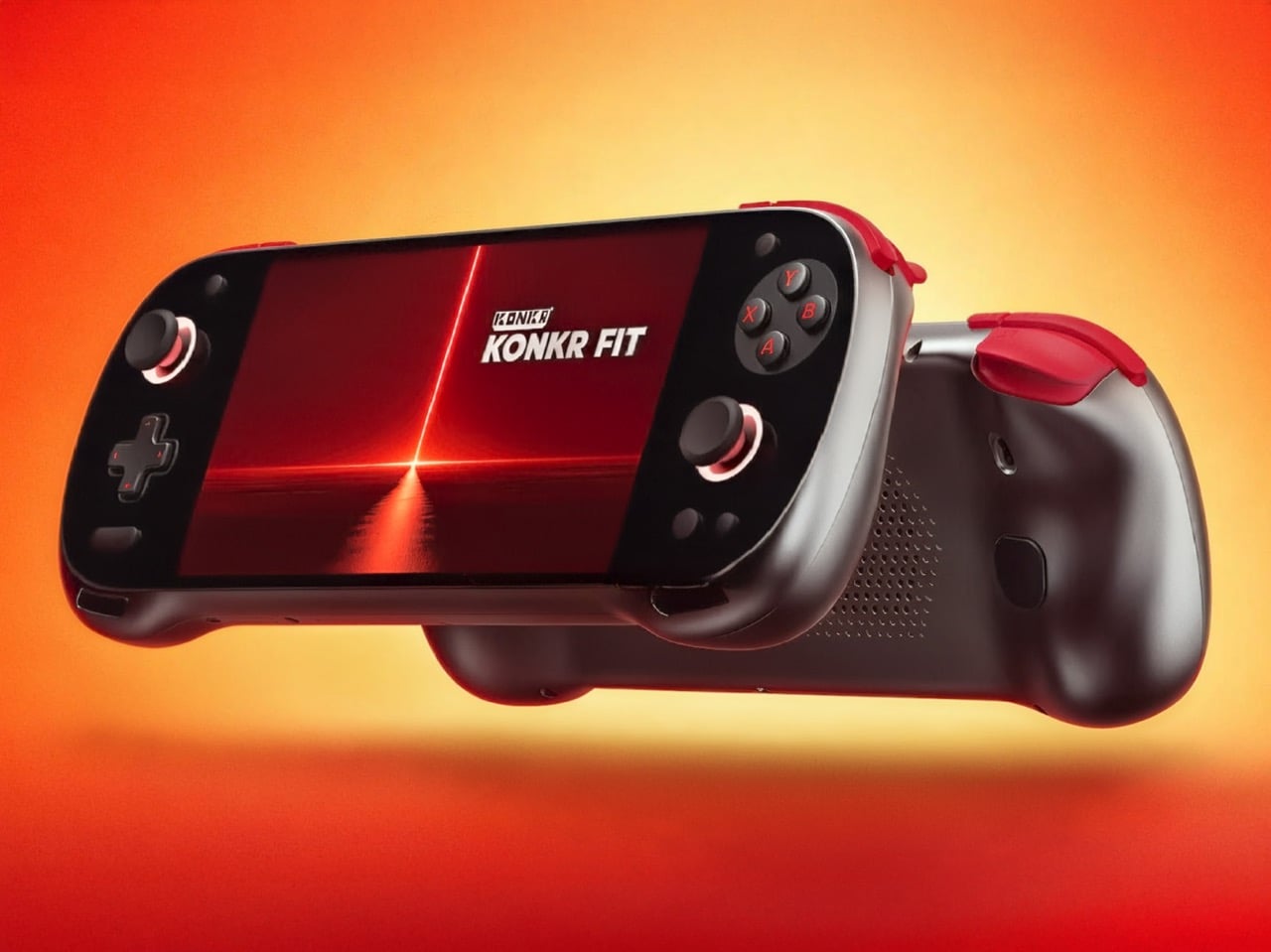
Ayaneo’s budget Konkr brand is expanding beyond Android. After launching the Pocket Fit with Snapdragon G3 Gen 3 and the more powerful Pocket Fit Elite with Snapdragon Elite 8, the company has unveiled its first Windows handheld under the Konkr name. The new device drops “Pocket” from its title for good reason.
The Konkr Fit features a 7-inch OLED display, significantly larger than the 6-inch screens on its Android siblings. Powering this Windows handheld is an AMD Ryzen AI 9 HX 470 processor, marking a departure from Snapdragon mobile chips. The device also packs an impressive 80Wh battery, dwarfing the capacity found in competitors like the Lenovo Legion Go S and even the Legion Go 2.
Designer: Ayaneo
80Wh in a handheld gaming device puts the Konkr Fit in genuinely rare company. The Legion Go S limps along with 55.5Wh, while even Lenovo’s newer Legion Go 2 only manages 74Wh. We’re talking about potentially game-changing longevity here, especially considering Windows handhelds typically drain batteries faster than their Android counterparts. The Ryzen AI 9 HX 470 is a hungry chip, sure, but you’re still looking at a device that might actually survive a cross-country flight without searching desperately for an outlet. Battery anxiety has plagued this entire product category since the Steam Deck launched, and Ayaneo seems to understand that cramming in more capacity solves more problems than any amount of software optimization ever will.
The HX 470 belongs to AMD’s Strix Point lineup, the same family powering proper gaming laptops. You’re getting Zen 5 cores and RDNA 3.5 graphics, which means AAA titles at respectable settings become genuinely playable. Compare that to the Snapdragon Elite 8 in the Pocket Fit Elite, which excels at emulation and Android titles but starts sweating with demanding PC games. Ayaneo clearly wants this positioned as a real PC gaming device, not just an emulation box with delusions of grandeur. The processor alone tells you they’re betting on people who want to run their Steam libraries natively, not folks content with streaming or playing mobile ports.
Borrowing heavily from its Android siblings makes sense when you consider the Pocket Fit’s design already works. Hall Effect joysticks handle the analog inputs, which means drift shouldn’t plague these controllers the way it does cheaper alternatives. Adjustable triggers and dual back buttons carry over unchanged. The company offers two colorways: Retro Gray with red accents and a straight Yellow option. Both feel very much in line with the broader handheld gaming aesthetic that’s emerged, though the gray and red combo has some Steam Deck vibes whether Ayaneo wants to admit it or not.
Two USB-C ports now sit at the top edge, giving you actual flexibility for charging while gaming or connecting accessories without blocking your hands. Larger inlet vents dominate the back panel compared to the Pocket Fit, addressing what will inevitably become thermal challenges with a chip this powerful. Even the screws holding the backplate are exposed, suggesting Ayaneo expects enthusiasts to crack this thing open for maintenance or upgrades. These aren’t cosmetic flourishes. Windows gaming generates serious heat, and pretending otherwise is how you end up with a handheld that thermal throttles ten minutes into Cyberpunk 2077.
The OLED panel upgrade from the Pocket Fit’s LCD matters beyond the obvious visual improvements. Response times eliminate the ghosting issues that plague cheaper LCD panels during fast-paced gaming. Deep blacks mean better contrast in dimly lit game environments, which basically describes half of modern AAA titles. At 7 inches, you’re getting enough screen real estate that Windows UI elements remain readable without squinting, though whether Windows 11 plays nicely with a 7-inch touchscreen remains an open question. Microsoft has never really figured out how to make their OS work elegantly on small displays, and I doubt Ayaneo’s custom launcher will magically solve decades of interface design problems.
Pricing remains a company secret, but simple math suggests this slots above the $399 Pocket Fit Elite. The Ryzen AI 9 HX 470 costs more than Snapdragon chips, Windows licensing adds expense that Android avoids, and that 80Wh battery doesn’t come cheap. My gut says somewhere between $500 and $600, which plants this squarely in Steam Deck OLED territory. That’s awkward positioning for a brand that built its identity on being the affordable alternative to Ayaneo’s own thousand-dollar flagships. Then again, Ayaneo could just drop the details and prove me wrong.
The post Ayaneo’s Konkr Fit Handheld Packs AMD Ryzen AI 9 And Windows, Targeting the Steam Deck and Legion Go 2 first appeared on Yanko Design.