
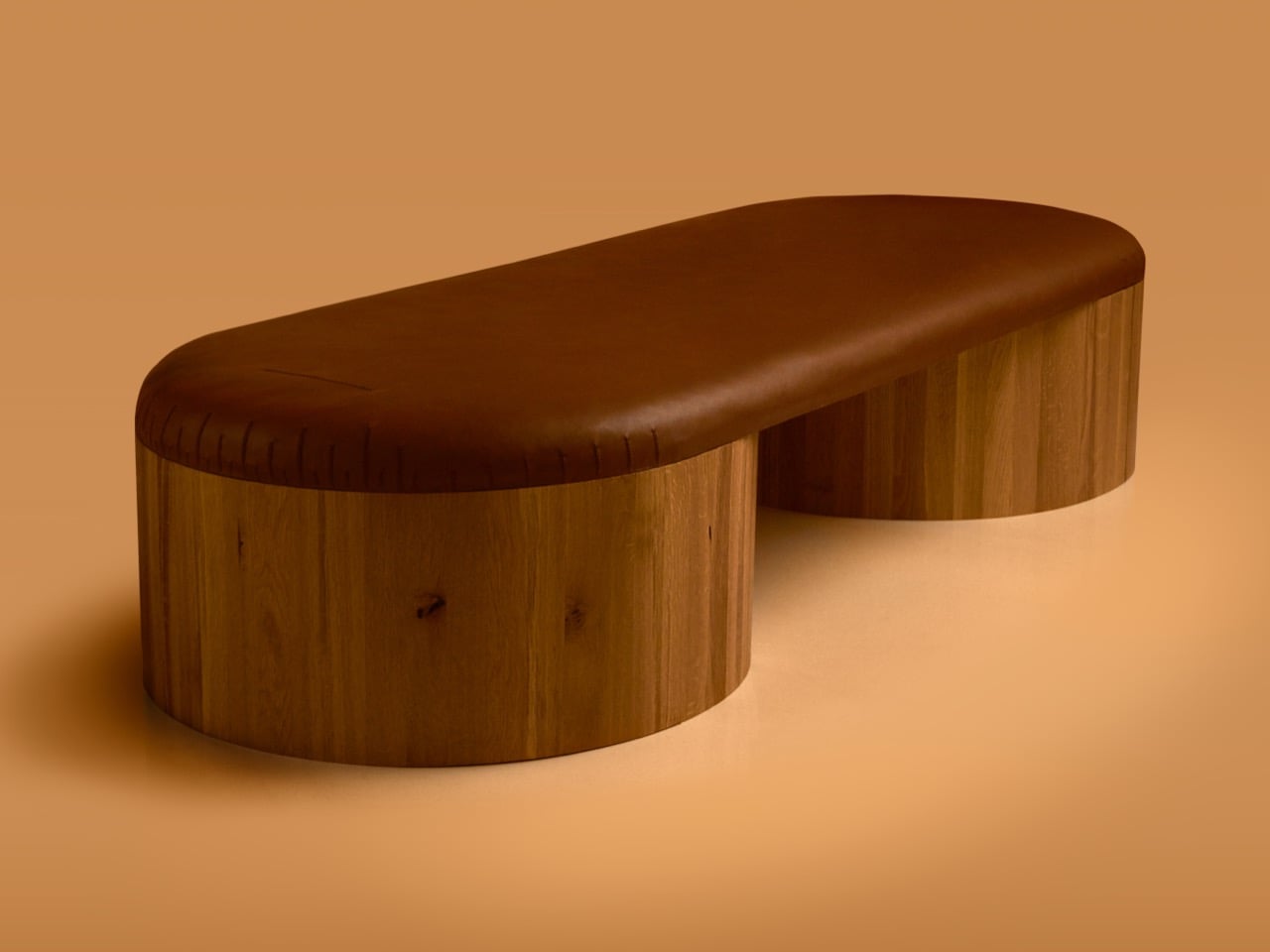
Joe Doucet has always been good at saying uncomfortable things politely. His latest provocation, delivered via Columns, a furniture collection with Bulgarian studio Oublier, is that the design industry’s obsession with biodegradable materials might be missing the point entirely. Furniture made from mycelium or algae can decompose in five years, sure, but a well-made antique armoire outlives empires because no one throws it away. Columns takes that logic seriously. Handcrafted in solid oak, natural leather, and horsehair, the pieces are built to last a thousand years, which sounds like marketing hyperbole until you look at the joinery, the hand stitching, and the material choices. This is furniture designed to be inherited, repaired, and remembered.
Oublier, a studio that typically explores forgetting as a cultural and creative act, seems like an odd partner for a project about permanence. But the contradiction makes sense once you see the work. The collection’s name refers to its columnar bases, two cylinders of oak laid horizontally and bridged by a continuous leather top. There are no fashionable details to anchor it to a specific decade, no finishes that will look dated in ten years. The form is so spare it borders on austere, which may be the entire strategy. If sustainability is about what we keep rather than what we compost, then the object has to earn its place across generations. Columns bets on clarity, craft, and a very patient understanding of time.
Designers: Joe Doucet X Oublier
Looking at the piece itself, the argument becomes tangible. The form is elemental, almost architectural, with the two solid oak drums giving it a grounded, permanent presence. The leather top is stretched over this base with a continuous curve, and the hand stitching along the perimeter is left visible. This small detail is a critical part of the story, acting as a quiet signal of human labor and future repairability. It suggests the piece can be opened, its horsehair padding refreshed, and its leather resewn a century from now. There is a thoughtful honesty in showing the construction, which reinforces the idea that this is a working object, not a sealed artifact. It feels built to withstand use, not just admiration.
The choice of materials is a direct commitment to graceful aging. The solid oak is not a uniform, characterless surface; it has grain and life that will deepen over the decades. Similarly, the natural leather is intended to absorb the evidence of its existence, developing a rich patina from sunlight, touch, and time. This philosophy is the complete opposite of designing for pristine, showroom condition. Instead, Columns proposes that wear is a form of beauty, that an object’s value increases as it accumulates a history. This approach redefines luxury away from novelty and toward endurance, suggesting that the ultimate premium is an object that improves with you.
What Doucet and Oublier have created is a subtle but firm critique of disposability. The project opines that true innovation might lie in looking backward, applying traditional techniques and durable materials to a clean, contemporary form. It challenges the prevailing notion that sustainability requires constant material invention and complex recycling systems. Instead, it offers a simpler, more profound solution: make things that last, and are simultaneously too good to throw away. Columns proposes that the most responsible act of consumption is to buy something once and keep it for a lifetime, passing it on as a functional heirloom rather than a problem for a landfill.
The post The Case for Heirloom Furniture in an Era Obsessed With Biodegradable Everything first appeared on Yanko Design.