
Laze Tripkov is currently researching and practicing what he calls the “Virtual Poster,” an evolution of the form from a static, two-dimensional object into an immersive spatial experience within VR environments. It’s not about replacing the poster, but rather testing and extending its attributes into time, perception and embodied interaction.
“What I learned through the Polish poster tradition,” Tripkov says, “is that metaphor, image and message don’t function separately; they move together, like a visual sentence. But in today’s visual culture, lasting impact comes from resonance. A poster should offer more than answers; it should invite a personal response, a reflection. When that happens, the poster becomes more than a surface or medium; it becomes an experience.
“This is precisely where Virtual Reality steps in to transform the poster format. While traditional posters are static and two-dimensional, VR posters exist as living, immersive spatial environments. They turn viewers into participants, inviting exploration, interaction and emotional engagement through presence. In VR, a poster is no longer confined to the wall, it becomes a world. It speaks not just through text and image but through scale, movement and immersion. This shift from presentation to presence allows metaphor and message to unfold in time and space, making the experience more memorable and deeply felt. In that way, the VR poster embodies the true essence of impactful design: to echo quietly and persistently in the viewer’s mind.”
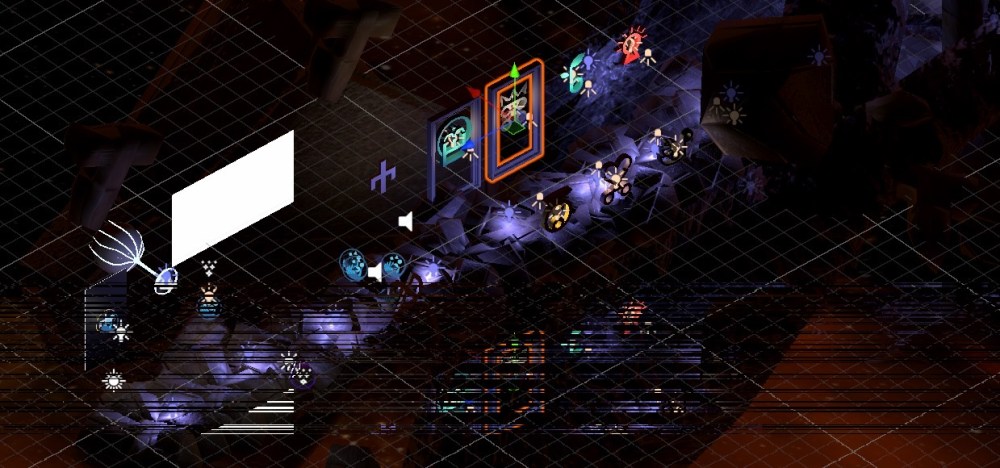
Stills from a virtual galllery
Glagolitic script
This project explores how cultural heritage merges with digital innovation by reinterpreting the Glagolitic alphabet, one of the oldest Slavic scripts, through virtual reality. The work transforms the traditional poster into an immersive, multisensory experience using VR and haptic feedback. The poster becomes a living medium that engages sight, sound, touch and movement, moving beyond the flat surface into spatial, interactive communication. By using the Glagolitic script as a cultural-symbolic lens, the project reimagines poster semiotics and explores how technology can renew cultural identity through immersion, interactivity and experiential design.
“The approach repositions the historical narratives of the Glagolitic script as a transformational concept at the intersection of human cognition and digital subjectivity,” Tripkov esplains. “Immersive technologies actively participate in the reinterpretation of sensory-driven experiences; the installation challenges static notions of heritage, reshaping how audiences can engage with art, history and cultural memory in contemporary digital contexts.
“The illuminated Glagolitic poster serves as a conceptual and visual anchor, grounding the script in its historical legacy, while the animated projection dismantles linear representation, allowing the letters to shift, dissolve and reassemble as non-linear, adaptive narratives that explore multiple forms of cultural mediation in digital spaces. At the core of this experience, VR immersion enables users to embody non-human entities, activating the script as a co-created, dynamic system of meaning-making that transcends traditional archival presentation.”
The post The Daily Heller: Bringing the Old(est) Slavic Alphabet to Virtual Life appeared first on PRINT Magazine.