
Long-term care facilities have a particular kind of quiet in the afternoons. Residents sit in common rooms, some dozing, some staring at televisions tuned to channels nobody asked for. Rapid population aging has left many older adults dealing with cognitive decline and shrinking social circles, and while activity programs exist, they rarely create the kind of genuine cooperation that turns small tasks into shared moments worth remembering.
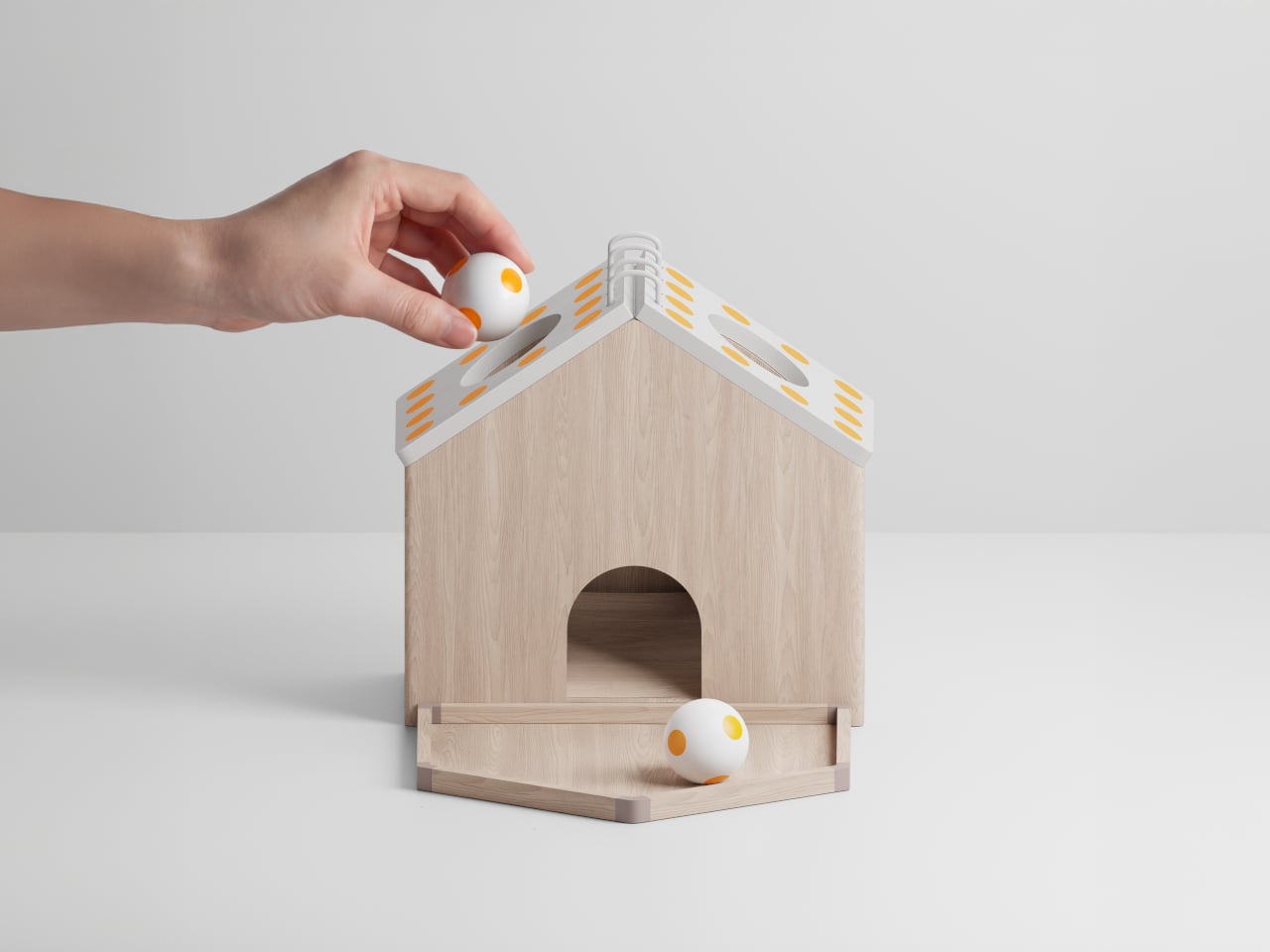
Cooperative House is a small, house-shaped toy that tries to change that script. Designed for two players and a caregiver, it uses patterned balls and pages to create challenges that require people to talk, decide, and act together. The interactive toy relies on analog play instead of screens, treating cooperation and conversation as the real work rather than just nice side effects of keeping hands busy.
Designer: Hyunbin Kim
The basic loop unfolds simply. Two residents sit with the wooden house between them while a caregiver flips a pattern page on the roof. The page shows colors and dots, and the pair chooses the right patterned balls to drop into the opening. When they get it right, the balls roll down an internal slope and emerge from the bottom, and everyone smiles before moving on to the next pattern.
When the wrong ball goes in, the toy gives immediate feedback and gentle hints so participants can try again without feeling scolded. That process encourages them to re-explore the problem together, strengthening attention and problem-solving while keeping the mood light. The toy becomes a shared puzzle supporting continuous small wins instead of a test someone can fail, which matters when confidence is already fragile.
The pattern pages come in three tiers. The first focuses on simple color recognition, just matching orange to orange. The second combines shapes and patterns, requiring players to consider both color and arrangement. The third moves into contextual reasoning, where patterns carry more abstract meaning. Caregivers can tailor challenges to each person’s cognitive level and gradually increase complexity, keeping the activity engaging without overwhelming anyone.
Of course, the physical design supports that intuition. The internal slope guides balls toward the bottom door automatically, providing instant visual feedback. The magnetic ball tray attaches to the back for easy storage and transport. The familiar house form and tactile wooden body make the object feel approachable, especially for people wary of digital devices or anything that looks like medical equipment.
Cooperative House turns a simple act, dropping balls into a toy, into a small ritual of cooperation. It does not promise to cure anything, but it offers a way to chip away at loneliness and cognitive decline by giving people a reason to sit together, talk through options, and think side by side. A kind of shared play can be its own gentle medicine that’s perfect for the slow rhythm of care homes.
The post This Wooden House Toy Fights Loneliness in Nursing Homes with Play first appeared on Yanko Design.