
Let’s be real about furniture for a second. Most of us want pieces that look great, last forever, and don’t cost as much as a vacation. But we also want to be able to move without having to hire a team of professionals just to disassemble the bookshelf. Oh, and while we’re at it, can it also not destroy the planet? Apparently, that’s been too much to ask. Until now.
Meet LinumTube, a furniture system that manages to check all those impossible boxes at once. This isn’t your typical design project. It’s a collaboration between Studio Jonathan Radetz and the Fraunhofer Institute for Wood Research in Germany, and it’s rethinking what furniture can be from the ground up.
Designers: Studio Jonathan Radetz and Fraunhofer Institute for Wood Research
The concept is beautifully simple. The furniture, which includes benches, chairs, and stools, is built from just two materials: steel tubes and multilayer flax fabric. That’s it. No glue, no bolts, no complicated hardware that you’ll lose during your third apartment move. The flax fabric wraps around the tubular steel frame, creating a self-supporting structure that stays stable through clever engineering rather than industrial adhesives.
What makes this particularly clever is the fabric itself. The team at Fraunhofer developed a specialized multilayer flax textile with open constructions and integrated channels that interact with the steel tubes to create varying levels of stiffness. This means you get support exactly where you need it without adding extra materials or complexity. The seating surface can even be customized with a lamellar structure that provides additional cushioning for those of us who like to linger.
The whole system is modular and completely reversible. Researcher Christina Haxter explains that the goal was to design seating furniture that allows for quick assembly, disassembly, and rearrangement, making it easy to take apart when moving. You can reconfigure pieces depending on your space, separate everything by material type at the end of its life, and send each component back into its own recycling stream. Steel stays with steel, flax goes back to being flax. It’s circular design at its most practical.
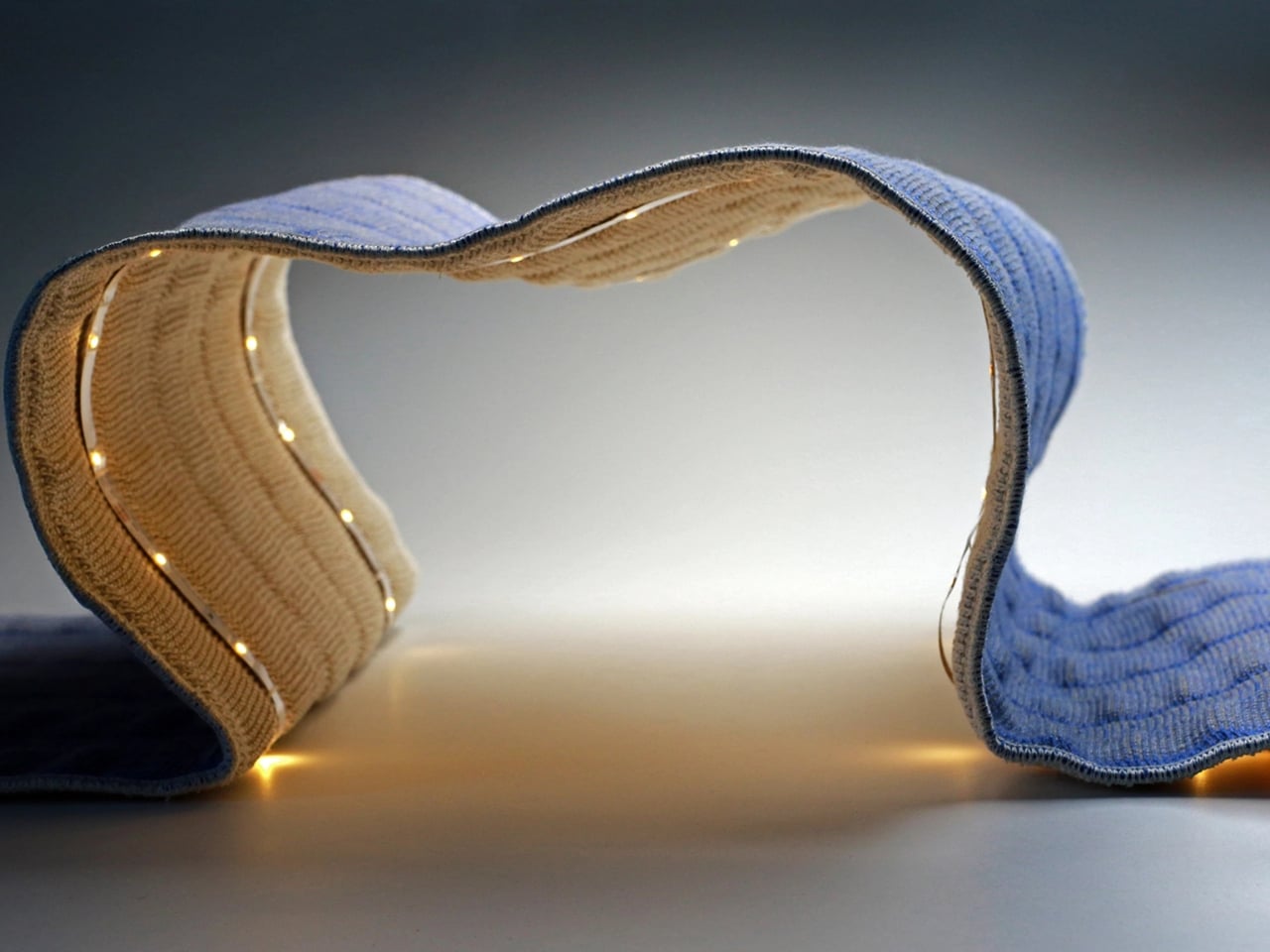
But here’s where LinumTube really shines: it doesn’t look like a sustainability lecture. The covers come with or without fringes and are available in both multicolored and natural pastel tones. The aesthetic is minimalist but warm, the kind of thing that would fit just as easily in a modern office lobby as it would in your living room. There’s even an option for integrated LED lighting woven into the fabric, because why shouldn’t sustainable furniture also have a bit of flair?
The project received funding from the German Federal Ministry of Education and Research, and was unveiled at Milan Design Week 2025 during the Materially exhibition. It represents a genuinely different approach to how we think about furniture design. Instead of creating objects meant to be used and discarded, LinumTube embraces the idea that furniture should evolve with us. Need more seating? Add another module. Moving to a smaller place? Reconfigure what you have. Done with it entirely? Return everything to the material cycle without guilt.
This is the kind of innovation we need more of. Not flashy tech for tech’s sake, but thoughtful problem solving that addresses real challenges without sacrificing style or functionality. Furniture has been essentially the same for decades, built on a model of planned obsolescence and complicated assembly instructions. LinumTube proves there’s another way: lighter, smarter, and infinitely more adaptable.
The best part? This doesn’t feel like a compromise. You’re not choosing between design and sustainability, or between affordability and quality. You’re getting furniture that works better precisely because it was designed with all those constraints in mind from the beginning. That’s the kind of thinking that actually changes industries. So next time you’re wrestling with an Allen wrench at 2 a.m., wondering why furniture has to be this complicated, remember that someone out there is already building the alternative. They’re using flax, steel tubes, and some seriously smart engineering to prove that better is possible.
The post This Furniture System Uses Just 2 Materials and No Glue first appeared on Yanko Design.