
PnP Furniture (Plank and Point) introduces Cabinet Collection
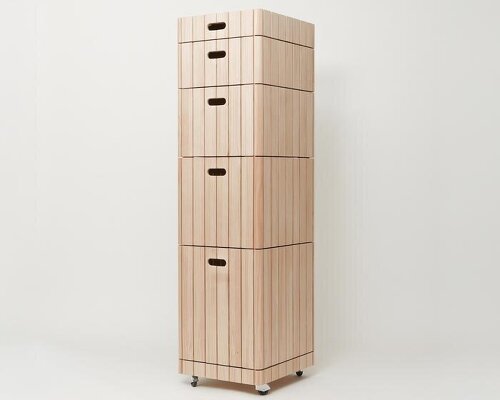
PnP Furniture (Plank and Point) introduces the Cabinet Collection, a series of storage pieces constructed through a modular system of planks and exposed screw connections. The series draws on the logic of wooden fences, where evenly spaced vertical boards create rhythm, order, and enclosure through simple modular components.
The arrangement of regularly dimensioned planks establishes a consistent visual cadence. This ordered framework provides a structured setting for the objects stored within, addressing the need for coordination as personal belongings accumulate over time. Rather than concealing storage, the system defines it through visible construction and measured spacing.
The material approach begins with cut timber in its sectional state. By standardizing dimensions and reorganizing wooden elements according to a defined assembly rule, the collection reframes wood as both structural unit and surface. The process emphasizes the inherent qualities of timber while introducing a new configuration that differs from its natural form.
PP1 Cabinet (storage), 475(W) x 410(D) x 1505(H) | all images courtesy of PnP Furniture (Plank and Point)
Rhythm, repairability, and modularity define the collection
The Cabinet Collection also reconsiders the role of the cabinet within contemporary interiors. As built-in storage is typically integrated into walls, freestanding cabinetry often recedes from attention. This project restores its physical presence, treating the cabinet as an independent architectural element within the room.
Construction is based on a system that increases the number of connection points while reducing rigidity between parts. Instead of relying on fixed joints, adhesives, or concealed fasteners, the components are segmented and connected in a way that allows for measured flexibility. This method enables individual elements to be replaced if damaged, supporting maintenance and long-term use.
By prioritizing assembly over seamless enclosure, the designers of PnP Furniture position the cabinet as an open system composed of distinct yet coordinated parts. The result is a modular structure that emphasizes rhythm, repairability, and an ongoing relationship between material, object, and space.
PP2 Cabinet (box), 520(W) x 455(D) x 1670(H)
PP5 Cabinet (drawer), 1115(W) x 365(D) x 1055(H)
PP11 Cabinet, 1145(W) x 255(D) x 1820(H)
PP14 Shelf / Divider, 473(W) x 340(D) x 1865(H)
PP15 Floor lamp, 270(W) x 270(D) x 1600(H)
PP6 Chair, 385(W) x 425(D) x 750(H)
PP11, side view
PP2, open state
PP14, detail
PP2, side view
PP5, open state
project info:
name: Cabinet Collection
designer: PnP furniture (Plank and Point) | @pnp_furniture
lead designers: Kim Hunkyung, Yoo Jiung
designboom has received this project from our DIY submissions feature, where we welcome our readers to submit their own work for publication. see more project submissions from our readers here.
edited by: christina vergopoulou | designboom
The post PnP’s cabinet collection builds modular storage from planks and exposed screws appeared first on designboom | architecture & design magazine.