
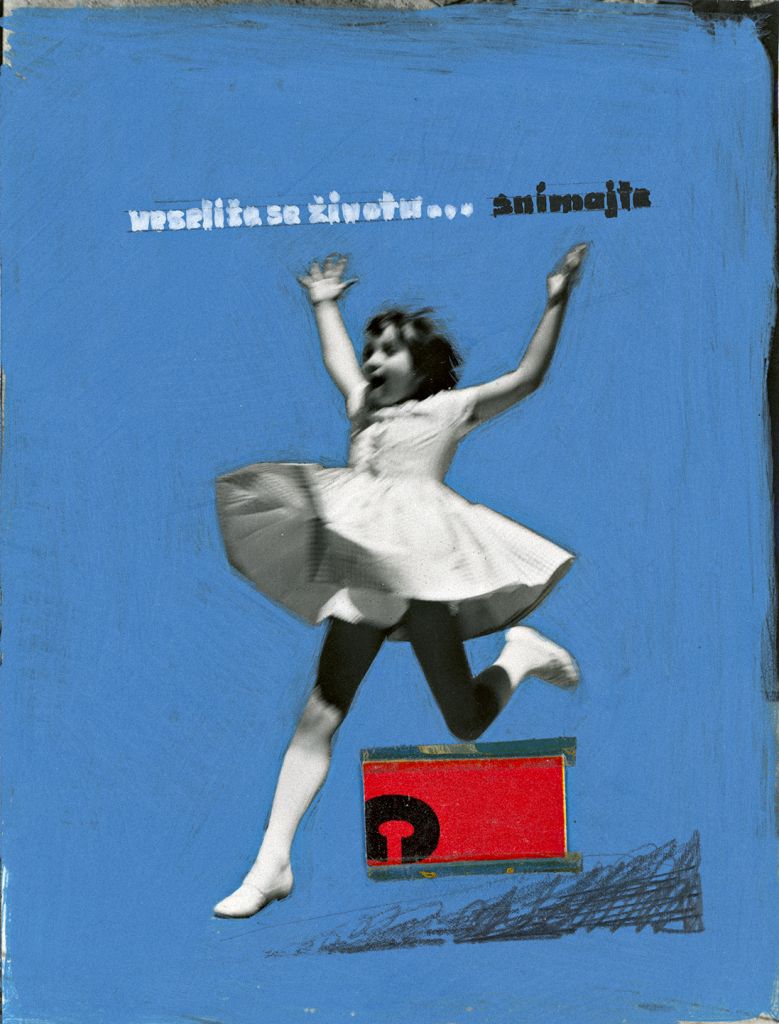
Evidence of graphic design history reaching maturity has been cited here many times. In the past 30–40 years, design languages have regularly emerged from under-represented—or, rather, misrepresented—cultures and countries. That particularly applies to the nations that were behind the global capitalist curve, whose graphic design was less economically developed than the U.S. and the West. During the Iron Curtain/Cold War era, it was simply assumed that Communist-dominated systems didn’t require sophisticated design to sell what few essential wares they produced.
That fallacy is now being disproved by a slew of design magazines and exhibitions that have heralded international design movements. In recent years, the history of global graphic design, from South America to Central America to Eastern Europe to Asia, is not just a footnote, but a focal point. There are so many analog and digital chronicles, monographs and anthologies of world-class graphic design that researchers have more resources for discovery than ever before.
Just last week, I received a recently published monograph devoted to one such unknown (to me) Midcentury designer. Dušan Bekar (1931–2019) was a Croatian graphic designer whose works included advertisements, product packaging and public campaign visuals that became iconic in former Yugoslavia. His son, Dušan Bekar Jr., who runs Bekarhaus studio in Zagreb, writes, “In Croatia, as in much of our region, many designers from older and middle generations remained under-recognized for a long time. Among these ‘designers from the shadows’ is my father, Dušan Bekar, an influential art director whose work emerge from the foundations of international Modernism and was affiliated with the EXAT 51 circle [short for Experimental Atelier, an interdisciplinary avant garde group of abstract artists, designers and architects active in Zagreb from 1950–1956].”
Bekar Jr. and his wife, Alira Hrabar-Bekar, are preserving an extensive archive of the elder Bekar’s work, “and look forward to bringing greater visibility to it.” With this intention, the couple published Bekar Prelude (HDD/Croatian Designers Association), the first comprehensive publication dedicated to exploring his lexicon of illustration, typography, calligraphy, photography and three-dimensional objects.
The book includes around 200 advertisements, posters, packages and identities that reveal how his designs relate to household and lifestyle items from the former Yugoslavia (which, like other Eastern Bloc countries, was plagued by shortages). Bekar’s work infuses everyday domestic scenes with humor, often humanizing household items, bringing an uncharacteristic warmth to the products.
Bekar, whose career spanned the latter 20th century and beyond, was especially known for his Efke film identity.
Given the prevalent stereotype in the U.S. of a drab color palette throughout Eastern European design, the joy inherent in Bekar’s work says otherwise.
The post The Daily Heller: A Croatian Midcentury Modernist Challenges the Stereotype of Bland Design appeared first on PRINT Magazine.