
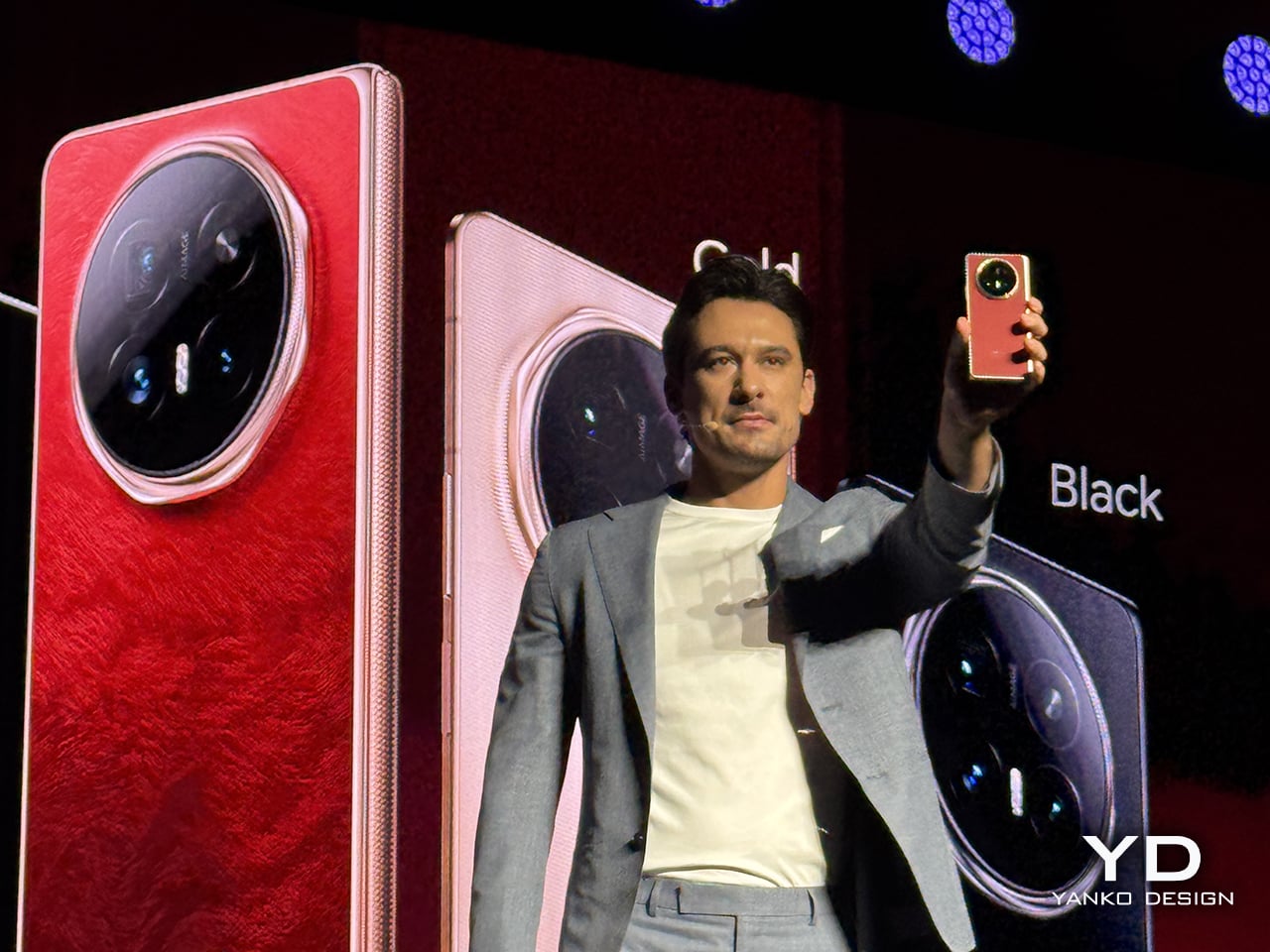
Inside the engine of a high-performance car, components endure thousands of violent explosions per minute, resisting incredible friction and wear. The materials chosen for this environment are selected for one reason: absolute, uncompromising durability. One of the most resilient of these materials is silicon nitride, a ceramic used where extreme toughness is the only acceptable standard. It is a substance born from one of the harshest mechanical environments imaginable.
Honor has taken that same material and applied it to the screen of the Magic V6. This decision to borrow from the world of motorsport engineering is a telling one, and it is a philosophy that extends throughout the device. The hinge is benchmarked against the A-pillar of a modern EV, and the battery’s chemistry is pushed to new limits of silicon content. The 2026 F1 season starts in a few days, but apparently we are seeing F1-level engineering in the smartphone world already.
Designer: Honor
Certain objects feel like they should be impossible. A foldable phone that, when closed, is as thin as a conventional flagship, yet contains a battery that is larger than any of its thicker rivals, presents a genuine design paradox. The physics of space and energy density suggest that one of these goals must aggressively compromise the other. You can have a thin device, or you can have a big battery, but the laws of thermodynamics are usually quite firm about not letting you have both.
The Honor Magic V6 manages to exist in this paradoxical space. It resolves the contradiction by treating the inside of the phone like a three-dimensional puzzle, where core components were redesigned and relocated to accommodate its massive power source. This internal architecture is then wrapped in a shell of exotic materials, including that screen coating developed for racing engines and a hinge with the structural integrity of an automotive safety pillar.
The battery itself is the real story here, the anchor for the entire design. To fit a 6660mAh silicon-carbon cell into this chassis, Honor had to completely re-engineer the phone’s internal layout. They customized and moved key components, including the speaker, the NFC module, and even the USB-C port, all to carve out precious fractions of a millimeter around the battery. The result is a cell with 25% silicon content, giving it the highest capacity ever seen in a foldable. This is the kind of obsessive internal space management that you see in high-end watchmaking or, well, motorsport, where every single component is fighting for its place.
Then you learn about the version they are keeping for the Chinese market, and the engineering goes from impressive to just plain absurd. This model gets the next-generation Silicon-carbon Blade Battery, pushing the silicon content to 32% and the capacity to over 7000mAh. It uses a unique stacking technology, with each power-generating layer measuring a mind-numbing 0.15mm thick. This might be the thinnest, most energy-dense battery ever put into a consumer device. It is a quiet technological flex, a statement that Honor is not just competing, but is capable of producing battery technology that feels a generation ahead of what we see elsewhere.
That philosophy of extreme durability extends to the hinge, the component that carries all the mechanical stress of a foldable. The device opens and closes with a satisfying, confident action, backed by a rating for half a million cycles, which is a frankly absurd number. At their keynote experience zone, Honor even had a V6 operating completely underwater, its hinge cycling open and closed without a single issue. This is an interesting, if slightly dramatic, way to communicate long-term reliability. We have all seen foldables that delicately dance around IP ratings and overall durability claims, but this is a clear statement of intent to build something that feels solid and dependable from the first time you open it.
Fitting a 64MP periscope camera into a device this ridiculously thin is another piece of that engineering puzzle. People who own the V5 might not see a massive day-to-day difference in thickness, but in the grander scheme, the ability to shave off millimeters while adding complex optical hardware is where the real magic lies. This focus on miniaturization and strength is not isolated to the V6. We saw the same DNA in their Robot Phone concept, where this hinge technology allowed them to shrink the necessary micromotors by a staggering 70% to achieve its tiny, folding camera design. This is a company obsessed with pushing the boundaries of mechanical engineering.
This hardware obsession serves a very specific software strategy. The team seems to have built the V6 with the assumption that its ideal customer already owns a Mac, an Apple Watch, and AirPods. They have leaned into this, building in one-tap file transfer to macOS, full support for the iWork suite, and even iCloud integration. It’s a bold move, positioning an Android device as the ultimate companion for the Apple ecosystem, all accomplished using open interfaces. It’s safe to say that not only did Honor build a highly-engineered design-forward foldable that’s thinner than any other Android device, they ended up making a foldable phone that Apple users can buy and use LONG before the foldable iPhone comes out!
The post If F1 Engineers Designed A Foldable Smartphone: HONOR Magic V6 Hands-On at MWC 2026 first appeared on Yanko Design.