
Game controllers have not changed much in shape since the mid-1990s. They’re still two-handed symmetrical slabs built around adult grip dimensions, loaded with enough buttons to pilot a small aircraft. For a 10-year-old just getting into gaming, picking one up for the first time is a bit like being handed a TV remote and told to perform surgery, no sweat.
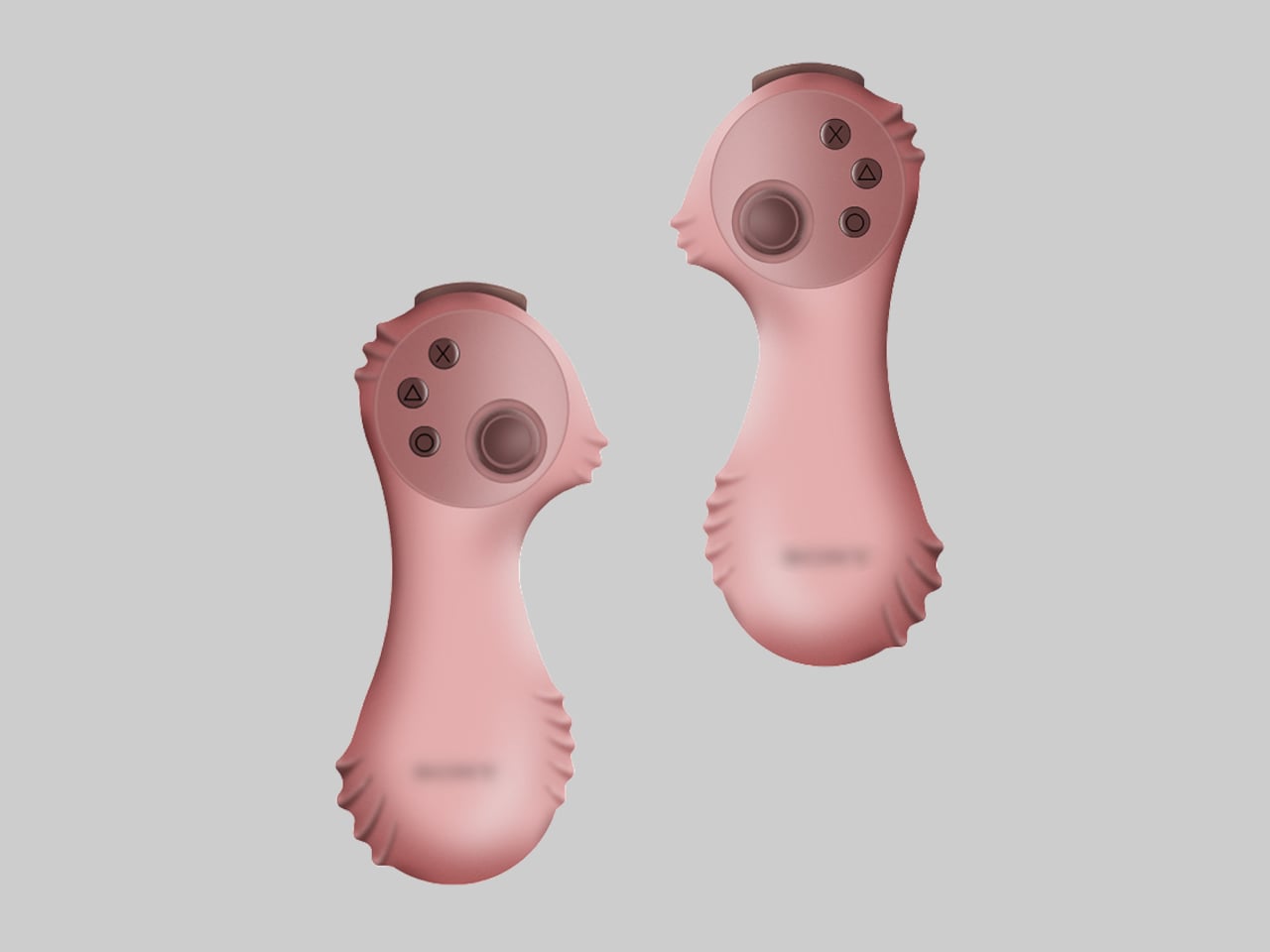
The concept is called LEVION, and it proposes a split controller: two separate units, one per hand, each sized for a pre-teen’s palm. It was designed as a rethink of the thumb stick from scratch, and the result looks like nothing in the current gaming peripheral market, which is mostly the point. And its inspiration comes from the most unlikely source you can imagine.
Designer: Vedika Bapat
The form comes from a seahorse, specifically its upright posture, curved spine, and ridged body. Those horizontal ridges, translated into a soft frill around the base of each unit, are the structural logic of the grip. A seahorse’s bony plates give it stability without bulk, and LEVION’s ridges do the same thing for a small hand holding a rounded object across an hour of gameplay. It’s biomimicry that connects cause to effect rather than borrowing a shape for decoration.
Each unit carries a joystick, three face buttons, and a shoulder button, arranged on a circular head that sits atop a curved hourglass body. The silhouette is wider at the head and base, pinched at the waist, giving the thumb a natural landing zone and keeping the unit from rotating mid-game. The sketch process started with a seahorse drawing annotated “grip inspiration” before moving through VR console proportions to arrive at this form, so the shape isn’t just decorative shorthand.
The colorways lean into the pre-teen audience: pink, mint green, sky blue, and lavender, all in a soft matte finish that reads more like a toy than a peripheral. That positioning is deliberate. Standard controllers signal seriousness and capability. LEVION signals approachability, which matters when the target user is still sorting out that the left stick moves the character and the right one moves the camera.
The honest question is one of input coverage. A standard PlayStation controller has two joysticks, a D-pad, four face buttons, four shoulder buttons, and several system controls. LEVION offers a joystick, three face buttons, and one shoulder button per hand. For casual and younger audiences, that might be exactly right. For anything more demanding, the math gets uncomfortable, and the concept doesn’t address how that gap closes when the pre-teen turns 13.
That’s worth taking seriously, but it doesn’t diminish what LEVION gets right in the space it occupies. The design’s own research board lists the Nintendo Switch Joy-Cons as a reference point, and the parallel is fair: the Joy-Con also split a standard controller into two smaller units and found an audience that didn’t know it needed that format. LEVION asks the same question one step earlier in the age range, in a form that a kid might actually want to reach for.
The post This seahorse-inspired game controller concept is made for smaller hands first appeared on Yanko Design.