
TRIMINÓ: modular furniture series for early childhood learning
TRIMINÓ is a modular furniture system designed for early childhood education environments, developed by Lais Ferraz. The project transforms conventional school storage units into interactive elements that support learning through play, targeting children up to six years old.
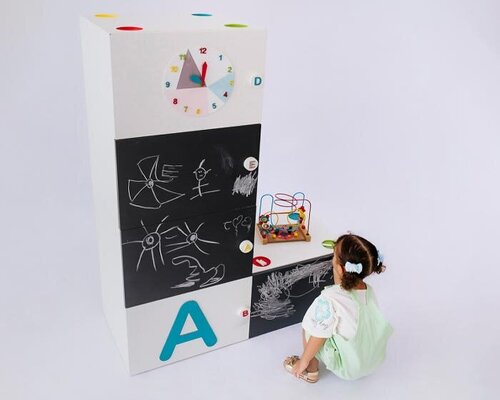
The system is based on a modular logic influenced by construction toys, allowing units to be combined and reconfigured. Integrated sensory features, including chalkboard surfaces, analog clocks, and letter-based handles, encourage interaction, supporting the development of motor skills, basic literacy, and spatial awareness. These elements are embedded directly into the furniture, enabling children to engage with educational content through everyday use.
TRIMINÓ was conceived for implementation in budget-constrained educational settings. Its design prioritizes accessibility and adaptability, enabling production through local manufacturing processes while maintaining consistent performance and durability. By incorporating learning interfaces into standard furniture typologies, the system contributes to the creation of more interactive and inclusive classroom environments.
modular system: endless combinations that transform the classroom layout | all images courtesy of Lais Ferraz
furniture system for children follows a construction-toy logic
A key aspect of the project by designer Lais Ferraz is its construction method, described as ‘invisible engineering.’ The system eliminates the need for exposed metal hardware or screws, relying instead on precision joinery. Components are assembled using 45-degree miter joints and internal grooves, secured with high-strength adhesives. This approach ensures structural stability while reducing visible complexity and minimizing potential safety risks. The resulting furniture maintains a continuous, smooth surface through the application of durable laminate finishes. This construction strategy supports ease of maintenance and longevity, while allowing the technical aspects of the assembly to remain concealed.
TRIMINÓ positions furniture as an active component within educational space, combining modularity, sensory engagement, and efficient construction methods to support early learning environments.
ergonomics and autonomy: dimensions that allow children to organize their own space
sensory interface: playful handles and accessible internal storage space
direct interaction: playful, interactive elements are integrated into everyday use
design for literacy: lettered handles reinforce contact with the alphabet
spatial versatility: pieces that fit together like giant building blocks
technical minimalism: flawless laminate finish with no visible screws
pedagogical design: the integrated clock assists in playful learning of time
safety and durability: smooth laminate surfaces coat the furniture modules
individual TRIMINÓ module: pure Tetris-inspired geometry for child-friendly scale
furniture as a canvas: integrated chalkboard surfaces encourage creative expression
visual contrasts: colors and textures that define functions and stimulate sight
direct interaction: the furniture evolves from static object to teaching tool
invisible engineering: technical detailing of joinery and hardware-free assembly
project info:
name: TRIMINÓ
designer: Lais Ferraz | @laisferrazarch
designboom has received this project from our DIY submissions feature, where we welcome our readers to submit their own work for publication. see more project submissions from our readers here.
edited by: christina vergopoulou | designboom
The post school storage units transform into modular sensory furniture for early childhood education appeared first on designboom | architecture & design magazine.