
Before the iPhone arrived in 2007 and quietly buried the category, handheld PCs were shaping up to be something genuinely exciting. Devices like the Sony Vaio UX and OQO Model 2 promised a full desktop OS in your jacket pocket, and for a brief window, that felt like the obvious future of personal computing. Smartphones won that argument decisively, and the handheld PC faded into a footnote. A YouTuber who goes by Wisce decided that footnote deserved a second chapter, and built one himself from scratch.
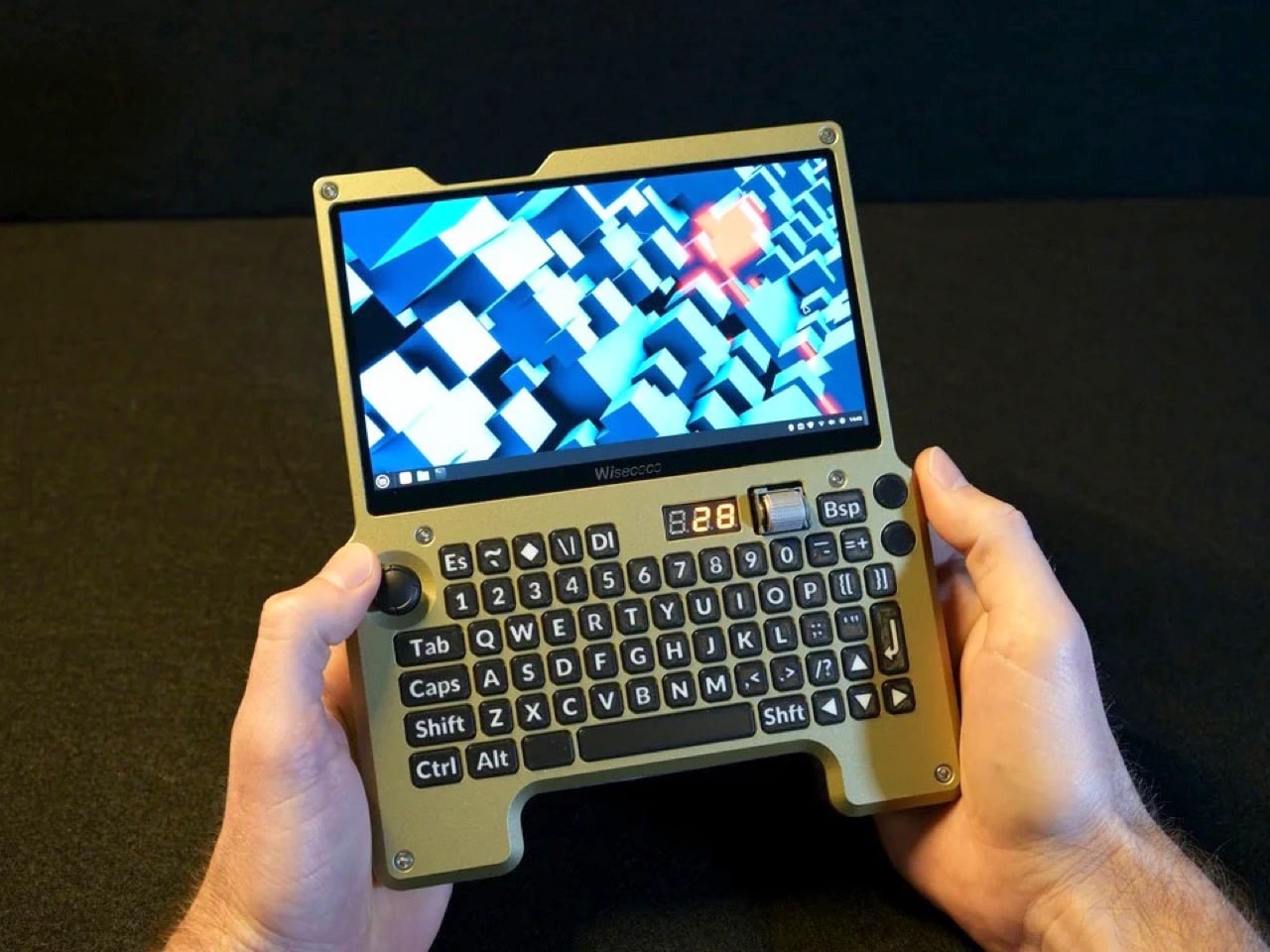
The result is a fully custom x86 handheld computer built around the LattePanda Mu single-board computer, running Linux Mint on a 7-inch 1920×1080 120Hz display. It has a full QWERTY ortholinear thumb keyboard with custom-printed keycaps, a Joy-Con thumbstick repurposed as a mouse, a horizontal scroll wheel, four USB ports, a full-size HDMI output, USB-C charging, and a 4,500mAh battery pack with a three-digit readout that tells you exactly how much juice is left. Every single component was designed, sourced, or fabricated by hand.
Designer: Wisce
The LattePanda Mu is an x86 SBC that outperforms even the Raspberry Pi 5 by a notable margin, and Wisce built a custom carrier board for it rather than using an off-the-shelf solution. That board delivers four full-size USB ports, a full-size HDMI port, M.2 SSD and Wi-Fi slots, and internal USB connectors for the keyboard and audio subsystem. A 1TB SSD and a budget Wi-Fi card complete the internals. The operating system is Linux Mint, chosen partly on merit and partly because Wisce’s previous builds attracted considerable audience displeasure when they shipped with Windows 11. Linux also strips out the background process bloat that Windows tends to accumulate, giving the Mu’s x86 architecture more room to breathe.
The display decision alone took multiple iterations to land. Wisce initially planned to use a 1024×600 60Hz panel from DF Robot, the parent company behind the LattePanda line, but rejected it for its low resolution, large bezel, and limited refresh rate. The replacement is a 1920×1080 120Hz eDP panel with a much thinner bezel, connected directly to the Mu’s native eDP output via a custom PCB that reroutes a pin mismatch between the two connectors. That kind of problem-solving shows up everywhere in this build: when a straightforward solution didn’t exist, Wisce designed one.
The keyboard runs on a custom PCB with an RP2040 microcontroller integrated directly into the board, bypassing the need for a separate Arduino or Pi Pico. The switches are surface-mount tactile types rated for around two million presses, sized small enough to fit a full QWERTY layout without sacrificing the thumb-typing ergonomics the ortholinear arrangement was chosen to support. Keycaps were modeled in Fusion 360 and printed on an FDM machine using a 0.2mm nozzle and multi-material filament to get legible, sharp legends on each key. The Joy-Con thumbstick on the left handles cursor movement via a QMK profile that maps it as a mouse, and the horizontal rotary encoder scroll wheel on the right is, by Wisce’s own admission, one of his favorite things about the finished device.
The enclosure is a two-part construction: a translucent resin rear shell that keeps the internal geometry visible, and an aluminum front plate that was CNC machined, anodized, then repainted by hand after the factory “champagne” finish came out looking closer to a flesh tone than the golden bronze Wisce had rendered. The finished device is 36mm thick at its deepest point and weighs approximately one kilogram, which puts it in a different category from a Game Boy but well within the range of something you’d actually carry. A 3D-printed dock props it upright on a desk with the HDMI port and USB-C charging accessible, turning the handheld into a functional desktop workstation when paired with an external keyboard and mouse.
What makes this build genuinely compelling, beyond the craftsmanship, is how clearly it articulates a design philosophy that commercial manufacturers keep fumbling. Devices like the GPD Win 5 chase gaming performance and end up compromising portability or pricing out most buyers. The Steam Deck nails the gaming use case and handles general computing as an afterthought. Wisce’s machine is neither of those things. It’s a full x86 desktop OS in a form factor that fits in two hands, with physical controls that were chosen specifically for the way humans hold objects, a battery system that actually communicates with its user, and a screen bright and sharp enough to make the whole proposition feel current. The handheld PC category failed twenty years ago because the hardware wasn’t ready. This build suggests the hardware has been ready for a while, and we’ve just been waiting for someone stubborn enough to put it together properly.
The post Forget the Steam Deck, This Custom-Built Handheld Runs a Full Linux Desktop in Your Palms first appeared on Yanko Design.