
Bugatti built the Type 57SC Atlantic in the 1930s using a technique called riveted construction, where aluminum panels were joined with raised seams that became the car’s defining visual feature. That central spine running from nose to tail was both structural necessity and sculptural flourish, a detail so elegant it’s been referenced in automotive design for nearly a century.
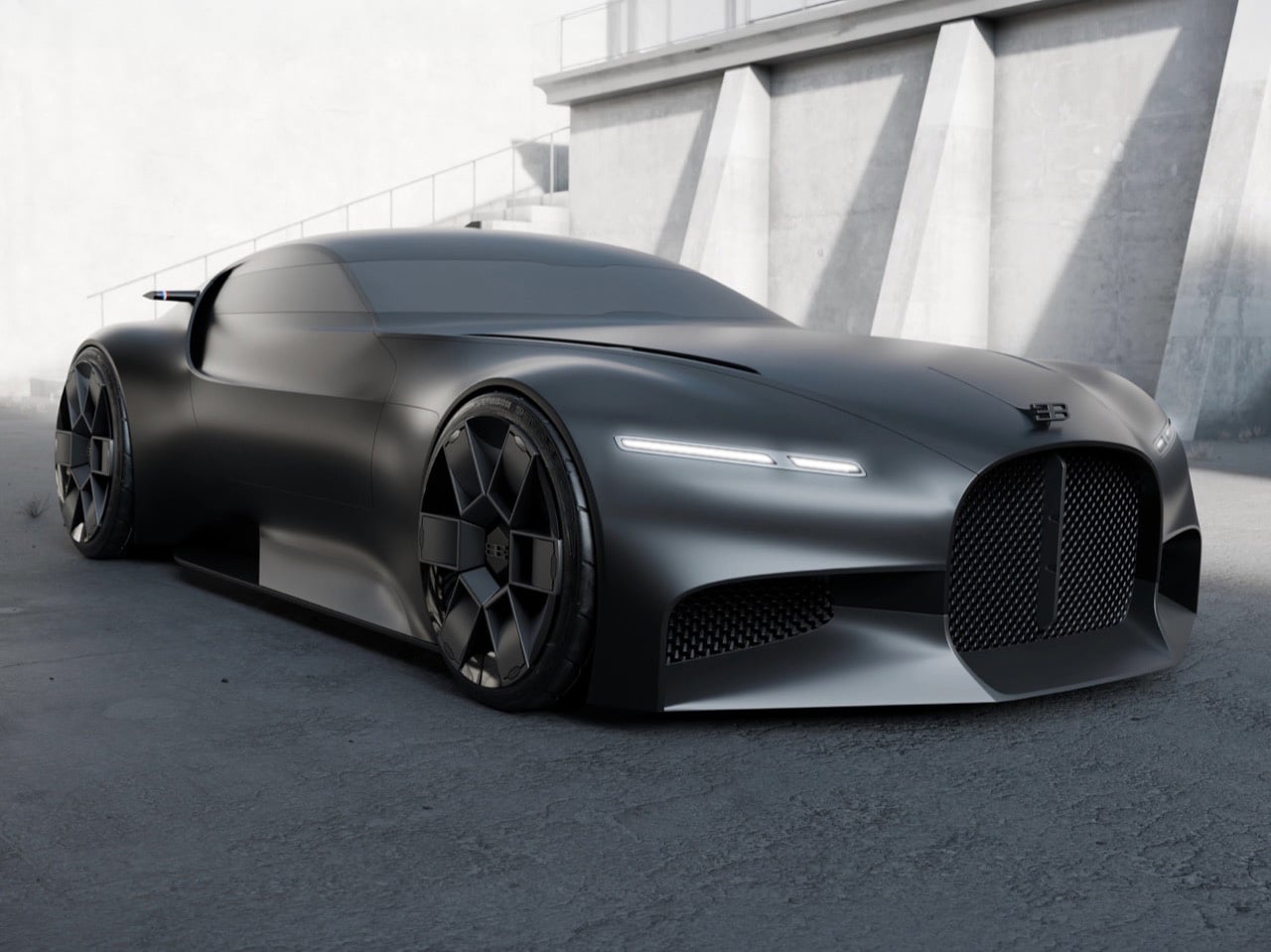
Edouard Suzeau’s Type Sigma concept channels that same philosophy but inverts the execution. Where the Atlantic celebrated its construction method, the Type Sigma hides every seam, every panel gap, every hint of how it might actually be built. The body looks like a single piece of fabric pulled taut over a frame, finished in matte gray that emphasizes form over finish. The surface is so clean, so deliberately unadorned, that it forces you to focus on proportion and gesture rather than details and embellishments.
Designer: Edouard Suzeau
The design carries Bugatti’s genetic code but translates it through a contemporary filter. The horseshoe grille sits vertically integrated into the nose, maintaining brand identity without dominating the composition. The C-shaped rear pillar flows from cabin to tail as a surface rather than a graphic, tracing lineage back to the Atlantic while pushing the language forward. The long hood and fastback roofline recall the grand tourers Ettore Bugatti built for covering continents, cars that prioritized elegance and comfort alongside speed. Suzeau’s concept explores what Bugatti’s design language looks like when stripped of the Chiron’s dual-tone drama and the Tourbillon’s hyper-complex surfacing. The Type Sigma proves that sometimes the most challenging design exercise is knowing what to leave out, and the result is a car that feels both historically grounded and refreshingly modern.
The matte metallic finish is pretty new to Bugatti, which has relied on glossy finishes like blue and black in the past. Where gloss black or bare carbon fiber would create hard reflections that break up the surface into geometric shards, this matte gray lets light pool and stretch like mercury on glass. Reflections become soft gradients that emphasize the underlying form, making the car read as a single sculptural mass rather than an assembly of panels. The choice to avoid dual-tone treatment is equally deliberate. Recent Bugattis have relied on contrasting materials to create visual drama, splitting the body into upper and lower sections or using exposed carbon to telegraph performance intent. The Type Sigma abandons that strategy entirely, trusting that the purity of the form will carry enough visual weight on its own.
The proportions position this firmly in grand tourer territory rather than mid-engine hypercar land. The hood stretches forward in the classic front-engine GT tradition, creating that long, muscular stance that defined Bugatti’s pre-war icons. The cabin sits far back on the wheelbase, with a greenhouse that tapers gently rearward into the fastback deck. The roofline has an almost shooting-brake quality to it, extending further back than a traditional coupe but stopping short of full estate proportions. This creates a unique silhouette that feels both familiar and fresh within Bugatti’s portfolio.
The wheels appear to be modern interpretations of classic Bugatti spoke patterns, possibly referencing the Type 35’s iconic wheels but rendered with contemporary multi-spoke turbine detailing. The fender arches are muscular but smooth, defined by surface curvature rather than hard character lines. Side vents behind the front wheels are so subtly integrated they’re almost invisible in this matte finish, revealed only by shadow and surface transition rather than chrome trim or aggressive surfacing. The horizontal DRL bars sit flush with the front fascia, clean and minimal, avoiding the overwrought lighting signatures that plague most modern concept cars.
A full-width lighting signature spans the tail, likely incorporating Bugatti script or the EB logo as part of the illuminated graphic. Below, the diffuser is aggressive but integrated, its fins and channels carved into the lower body rather than appearing as tacked-on aerodynamic furniture. The way the C-shaped pillar terminates at the rear deck is particularly elegant, flowing seamlessly into the tail rather than stopping abruptly or requiring a visual full stop. Horizontal slats in the rear glass echo the Chiron’s central spine but abstracted into functional venting, maintaining visual continuity with the current lineup while pushing the aesthetic somewhere quieter.
Production viability was clearly never the point here. Suzeau’s renders show a car with shut lines that would be impossible to engineer, glass areas that would never pass certification, and aerodynamic surfaces that exist purely to please the eye rather than cheat the wind. The Type Sigma lives in the same realm as the Atlantic did when it debuted in 1936, a piece of rolling sculpture built to prove that a car could be art. Only four Atlantics were ever made, and they remain among the most valuable automobiles ever auctioned. The Type Sigma will never be built at all, but it accomplishes something harder than production feasibility. It makes you reconsider what a modern Bugatti could look like if the brand decided to prioritize elegance over aggression, sculpture over decoration, whisper over shout.
The post Bugatti Type Sigma Concept Ditches the Chiron’s Maximalist Design for Pure Sculptural Form first appeared on Yanko Design.