
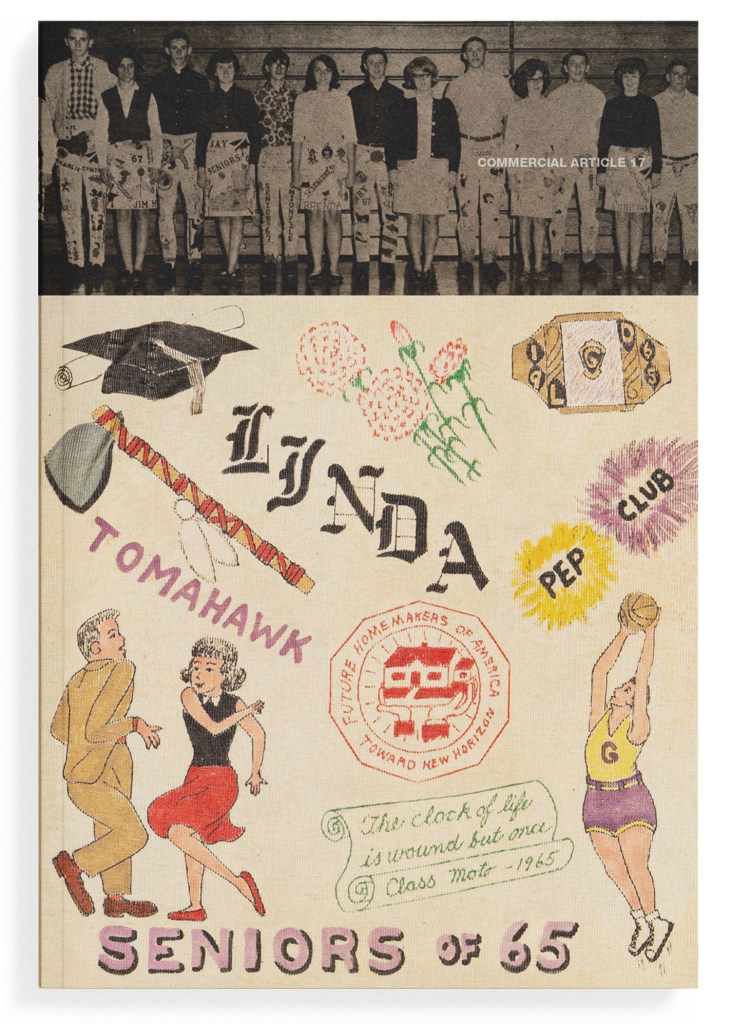
Senior cords are a largely forgotten fashion statement born in the Indiana school system. They have been brought back into view by James Sholly, editor and designer of Commercial Article, who once again has rediscovered a little-known DIY species of Americana design. Senior cords (short for corduroy) are a not-so-secret pant and skirt phenom that was first started in the 1900s and is now explored in Commercial Article #17: a Dirty, Colorful History.
“As a tradition unique to Indiana, senior cords have been embraced by Hoosier students [along with their extreme passion for basketball] for over a century,” writes Sholly in his introduction to the magazine. “Only in recent years has this highly individualistic form of scholastic expression made its way to the wider world.”
Historian Kelly Gallett Richardson, director of the Elizabeth Sage Historic Costume Collection at Indiana University, and Mary Figueroa, curator of history at the Indiana State Museum and Historic Sites, detail these little-known garments in the magazine.
In the following conversation, Sholly discusses the significance of the cords, and how such seemingly off-the-cuff ephemera became permanent in the hearts and minds of generations past and present.
How did you decide to choose this genre of DIY/folk design for the current issue?
We’re always on the lookout for stories from Indiana’s little-known design history. Like many of our previous subjects, senior cords were suggested by one of our readers. We hadn’t known about senior cords until a few years ago, but when we began seeing them the topic became irresistible. Some examples look professionally done, but the vast majority are made by young people with little or no design and art training. Both types are wonderful, but we’re particularly drawn to the wildly creative nature of the untrained type. They just exhibit a passionate and expressive method of design that seems honest and completely personal.
How long did this trend of clothing decoration last?
It’s an incredibly long period of time! The origins of senior cords can be traced back to Purdue University in 1904. The trend expanded to other colleges and high schools throughout Indiana during the following decades, reaching peak popularity in the 1960s and 1970s. At that point it was a full-on tradition and rite of passage embraced by seniors across Indiana. There was less interest beginning in the 1980s, but there are still a few areas that continue to take part and put their own contemporary spin on the garments.
An interesting side note in the senior cords story is that within the past decade, they have been rediscovered, with exclusive fashion houses like Bode and Ralph Lauren creating their versions of cords for their customers. Celebrities like Harry Styles, Leon Bridges and Jeff Goldblum have been shown wearing amazing senior cords ensembles. And Kendall Jenner appeared in Architectural Digest with her beautiful senior cords sofa!
Why do you think this is unique to your part of the US?
Avery Trufelman (creator of the Articles of Interest podcast) states that Indiana and Hawaii are the only two states with their own bonafide regional clothing item. The fact that senior cords are unique to Indiana was one of the main features that interested us when we decided to pursue it as a topic.
We were fortunate to have Mary Figueroa, curator of history at the Indiana State Museum and Historic Sites, and Kelly Gallett Richardson, director and curator of the Elizabeth Sage Historic Costume Collection at Indiana University, as our writers and collaborators on this issue. When I asked them this question, Mary responded, “Hoosiers love high school sports. Hoosiers love tradition. But sometimes Hoosiers are willing to push the boundaries a little bit, and senior cords embody this. That idea is prominent in the book Hoosiers: A New History of Indiana by James H. Madison. He talks a lot about Hoosiers consistently saying they want to resist change and uphold traditional values, while still often in practice ultimately (often begrudgingly) accepting/tolerating new ways of life. I think this parallels the 1950s and 1960s cords that were being made by Indiana students who wanted to keep a historic tradition going but also wanted to add their flavor of pop culture, edge, etc.
Kelly adds, “The tradition was started by and for students, but encouraged and promoted by school administrators, retailers and media as a way to foster local community and school pride. Hoosiers in towns all over Indiana looked forward to the new school year in the fall and the unveiling of that year’s senior cords.”
Was it easy to find well-preserved examples?
Both the Elizabeth Sage Historic Costume Collection and Indiana State Museum have been actively collecting senior cords, and generously provided us with an incredible image resource as we worked to represent the garments in our publication. But outside of their collections it seems that in Indiana all you need to do is mention senior cords and you’ll hear that someone’s dad has a pair in the attic, or that someone just inherited them from a relative like some type of family treasure. eBay and local vintage clothing stores are another great resource in trying to track down legitimate senior cords. The term “well preserved” is interesting, because senior cords were never intended to be washed, and in many instances the accumulated filth was seen as a true sign of their authenticity and durability.
Do you view the garb as having levels of meaning?
Without question. Some of the most recognizable imagery includes pop-culture references like cartoon and comic characters. Other imagery indicates associations with clubs, athletics and religious organizations. But beyond that there are secret languages and in-jokes that can only be understood by the makers and those in their close circles. References might include loopy depictions of parents, faculty or other figures of authority. Or perhaps caricatures of friends with their quirky qualities and goofy nicknames. These are, after all, sartorial statements made by and for young people. Viewing them so many years after their creation also gives senior cords a time capsule kind of quality. They offer a glimpse into what was important to students, and what messages they wanted to broadcast to the world—even if the world was just their high-school gymnasium.
What, if any, lessons did you learn from your research?
I learned (once again) that graphic design doesn’t necessarily need to be a deathly serious pursuit. The students that made senior cords were having fun and experimenting with typography, illustration, symbolism and humor. It didn’t really matter if they were trained in these areas—they simply did it in their own way, and as a means to connect with their friends and classmates. The range of creativity we’ve seen is both enlightening and inspiring. I’m also reminded that Indiana continues to be a surprising source of design, with its own particular characteristics and fascinating characters.
The post The Daily Heller: The True Story of Indiana’s DIY Senior Cords appeared first on PRINT Magazine.