
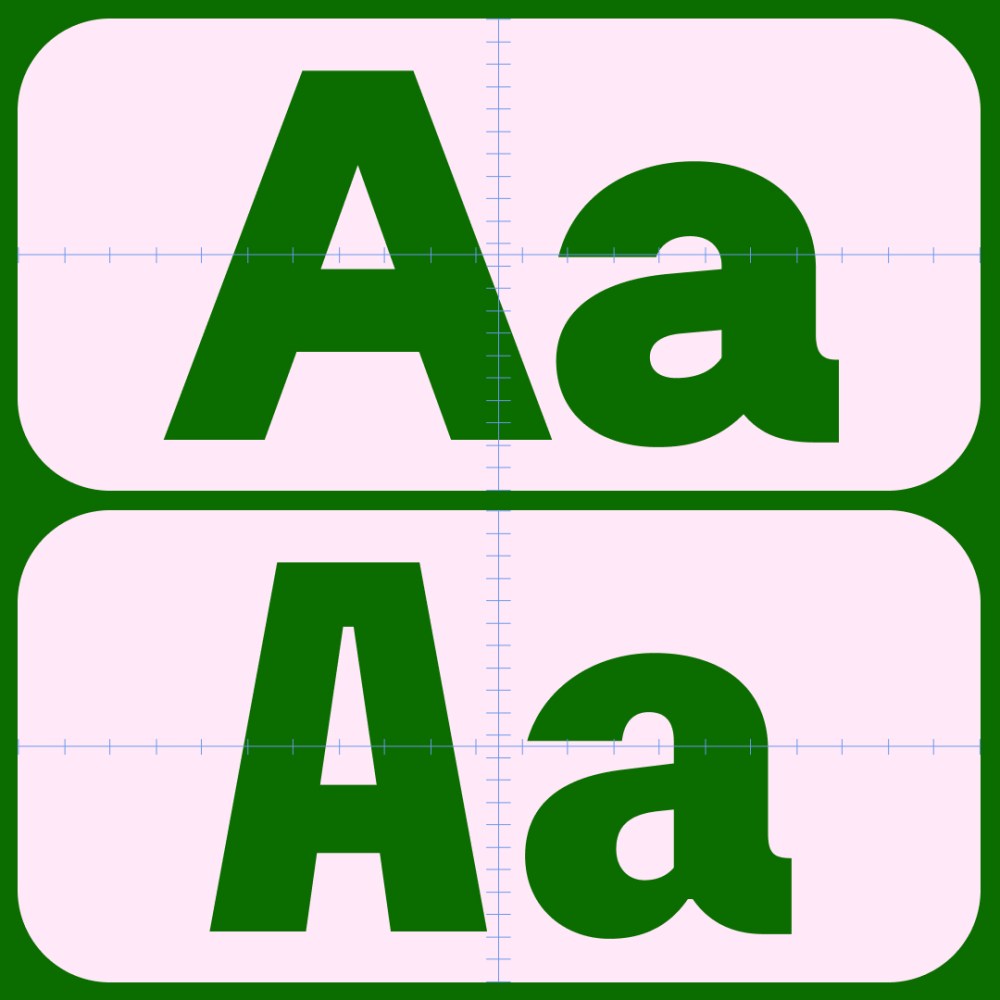
Marshall McLuhan famously declared that the medium is the message which raises an uncomfortable question: if our contemporary medium is a blur of notifications, pings, disappearing stories, and emails marked “urgent” that absolutely are not urgent, what exactly is the message?
Somewhere between the analog clatter of the typewriter and the churn of digital communication, typography has suffered. Messages once arrived with weight—ink pressed into paper, letters stamped into metal, wood type inked by hand. Communication had texture, friction, and—most radical of all—time. GT Mechanik seems tuned to that earlier time.
Built on a monospace tradition, GT Mechanik embraces fixed-width constraints not as limitations, but as design doctrine. Every character occupies the same horizontal real estate, creating a framework that gives rise to its distinct personality: abrupt joins, interrupted strokes, oversized punctuation marks that practically clear their throat before speaking. These aren’t decorative flourishes sprinkled on top for flavor—they’re structural choices, the typographic equivalent of making a beautiful chair out of rough lumber because that’s the wood you had. Constraint = character.
GT Mechanik’s letterforms are simple, sturdy, and just a touch naïve in the best possible way. Not naïve as in unsophisticated, but naïve as in charmingly direct, unpretentious, and refreshingly free of typographic peacocking. (No swashes. No needless flourishes.) Set in text, its rhythm creates an offbeat cadence, buoyed by slightly awkward spacing that gives paragraphs a curious quality—as though the message has been sent, but is still traveling by rail, perhaps with a scenic detour.
Designed by Shiva Nallaperumal, Reto Moser, and Noël Leu, at Grilli Type in Switzerland, the family unfolds across three distinct voices with a a flowing rhythm: Mono, Semi, and Poly—each interpreting the same mechanical DNA with different levels of expression.
Mono is the most overtly industrial: rhythmic, precise, and satisfyingly machine-like, as if it might come packaged with a satisfying clank sound effect.
Semi loosens up slightly, introducing a more lyrical cadence while keeping one foot firmly planted in utility.
Poly, the starkest of the trio, pares everything down into ultra-low contrast forms so clean and severe they feel almost architectural—quietly commanding but never shouting.
However, all together, it’s less a type family than a dial the designer can tune and adjusting not for size or medium, but for voice. And that may be GT Mechanik’s most compelling idea: it doesn’t optimize for usage so much as it asks what kind of message you want to send.
In an era obsessed with speed, GT Mechanik reminds us that how something is said still matters—and that sometimes the best messages arrive not instantly, but thoughtfully… perhaps with a little clatter, a little charm, and punctuation big enough to make a point.
The post GT Mechanik: The Anti-Notification Typeface appeared first on PRINT Magazine.