
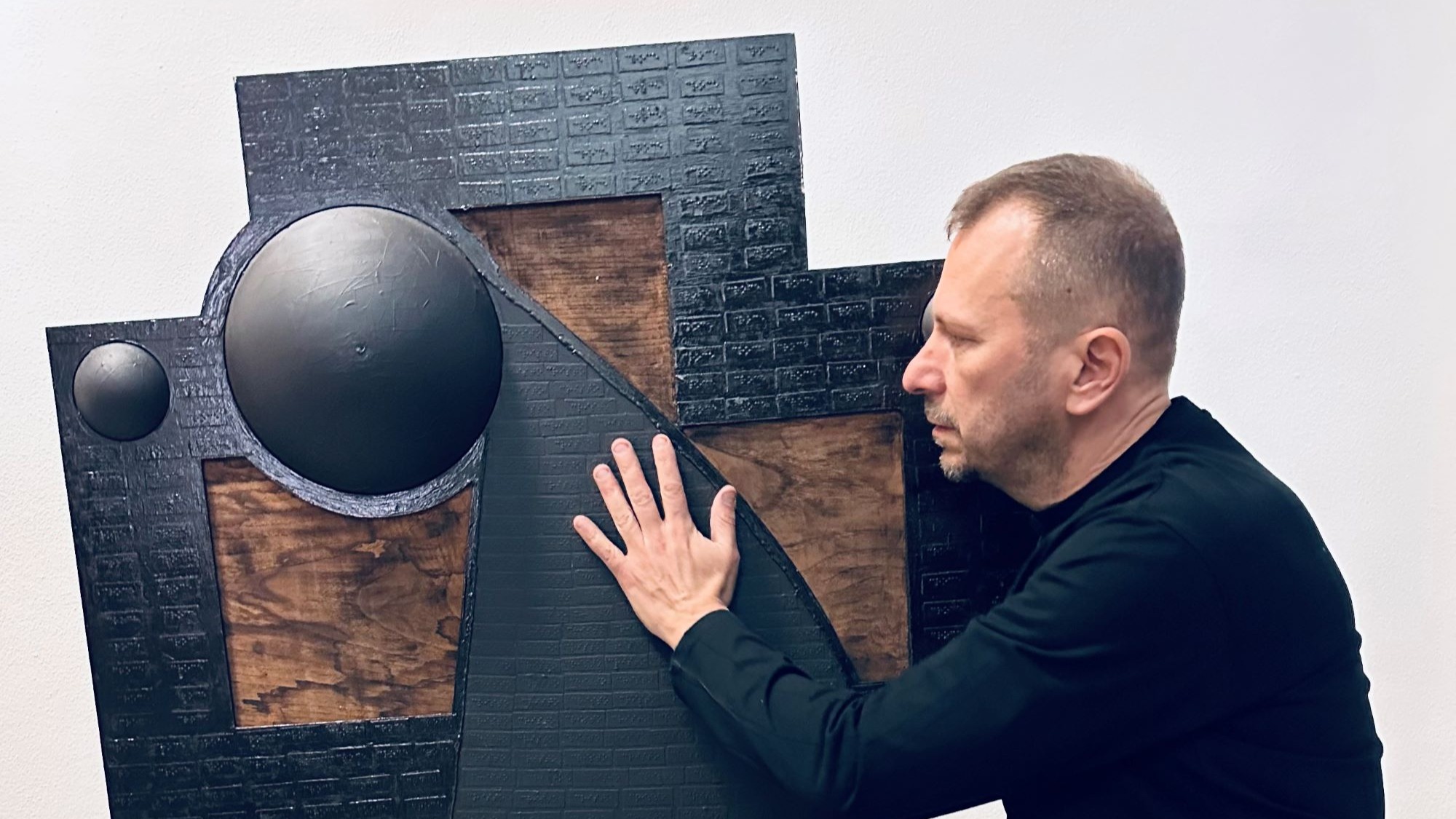
Some artists interpret their time; others manage to anticipate it. Aldo Gallina, known as Jona, belongs to the latter group.
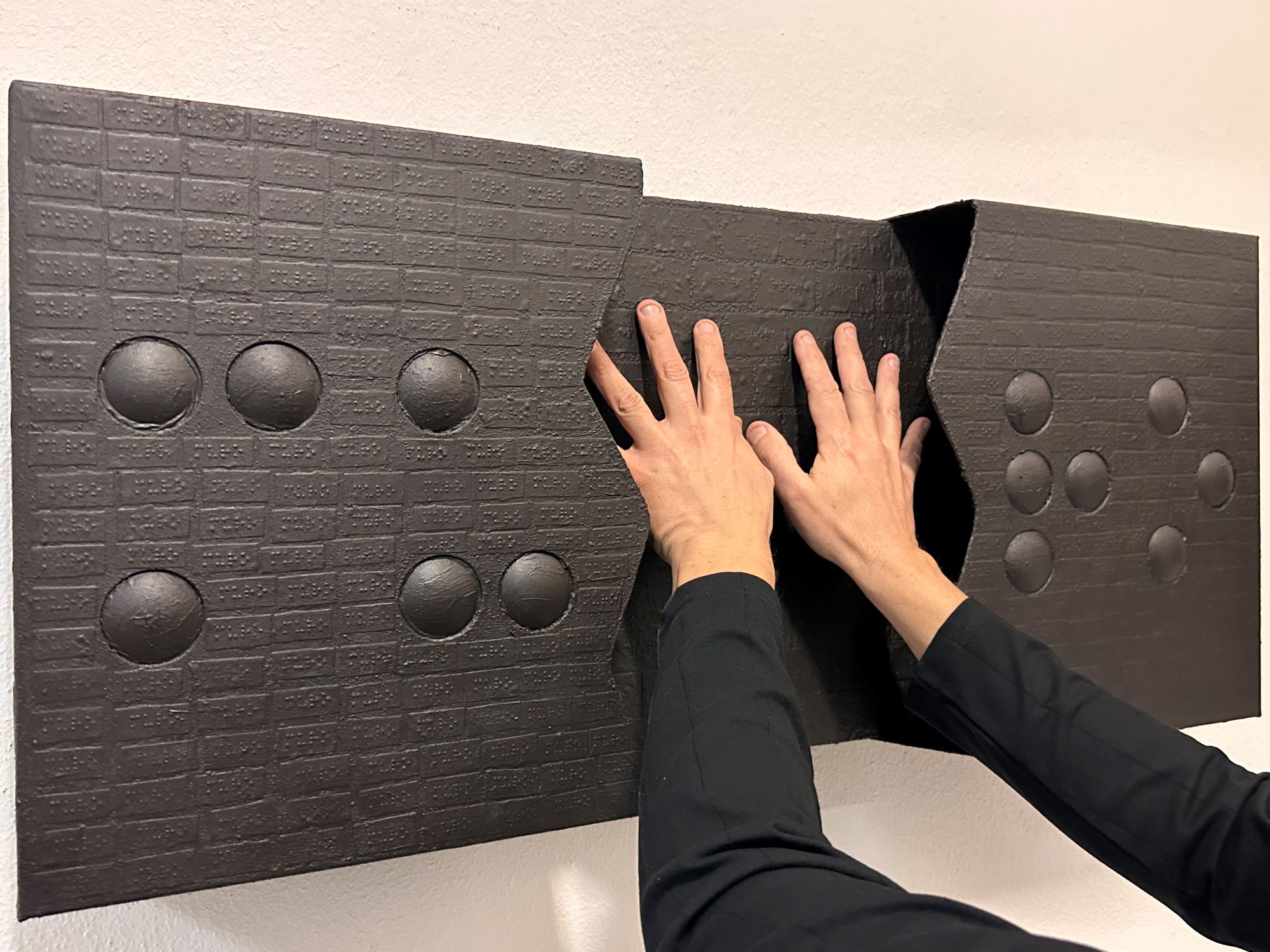
His artistic research brings together aesthetics, perception, and inclusion, developing a language that moves beyond the traditional boundaries of visual art. By transforming Braille from a writing system into an expressive medium, Jona proposes a new understanding of the artwork: no longer merely an image to be observed, but an experience to be lived through touch, engaging the body, the senses, and our awareness.
At a time when accessibility has become central to international debate, his work does more than promote inclusion: it invites us to reconsider the very meaning of perception. His works place sighted and blind people on equal footing, showing that beauty can be experienced through different yet equally profound forms of language.
This vision has brought his work to major national and international settings and is now receiving significant recognition in the United States, where his artistic practice has been welcomed as an original contribution to the dialogue between art, culture, and innovation.
We met with Jona to discuss his creative journey, the philosophy behind his research, and the universal value of an art form that invites us not only to look, but also to feel.
Interview
Maestro Jona, your works are now exhibited and appreciated outside Italy as well. What does it mean to bring an artistic language based on Braille to audiences around the world?
It means showing that art can transcend linguistic, cultural, and sensory barriers. Braille was created as a reading system, but in art it becomes a universal language capable of bringing different people together through a shared experience.
You have transformed a code originally developed for communication into an expressive medium. When did you realize that Braille could become art?
When I understood that those dots could convey more than words: they could also convey emotions. I began to see them not simply as signs, but as sculptural, rhythmic, and poetic elements capable of shaping an artwork.
Your work invites audiences to touch the artwork. Is this a revolution in the way we experience art?
More than a revolution, it is a return to the full range of our senses. For too long, we have entrusted beauty exclusively to sight. I believe that hands, too, know how to observe and understand.
Your works speak simultaneously to sighted and blind people. How important is it today for art to become a genuinely shared space?
It is essential. Art should be one of the few places where differences do not divide us, but enrich us. Each person enters the artwork with their own sensibility and leaves with a new experience.
You will receive an award in the United States from the Italian Reputation Awards, partly in recognition of your creation of an American flag in Braille. What does this recognition mean to you?
It is deeply moving. I see it as recognition not only of my work, but also of the universal importance of accessibility and inclusion. Receiving it in the United States carries particular significance because it represents different cultures coming together through the language of art.
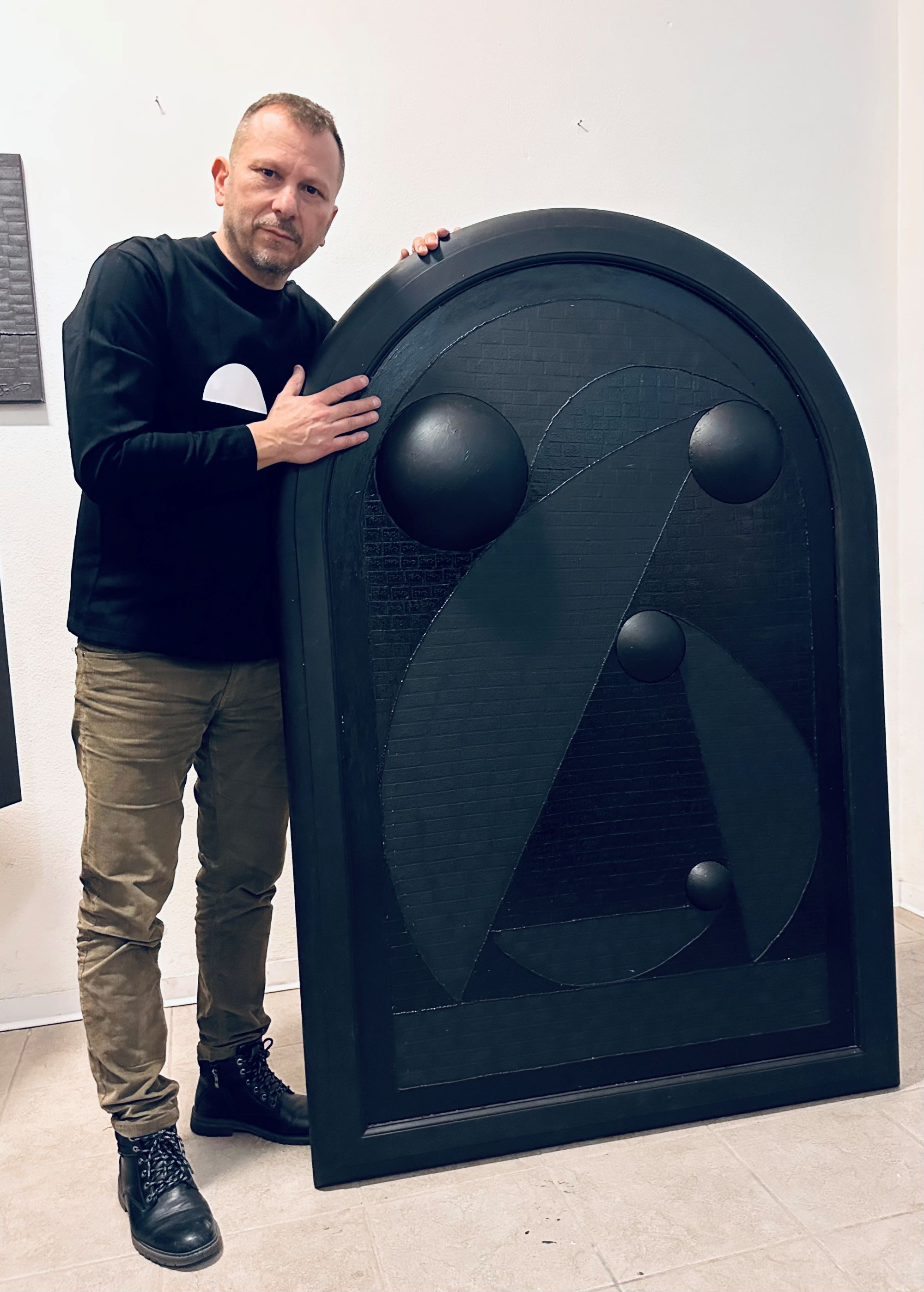
Art, ethics, and social research coexist in your practice. How important is it for contemporary artists to take responsibility toward society?
Artists cannot limit themselves to producing images. Every artwork communicates a vision of the world. I believe that today we have a responsibility to build bridges rather than walls, and to create opportunities for dialogue rather than exclusion.
If you had to describe your artistic research to someone encountering it for the first time, what would be the most accurate definition?
I would describe it as an invitation to discover that beauty does not belong only to the eyes. There is a form of beauty that can be perceived through touch, listening, sensitivity, and our encounters with others.
What message would you like to leave with the international audiences who visit your exhibitions?
I would like every visitor to leave with one conviction: diversity is not a limitation, but a possibility. When we learn to experience the world with our hands and our hearts as well, we discover that art can become a language capable of uniting humanity.
Maestro Jona, what message would you like to share with the people of New York, a city that has always welcomed cultures, languages, and artistic visions from around the world?
I would like to invite everyone to take the time to experience art differently. We live in a world that pushes us to look quickly, but I believe our hands can teach us to slow down. Through touch, we rediscover attention, respect, and our connection with others. If my works manage to convey this experience, even for a single moment, then they will have achieved their purpose.
di Antonella Gramigna