
There’s something oddly comforting about watching the vinyl resurgence happen in real time. We’ve collectively decided that convenience isn’t everything, that sometimes the ritual matters as much as the result. But while turntables have been getting their moment in the spotlight, another piece of audio history has been quietly staging its own comeback: the dedicated digital audio player.
Enter the DAP-1, a concept device from Frankfurt-based 3D artist and art director Florent Porta that asks a simple but compelling question: what if we took the best parts of portable audio’s past and reimagined them for today?
Designer: Florent Porta
Porta, who’s built a reputation creating everything from viral 3D animations to commercial work for brands like McDonald’s and Tuborg, recently unveiled this personal project after letting it sit unfinished for over a year. Sometimes the best ideas need time to breathe, and the DAP-1 feels like it benefited from that patience.
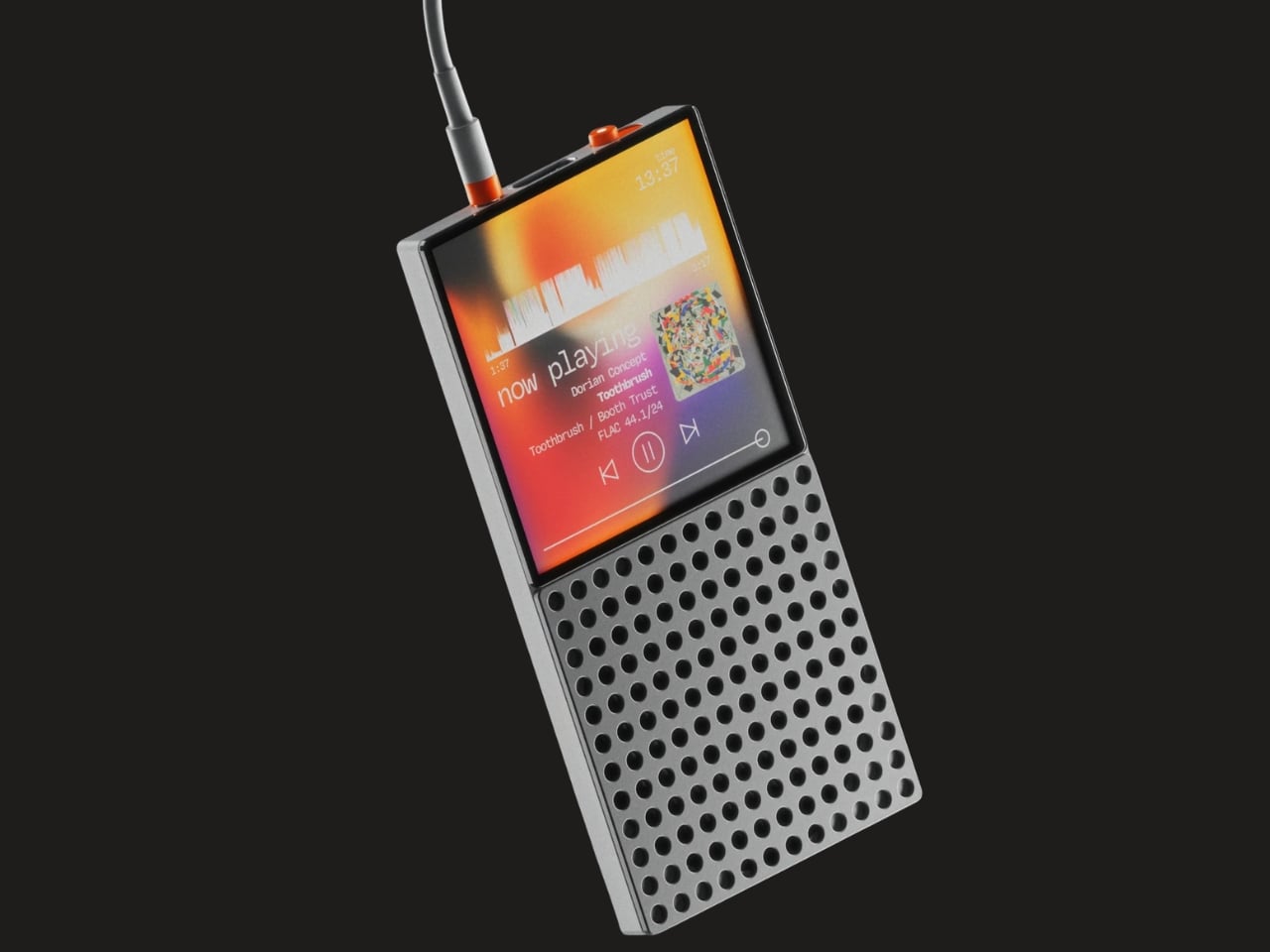
At first glance, the device looks like it could have been pulled from an alternate timeline where iPods evolved differently. There’s a clean, minimalist aesthetic that feels both retro and contemporary. The most striking feature is the OLED touchscreen, which gives the device a modern interface while maintaining the dedicated hardware approach that made original DAPs so appealing to audiophiles.
But here’s where it gets interesting: Porta included a built-in speaker. His parenthetical aside of “because why not” undersells what’s actually a clever design choice. Most high-end portable audio players skip integrated speakers entirely, assuming users will always have headphones or want to connect to external systems. The DAP-1 challenges that assumption. Sometimes you just want to share what you’re listening to without fumbling for a Bluetooth speaker or passing around earbuds.
The real substance of the DAP-1 lies in its commitment to high-resolution FLAC file playback. While streaming services have made music more accessible than ever, they’ve also created a generation of listeners who’ve never heard what their favorite songs actually sound like without compression artifacts. FLAC files, which preserve audio quality without the data loss of MP3s or streaming codecs, require dedicated hardware and storage. The DAP-1 embraces this limitation rather than trying to work around it.
This positions the device squarely in the current audio zeitgeist. Audiophiles have long argued that we lost something important in the transition from physical media to streaming, and they’re not entirely wrong. There’s a noticeable difference between a 320kbps Spotify stream and a lossless file, especially if you’re using decent headphones. The question is whether that difference matters enough to justify carrying a separate device.
For some listeners, the answer is becoming yes. The same impulse that drives people to buy vinyl despite its inconvenience applies here. There’s value in intentionality, in choosing to engage with music as an activity rather than ambient background noise. A dedicated audio player forces you to curate your library, to think about what you’re bringing with you rather than having infinite options at every moment.
What makes the DAP-1 particularly noteworthy as a concept is its timing. We’re seeing a broader cultural pushback against the smartphone-as-everything approach to technology. People are buying digital cameras again, rediscovering e-readers, and reconsidering whether having every tool in one device actually serves them well. The DAP-1 fits perfectly into this moment of technological reevaluation.
Of course, as a concept design, the DAP-1 exists primarily as a beautifully rendered 3D vision rather than a physical product you can actually purchase. Porta’s background in 3D animation and motion graphics means the device looks stunning in its presentation, with the kind of glossy perfection that concept renders do so well. Whether it will ever make the jump from screen to hand remains to be seen.
But that might not be the point. The best concept designs don’t just imagine new products; they spark conversations about what we actually want from our technology. The DAP-1 succeeds in asking whether we’ve given up something valuable in our rush toward convergence and convenience. It suggests that maybe, just maybe, there’s still room in our pockets and our lives for devices that do one thing exceptionally well rather than everything adequately. The DAP-1 proposes something quietly radical: focused, high-quality audio experiences on your own terms. That’s a concept worth tuning into.
The post A Digital Music Player with FLAC Files and a Built-In Speaker first appeared on Yanko Design.