
A Victorian Weatherboard Inspired By Fitzroy North’s Rich History
Architecture
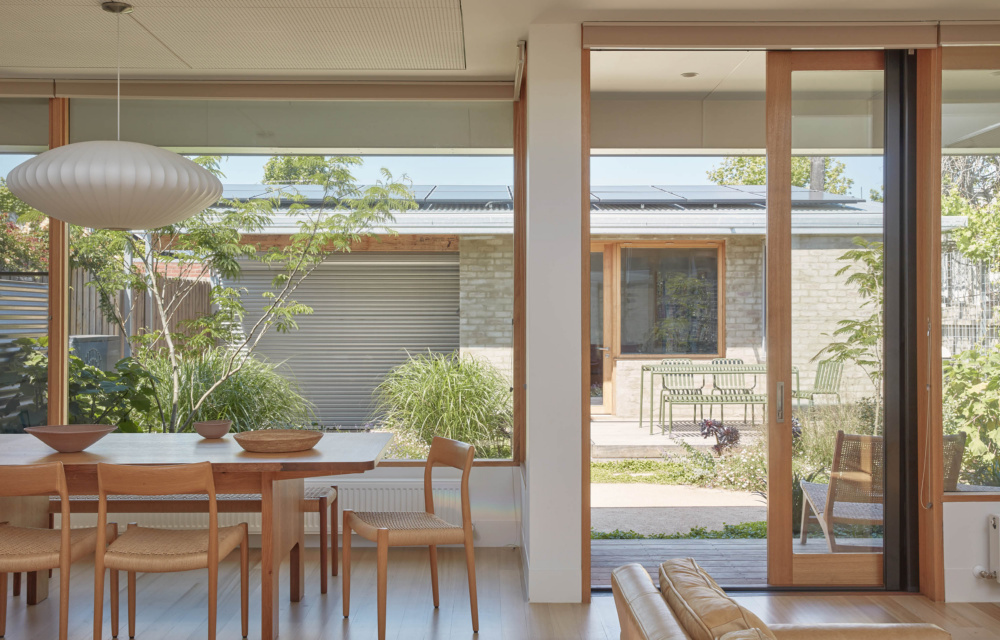
Inside Fitzroy North House by Pop Architecture.
Bar stool from Great Dane Furniture. Wire bowls and kettle from Pan After. Salt and pepper grinder from Design Stuff.
Vase from Pepite. ‘Copy Mechanical Water’ by Yasmin Hopkins, represented by Sutton Gallery. Dining chairs from Great Dane Furniture.
The kitchen is located in the new extension.
Coffee table from Great Dane Furniture. Vases from Pepite. Side table from Pan After.
The tiled floor of the genkan marks the quiet transition between old and new. Slippage by Robert Owen. Fish by MO.
Chair from Great Dane Furniture. Basket and wire bowl from Pan After. Mountain Devil Lizard by Kathleen Petyaree. Untitled artwork by Jan Billycan.
The terrazzo tiles offer a playful nod to the neighbourhood’s migrant history.
Where the sea finds the sky by Zoe Grey, represented by James Makin Gallery. Bad Mood Vases by Claybia Ceramics, Represented by CRAFT Victoria. Tiwi Islands sculptures by unknown artist.
The entryway features thoughtful storage for removing shoes and outerwear.
The garden separates the main house from the self-contained retreat at the rear.
The side entrance offers daily interaction with the gardens.
A large timber door leads to the genkan or foyer.
Pavers line the side path.
The original facade has been beautifully restored.
In many heritage renovations, the end goal is often absolute preservation and restoration.
But for Fitzroy North House, Pop Architecture’s clients weren’t interested in creating a direct replica of their Victorian weatherboard’s former glory — most of which was long gone, concealed by piecemeal post-war additions that weren’t suited to the site or climate.
‘The brief was simple: a sustainable, flexible home that felt calm, light, and comfortable year-round,’ Pop Architecture director Katherine Sainsbery says.
‘They prioritised quality of light, thermal performance, and connection to landscape, all within a modest footprint and sensible budget.’
This doesn’t mean heritage wasn’t an important consideration. In fact, since the owners had lived in Melbourne’s inner north for many years, they wanted their family home to speak even deeper to the diverse history of the suburb.
While the Victorian facade was carefully reinstated, the rest of the building was completely reworked. The three distinct forms — made up of the original house, a new extension, and a free-standing retreat at the rear — are each characterised by exaggerated corrugated zinc planes and inverted rooflines that maximise northern sunlight and solar panel efficiency.
A new side entry with a ‘genkan’ (a Japanese-style entry space) was also introduced, marking the threshold between the existing bedrooms at the front of the house and the new open-plan living zone.
‘The design acknowledges the layered history of the site; its foundations on unceded Wurundjeri land, colonial occupation, and post‑war migration. The project avoids nostalgic replication, instead proposing a more site and climate‑specific response,’ Katherine explains.
In addition to selecting robust materials that would age honestly over time, the palette was heavily driven by the setting.
Off-whites, greys, greens, and warm timbers reference the changing bark of a native yellow gum tree, as terrazzo and decorative wrought iron introduce subtle historical references.
Bagged recycled bricks, corrugated zinc and galvanised steel ensure the project’s reduced embodied carbon, while all-electric appliances, rainwater collection from the large eaves, and operable shading also help with energy efficiency.
Katherine says the biggest challenge was navigating the home’s heritage requirements, while still creating something meaningful that performed like a brand-new build.
‘The council’s heritage overlay dictated what stayed, but not how it could evolve,’ she notes.
‘We’re proud that it broadens the notion of “heritage,” embedding cultural and environmental awareness within a modest, everyday home.’
Sign up to The Design Files newsletter to get more inspiring features like this in your inbox.