
KAN series Explores Tactile Interaction and Bodily Awareness
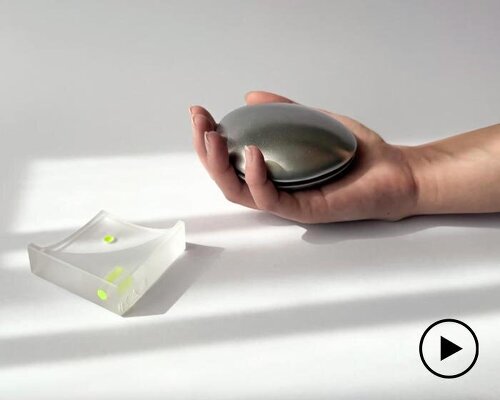
KAN is a series of three handheld objects by designer Amit Hadar that explores the relationship between material, body, and attention. Each piece is scaled to the palm and is designed to support simple actions such as holding, rotating, or resting. Through these interactions, the objects emphasize tactile awareness and physical engagement.
The project is structured around three moments: cooling, movement, and weight. These correspond to different modes of interaction, awakening, refocusing, and grounding, forming a sequence of use that unfolds through direct contact rather than prescribed function.
KAN proposes an approach to object design based on minimal interaction and material perception. By focusing on touch, movement, and physical presence, the series frames everyday gestures as a means of re-engaging with the body. The project is presented at the Isola Design District during Milan Design Week 2026.
all images courtesy of Amit Hadar
Cold Metal and Translucent Acrylic Guide Touch and Movement
KAN series’ material selection by designer Amit Hadar plays a central role in shaping the experience. The objects combine aluminum and semi-transparent acrylic, establishing a contrast between density and lightness. Aluminum introduces a cold, solid quality, while acrylic contributes visual permeability and reduced weight. Variations in texture, temperature, and mass generate distinct sensory responses across the three pieces.
The formal language is reduced to essential geometries, allowing interaction to emerge intuitively. Subtle neon accents indicate points of contact, rotation, or balance, guiding use without imposing fixed behavior.
the series is structured around cooling, movement, and weight
each piece is scaled to fit within the palm
cooling surfaces introduce an awakening tactile response
acrylic introduces lightness and partial transparency
three handheld objects explore the relationship between material and the body
interaction is defined through touch rather than function
each object corresponds to a distinct sensory condition
movement-based interaction supports focus and repetition
neon accents mark points of contact and movement
aluminum provides density and a cold surface quality
the objects invite simple actions such as holding and rotating
weighted forms create a sense of grounding
project info:
name: KAN
designer: Amit Hadar
presented at: Isola Design District, Milan Design Week 2026
designboom has received this project from our DIY submissions feature, where we welcome our readers to submit their own work for publication. see more project submissions from our readers here.
edited by: christina vergopoulou | designboom
The post aluminum and acrylic handheld objects frame touch, weight, and movement as design tools appeared first on designboom | architecture & design magazine.