
This industry perspective is by Scott McGuffie, creative director at HB.
Business-to-business marketing has a perception problem. Traditional expectations say that B2B campaigns must be rational and serious, while B2C are creative, emotional and fun. Think bright colors and bold statements, compared with neutral palettes and jargon-heavy copywriting.
Yet that distinction no longer reflects the world we live in or the people we’re trying to reach. It’s easy to see why it happens – people worry that by trying something new, they will seem less credible – but it limits the effectiveness of these B2B campaigns. Yes, brands need to build trust and show expertise, but they also need to be remembered.
The most effective B2B campaigns are those that are memorable. So, how can B2B be less dull, yet still impart expertise and authority?
Part of the problem is that the industry still sees business audiences as a different species. In reality, they’re consuming the same culture as everyone else – be it art, film, TV, or even advertising – but the work aimed at them rarely reflects that. You continuously see stock images of meetings, neat metaphors about growth, a city skyline, and slogans that any other company could easily use. The intention is to sound credible, but the effect is that everything blends together.
B2B needn’t mimic consumer advertising, but B2B brands should apply some of the tools – such as eye-catching design or memorable copywriting – that B2C brands use.
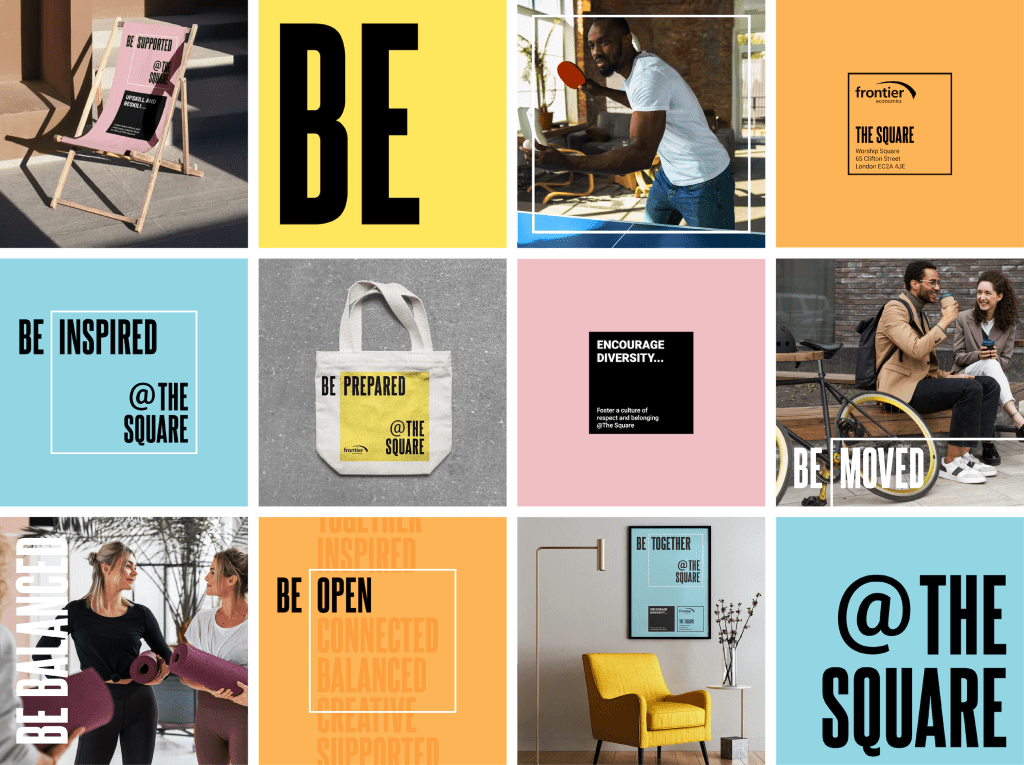
Frontier Economics campaign, HB
Human Tools are the Right Tools
The first step is to make people feel something. Emotion is what makes campaigns memorable. Roland DG’s 50 Shades of Ginger is a case in point: the campaign demonstrated its color accuracy through portraits of redheads and turned a technical benefit into a human story. The campaign worked because it evoked warmth without losing product credibility. Whereas a campaign like Workday’s Rock Stars of Business, which used famous musicians to challenge who the real ‘rock stars’ are at work and won the Grand Prix at The Drum Awards for B2B, demonstrates that humor can make something memorable.
The next tool is clear communication. Too many campaigns use overly complex language to signal expertise, when the most effective ideas convey purpose simply. Clarity and simplicity build trust because the intent is plain to see, rather than leaving people wondering if the brand is trying to confuse them with jargon.
Brand identity for Corinthia
Craft Can Be the Differentiator
Design matters more than many B2B brands realize. Enterprise marketing often treats design as information “window dressing” rather than as a tool for persuasion. However, the craft of how something looks, feels and sounds is what helps brands stand out in a crowded category – particularly if that category is a sea of sameness.
At a strategic level, brands can avoid creative stagnation by defining a driving idea that carries from strategy to execution. A strong driving idea acts as a north star for designers and marketers alike: it aligns everything from language and imagery to experience. It also helps overcome the subjectivity that so often derails B2B creative work. When everyone agrees on what the idea is meant to do, it’s easier to take creative risks with confidence.
None of this is about abandoning rigor. B2B will always be accountable to numbers, but it must recognize that attention is the first metric that matters. The difference is sequence: people remember what moves them. Campaigns that lead with emotion and story will still be viewed as trustworthy if they are done well. JCDecaux’s Meet Marina Prieto did this perfectly: the company filled Madrid’s empty metro posters with photos from a 100-year-old Instagram user. It created curiosity and conversation before revealing that it was an ad for outdoor media itself.
Newton brand activation, HB
The best B2B work today doesn’t look different for the sake of it; it feels relevant to the world around it. Whether through wit, humanity, storytelling, or design, great B2B work connects to the same sensibilities that drive consumer creativity, allowing B2B to show up in new spaces, such as entertainment streaming services, once considered only a B2C space. It proves that professionalism and imagination are not mutually exclusive.
The gap between B2B and B2C has narrowed, but a mindset gap remains. As brands compete for attention in the same digital spaces, the advantage will go to those willing to treat business audiences like people: intelligent, emotional and discerning. Creativity isn’t a luxury in B2B; it’s how you get remembered. In a market where every brand claims to be innovative, those that show it through design and storytelling will stand out and endure.
Scott McGuffie is Creative Director at HB, a global B2B-focused creative agency whose clients include PwC and Microsoft Advertising. His 30+ year career in brand design has spanned everything from Chewitts packaging and Pictionary cards to global rebrands for WWF and the RSPB. Having worked with various top creative agencies and with over 90 industry accolades under his belt, McGuffie delivers ideas, strategy, and design solutions to build businesses, empower organisations, and change world perception through creative.
Imagery courtesy of HB. Header image: HB’s work for Frontier Economics.
The post B2B Doesn’t Need to Be Dull appeared first on PRINT Magazine.