
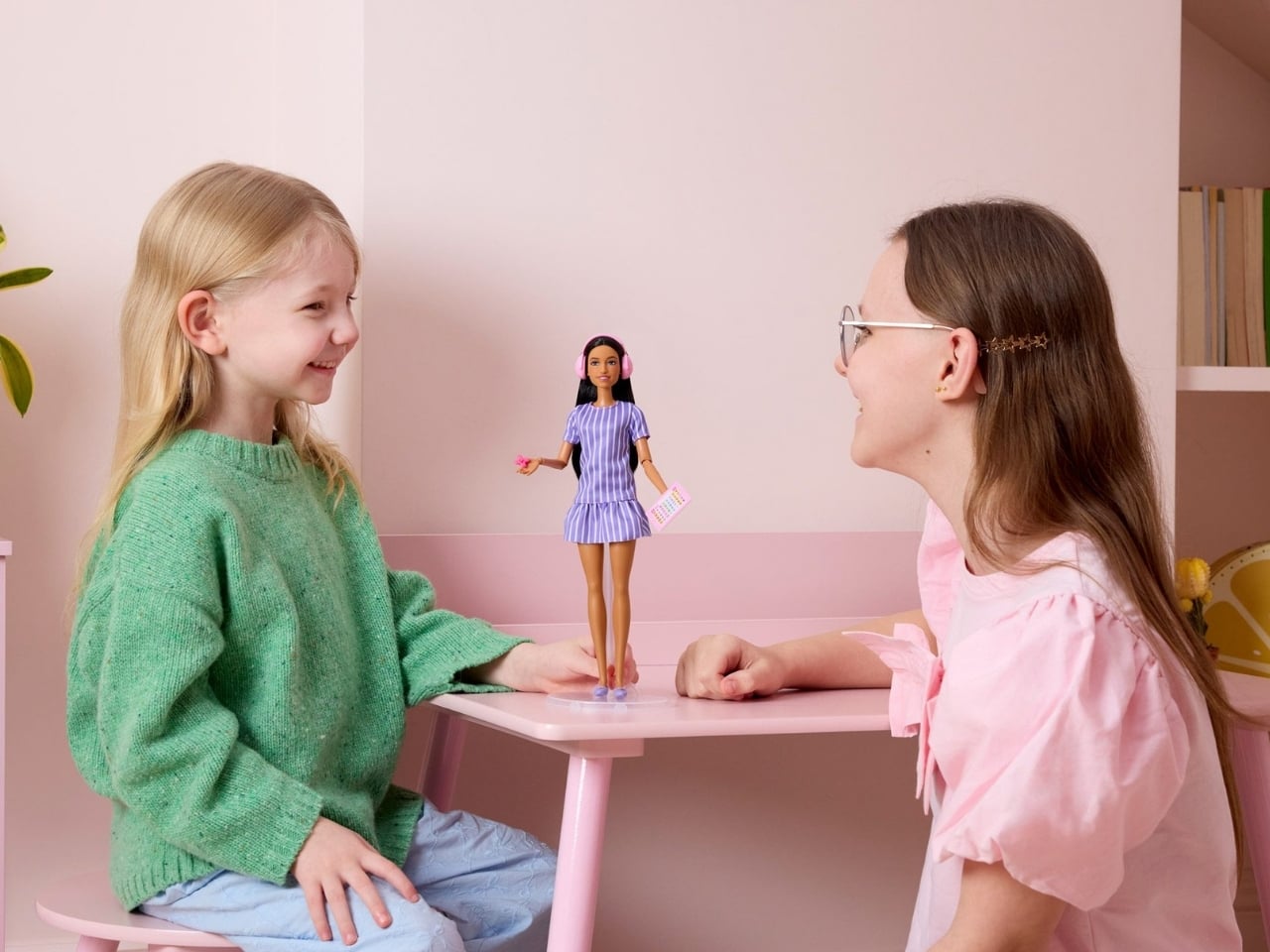
Sometimes the smallest design details can make the biggest statement. Mattel just dropped its first autistic Barbie, and honestly? It’s one of those moments that makes you realize how much power thoughtful design really has. This isn’t just about adding another doll to the lineup. It’s about fundamentally rethinking what representation looks like in the toy aisle and getting every tiny detail right.
The doll, which joins Barbie’s Fashionistas collection, took over 18 months to develop in partnership with the Autistic Self Advocacy Network, and you can tell. Every single design choice was intentional, from the way the doll’s eyes gaze slightly to the side (reflecting how some autistic people may avoid direct eye contact) to the articulated elbows and wrists that allow for stimming, hand flapping, and other movements that help some autistic individuals process sensory information or express excitement.
Designer: Mattel
Let’s talk about those accessories, because this is where Mattel really showed up. The doll comes with noise-canceling headphones in bright pink, a finger clip fidget spinner that actually spins, and a tablet displaying augmentative and alternative communication apps. These aren’t random props thrown in for fun. They’re tools that many autistic people rely on every day to navigate a world that isn’t always designed with their sensory needs in mind.
Even the clothing got the thoughtful treatment. The doll wears a loose-fitting purple pinstripe dress with short sleeves and a carefully designed skirt that reduces fabric-to-skin contact, paired with flat purple shoes. For anyone who’s experienced sensory sensitivities, this detail hits differently. It’s a recognition that comfort isn’t one-size-fits-all, and that design should accommodate different ways of experiencing the world.
Jamie Cygielman, Mattel’s Global Head of Dolls, explained that Barbie has always tried to reflect the world kids see and the possibilities they imagine. Working with the Autistic Self Advocacy Network helped expand what inclusion actually looks like beyond the usual box-checking exercise. This wasn’t about designing for autistic kids. It was about designing with the autistic community, and that distinction matters enormously.
What makes this launch even more significant is that it joins other inclusive Barbie dolls representing people with Type 1 diabetes, Down syndrome, and blindness. The Fashionistas collection now spans more than 175 diverse looks, body types, and representations of various medical conditions, proving that Mattel is committed to this beyond a one-off PR moment.
The response from the autistic community has been powerful. The executive director of the Autistic Self Advocacy Network emphasized how important it is for young autistic people to see authentic, joyful representations of themselves, and that’s exactly what this doll delivers. It’s not about making autism look cute or palatable. It’s about validation and visibility. Of course, there’s been some pushback along with the support, because internet, but the overwhelming sentiment seems to be one of appreciation for getting these details right. Research shows that representation in toys genuinely matters for how kids develop their sense of self and understand the world around them. When a child sees themselves reflected in their playthings, it sends a message that they belong, that their experience is valid, that they’re part of the story too.
Mattel is also donating more than 1,000 autistic Barbie dolls to pediatric hospitals that provide specialized services for children on the autism spectrum, which extends the impact beyond retail shelves and into spaces where kids might need that representation most. What strikes me about this whole launch is how it demonstrates that inclusive design doesn’t have to mean bland or boring. This doll is stylish, colorful, and fun while still being authentic. The pink accessories, the purple dress, the overall aesthetic is pure Barbie while the functionality and thoughtfulness honor the autistic experience. That balance is hard to achieve, but Mattel and ASAN nailed it.
The autistic Barbie is available now on Mattel Shop and at major retailers. Whether you’re a collector, a parent, or someone who appreciates good design that pushes culture forward, this one’s worth paying attention to. It’s proof that when brands take the time to listen, collaborate with communities, and sweat the details, they can create something that’s both culturally significant and genuinely delightful. And in a world that still has so much work to do around accessibility and inclusion, that feels like the kind of progress worth celebrating.
The post Barbie’s Autistic Doll Is a Design Masterclass in Inclusion first appeared on Yanko Design.