
Buddy portable mood lamps designed by Chevy Chanpaiboonrat
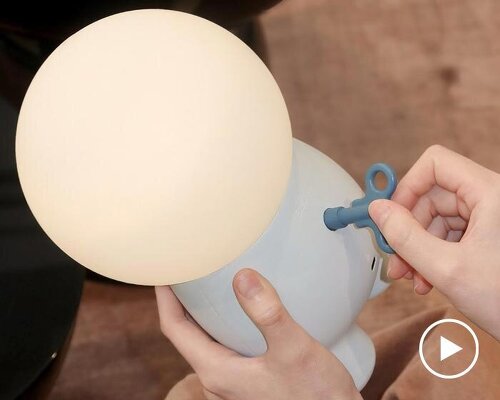
The Buddy portable mood lamps, designed by Chevy Chanpaiboonrat for Buddy Design, explore a physical approach to interaction in a product category increasingly dominated by digital interfaces. Instead of relying on applications or connected features, the lamps are operated through a single mechanical control: a winding key positioned at the back of the object.
In many contemporary products, interfaces aim to reduce friction through touchscreens, app-based controls, and automated settings. The design of the Buddy lamps takes a different direction. The product replaces digital interfaces with a tactile interaction intended to encourage a direct physical relationship between user and object. The lamp’s winding key functions as the primary interface. Rotating the key cycles through lighting modes, while pressing it adjusts brightness levels. Positioned at the rear of the lamp, where a tail might appear on an animal, the control also contributes to the visual character of the object.
The winding key is intentionally oversized relative to the lamp body, referencing the visual language of traditional wind-up toys. This proportion highlights the control element and encourages interaction through a clear and recognizable gesture. The design approach emphasizes simplicity and accessibility. By concentrating all functions in a single mechanical element, the lamp avoids additional interfaces such as apps, voice commands, or wireless connectivity. The result is a product that operates entirely through physical interaction, without the need for screens or external devices.
all images courtesy of Buddy design
Physical Gesture as Interface in a Screen-Saturated World
Maintaining a fully analog system was a deliberate decision by Buddy design studio, led by Chevy Chanpaiboonrat. Many contemporary lighting products incorporate app control, Bluetooth connectivity, or automated scheduling. The Buddy lamps omit these features in order to keep the interaction focused on the physical object itself. This approach aligns the functional interface with the product’s intended use as a portable mood light. The winding key allows users to control lighting through a simple, intuitive gesture without navigating digital menus or connected devices.
The Buddy lamp collection received the iF Design Award 2026 in the lighting category, selected from more than 10,000 international submissions. The project was developed by Chanpaiboonrat after graduating from Parsons School of Design, where the concept for the lamp’s tactile interface first emerged.
Buddy portable mood lamps are designed by Chevy Chanpaiboonrat for Buddy Design
the lamps explore a tactile alternative to digital product interfaces
the product operates entirely through analog interaction
the design encourages direct engagement with the object
a mechanical winding key replaces apps and touchscreen controls
the key is positioned at the back of the lamp body
the detail contributes to the lamp’s playful character
the control sits where a tail might appear on an animal-like form
Buddy lamps are intended for portable mood lighting
the product operates entirely through analog interaction
rotating the key cycles through different light modes
ahe lamps explore a tactile alternative to digital product interfaces
the lamps proportions reference traditional wind-up toys
project info:
name: Buddy portable mood lamps
designer: Buddy design – Chevy Chanpaiboonrat | @buddydesign.co
designboom has received this project from our DIY submissions feature, where we welcome our readers to submit their own work for publication. see more project submissions from our readers here.
edited by: christina vergopoulou | designboom
The post buddy portable mood lamp encourages interaction through a single wind-up key appeared first on designboom | architecture & design magazine.