
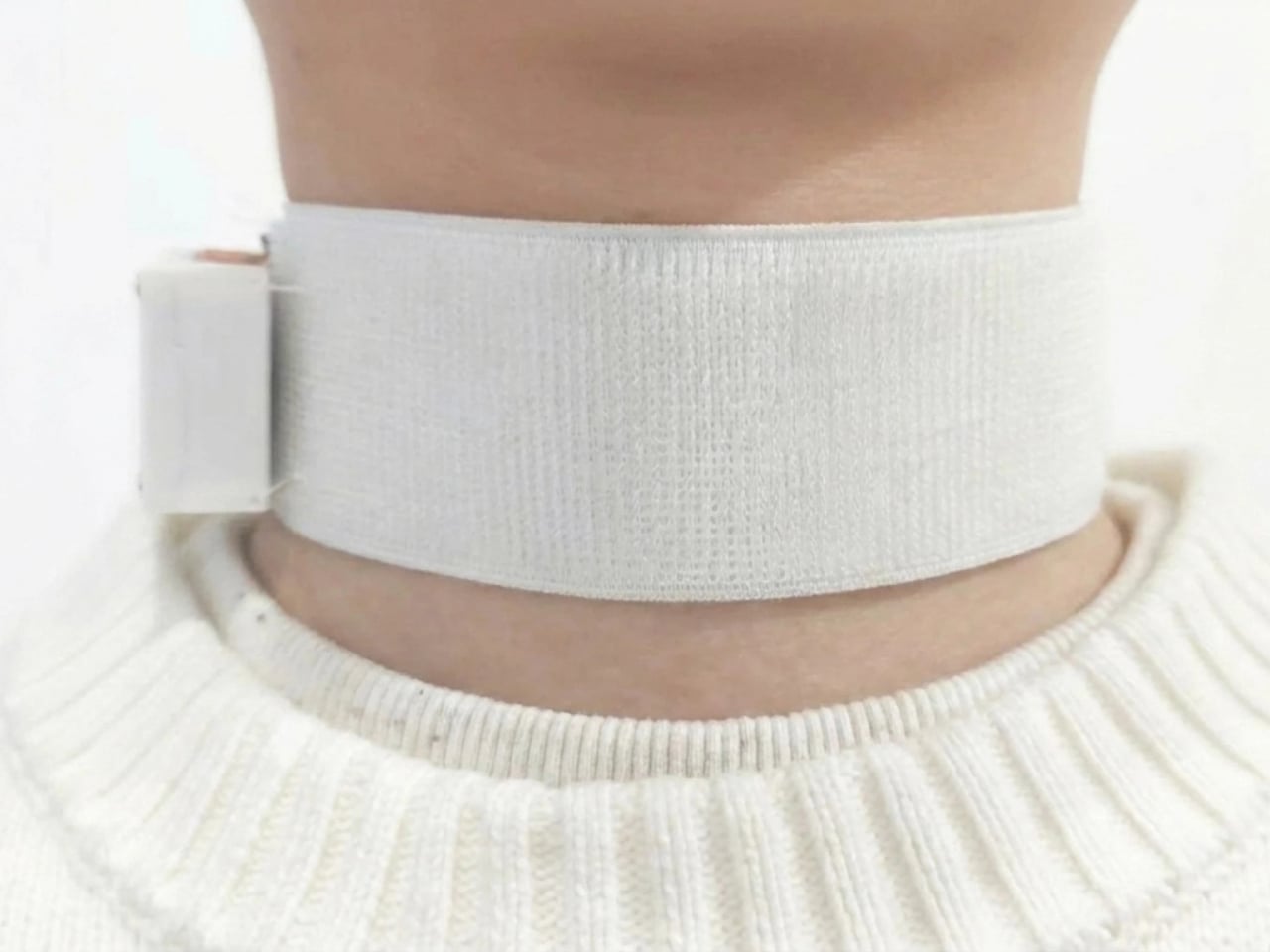
There’s something almost poetic about a piece of technology that looks like a fashion accessory but can fundamentally change someone’s life. That’s exactly what researchers at the University of Cambridge have created with Revoice, a soft, flexible choker that helps stroke survivors speak again.
Around 200,000 people in the U.S. experience speech difficulties after a stroke each year. Many lose the ability to form words clearly or struggle to express complete thoughts, a condition called dysarthria. For years, the options have been limited to speech therapy, typing on communication boards, or experimental brain implants that require surgery. Revoice offers something different: a wearable device you can put on like jewelry and throw in the wash when you’re done.
Designer: scientists from the University of Cambridge
What makes this device fascinating is how it works. The choker sits comfortably against your throat and does two things at once. First, it picks up the tiniest vibrations from your throat muscles when you mouth words, even if no sound comes out. Second, it tracks your heart rate, which gives clues about your emotional state, whether you’re frustrated, anxious, or calm.
These signals get sent to two AI systems working together. The first AI agent focuses on reconstructing what you’re trying to say based on those throat vibrations. It’s essentially reading the intention behind silent or partial speech. The second agent takes things further by expanding short phrases into full, natural sentences. So if you manage to mouth “need help,” the system might generate “I need help with something, can you come here?” complete with the right emotional tone based on your heart rate data.
Think about what this means. Instead of laboriously spelling out every word on a screen or pointing at pictures on a board, you can have fluid conversations again. Your family hears full sentences. You can express nuance and emotion, not just basic needs. The device aims to give people back something invaluable: their natural communication style. The technology builds on recent advances in AI and sensor miniaturization. These aren’t the bulky medical devices of the past. The choker is designed to be discreet and comfortable enough to wear all day. It’s washable, which means it fits into normal life without requiring special care or maintenance. You’re not announcing to everyone that you’re using assistive technology unless you want to.
What’s particularly clever is how the system learns. Current speech assistance tools often require extensive training periods where users must adapt to the technology’s limitations. Revoice flips this approach by using AI that can understand variations in how people try to speak. It works with what you can do rather than forcing you to work around what it can’t. The emotional intelligence aspect shouldn’t be overlooked either. When the device detects an elevated heart rate, it can adjust the tone of generated speech to reflect urgency or stress. This might seem like a small detail, but emotional expression is fundamental to human communication. Being able to convey that you’re upset or excited transforms a conversation from transactional to genuinely human.
Right now, Revoice is still in development and will need more extensive clinical trials before it reaches the market. The research team published their findings in the journal Nature Communications. They’re also planning to expand the system to support multiple languages and a wider range of emotional expressions, which would make it accessible to diverse populations worldwide. For the design and tech communities, Revoice represents a perfect intersection of form, function, and empathy. It’s a reminder that the best innovations don’t just solve problems technically, they solve them in ways that respect dignity and daily life. No surgery, no stigma, just a well-designed tool that helps people communicate.
The post Cambridge Just Designed the Voice Device Every Stroke Survivor Wanted first appeared on Yanko Design.