
STUDIO FOR NEW REALITIES REDESIGN PUBLIC PLAYSPACE
Studio for New Realities shapes the new lakeside playground pavilion for Plaswijckpark in Rotterdam, the Netherlands, as an all-season destination that combines play, learning, and experimentation. It also restores a direct relationship between the park and the waterfront. During the design process, children help shape the project by voting for their favourite play equipment, contributing to a building that supports every kind of activity: playing, creating, eating, concentrating, and experimenting. The new space replaces a former theatre and restaurant complex with a multifunctional space that reconnects the historic family park to the Bergse Achterplas.
Alongside the main pavilion, the studio designs a second, entirely open structure as its ‘little brother.’ This lightweight building provides a covered playground throughout the year. In winter, it operates as an ice rink served by the pavilion’s catering facilities. In summer, it becomes a shaded play area and event space. During spring and autumn showers, it offers a dry and sheltered refuge. A central fireplace, lighting, and enriched surrounding landscape transform this structure into a welcoming gathering point in every season.
all images Jorn van Eck
PAVILION CREATES INDOOR-OUTDOOR SYNERGIES IN ROTTERDAM PARK
After a fire destroys the park theatre in 2021, the organisation initiates plans for a new building: the pavilion. The project sets out to create an inviting indoor environment for play, learning, and experimentation that functions in every season and restores a strong relationship between the park and the waterfront. Studio for New Realities integrate the outdoor area as a fundamental part of the project, extending the experience of play beyond the building envelope. The pavilion also creates programmatic synergy by incorporating functions from the former freestanding restaurant and seasonal ice rink into a single coherent structure. Contextual integration forms a key principle for the pavilion. With its realisation, Plaswijckpark reconnects physically and visually with the lake, improves internal routing, and adds a new nature zone alongside the existing play, animal, and park zones.
the area around the pavilion opens up into a terrace and a forecourt
three volumes brought together on lakeshore
Rather than treating the pavilion as one large object, the architects divide the required volume into smaller elements that align in scale with other buildings in the park and along the water. The design relies on low-technical solutions and durable, timeless materials that blend naturally into the green shoreline. New trees and a carefully shaped natural embankment reinforce the calm character of the site. The pavilion acts as an anchor on the lakeside, while adjusted pathways establish a more logical connection between the different areas of the park. Toward the park, the building opens into an active forecourt and terrace that welcome families and encourage gathering.
A single expressive roof structure reminiscent of a tent brings together the separate volumes. This light and folded roof continues the tradition of existing park pavilions while creating a seamless transition between indoor and outdoor spaces. The largest volumes, containing the playscape and restaurant, remain as transparent as possible to preserve open views to the lake. Generous windows, multiple doors, overhangs, and carefully placed roof openings strengthen the relationship with the surrounding landscape and allow visitors to experience changing light, weather, and seasons. Roof terraces on the first floor connect studio rooms directly to the outdoors and overlook both the park and a hidden play area. More enclosed volumes house back-of-house functions and feature carefully considered materials, such as timber facades with open joints that continue from exterior to interior and a maroon-coloured zinc roof that harmonizes with the natural setting.
large curtain walls bring the qualities of the park indoors, with seating areas all around
building in plaswijckpark reinvigorates landscape
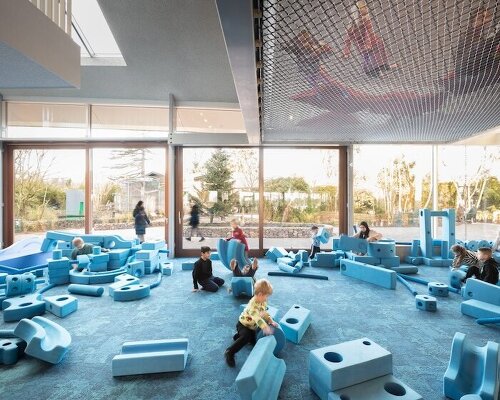
The architects follow a usage-driven approach and design the building to facilitate and stimulate use by children and their families. Inside, playful and creative ‘activators’ shape the experience. These include an oversized stair-landing that functions as an open studio, tiered seating steps, strategically placed skylights and windows that frame specific views, a sensory nook, a book wall, a chill net, and numerous informal seating areas. These elements activate movement through the building, enhance the experience of weather and daylight, and organize the interior in an intuitive way.
The concept treats the building as a lively ‘usage machine’: a collection of diverse spaces with distinct atmospheres, strong indoor–outdoor connections, and architectural elements that actively encourage exploration. The studio organizes the pavilion as a sequence of flexible and specific spaces, including large open areas for communal use, smaller enclosed rooms for groups, and dedicated workshop and craft zones. The design allows the building to host a wide variety of activities that change with the seasons.
seasonal ice rink in the covered playground
the burning down of the theater in 2021 prompted the idea of a new pavilion
a strong indoor-outdoor connection
large voids and a play net create a sense of interaction with the floor above
strategically placed skylights and windows frame specific views
the balcony connects the inside and outside, as terrace sections and planters continue indoors
volumes provide both intimacy and generosity, surrounded by grand windows that provide a soothing outdoor feel
interior elements and openings are ‘activators’ that invite exploration and active use
ground floor plan
project info:
name: Plaswijckpark Pavilion
architects: Studio for New Realities
location: Rotterdam, Netherlands
designboom has received this project from our DIY submissions feature, where we welcome our readers to submit their own work for publication. see more project submissions from our readers here.
edited by: claire brodka | designboom
The post children help redesign rotterdam playground with large playnet and all-blue adventure scape appeared first on designboom | architecture & design magazine.