
Pablo Luna Studio organizes bamboo arches around stepped roof
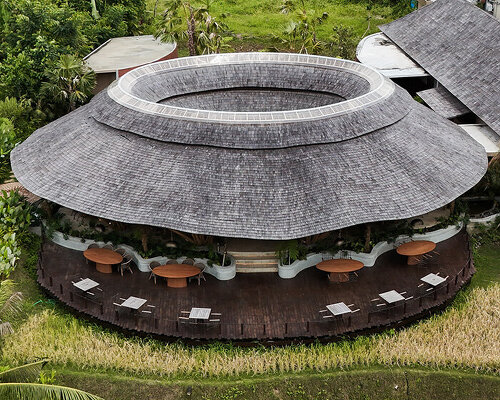
Juna Ubud Restaurant is a bamboo-built dining space by Pablo Luna Studio, set along Jalan Arjuna in Ubud, Bali. Sitting on an elevated plot overlooking a river and rice fields to the west, the project uses a circular plan, vernacular construction knowledge, and passive environmental strategies to shape a restaurant that is as much about climate, structure, and craft as it is about food.
The primary structure is made of bamboo, organized through a combination of arches and an A-frame system that defines the enclosure. This structural logic supports the stepped roof, which directs rainwater to a central point while remaining visually light. A skylight made from SolarTuff panels sits on a steel frame, finished to blend with the bamboo structure and provide a watertight surface. Above, the roof is clad in ulin wood shingles, crafted by local artisans.
all images courtesy of Pablo Luna Studio
juna features circular plan and passive climate logic
At the center of the project by Pablo Luna Studio is a circular layout that establishes a clear human scale within a built-up area. This geometry creates an internal opening through which light and air enter the structure, offering what the Bali-based architects describe as a central relief. The decision to avoid a single roof apex is critical here. A converging roof would have required excessive height and risked enclosing the interior. Instead, the roof steps inward and vents toward the center, maintaining openness at eye level while still managing structure, climate, and rainwater. The architects arrange the dining spaces to frame internal views while opening outward toward the river valley, drawing the surrounding greenery into everyday experience. This dual orientation allows the restaurant to feel both contained and expansive, balancing intimacy with openness. The west-facing outlook becomes part of the spatial sequence, turning landscape into an active backdrop rather than a distant view.
Environmental performance is driven by passive design rather than mechanical dependence. An open plan and ventilated roof gap encourage continuous airflow, allowing hot air to escape naturally. The inner courtyard enhances daylight penetration and supports cross-ventilation across the dining spaces. A central pond, dense planting, and controlled air inlets work together to moderate heat and improve thermal comfort, reinforcing the building’s reliance on natural cooling methods suited to Bali’s climate. Water management is also handled on-site. A deep well supplies water, which is stored in elevated tanks to enable gravity-fed distribution. This system reduces the need for pumping and integrates basic infrastructure into the building’s overall environmental strategy.
Juna Ubud Restaurant set within Ubud’s residential landscape
interiors shaped by use and vernacular intelligence
Inside Juna Ubud Restaurant, large openings maintain visual and physical continuity with the outdoors. The layout of the kitchen, bar, and dining areas was developed in close coordination with restaurant operations for proximity and interaction.
Throughout the project, vernacular construction practices inform details, joints, and roof craftsmanship, without being treated as nostalgic references. Instead, they are reinterpreted through contemporary bamboo architecture, allowing traditional knowledge to respond to current needs for sustainability, durability, and comfort. Pablo Luna Studio delivers a restaurant rooted in place while addressing broader questions of material use, passive performance, and human scale in tropical architecture.
the stepped roof geometry directs rainwater inward
the bamboo structure remains exposed along the perimeter
interior dining areas unfold beneath the arched bamboo framework
an internal opening brings daylight into the dining space
a central pond anchors the circular plan
the stepped bamboo roof overhang shades the perimeter walkways and dining areas
a central bar sits beneath the bamboo arches
arched bamboo elements frame views between interior spaces and planted courtyards
at night, the bamboo structure becomes a warm, porous enclosure
bamboo arches support the roof structure
project info:
name: Juna Ubud Restaurant
architect: Pablo Luna Studio | @pablolunastudio
location: Ubud, Bali, Indonesia
gross built area: 338 square meters
interior design: Sekar Kencana
structural engineer: Dewa Aditya (DW Plan Consultant)
architecture team: Adhi Guna, Eka Wiradana, Dolores Giribone, Yusron Saputra, Janni Aulina, Raditya Manggala, Krisnantara Putra, Rizqi Suganda
photographer: Pablo Luna Studio
The post circular bamboo roof collects rainwater at balinese restaurant by pablo luna studio appeared first on designboom | architecture & design magazine.