
Some plastics never get recycled, no matter how much you sort them. Fishing nets, buoys, agricultural films, and multilayer snack packaging are too dirty or too mixed for normal recycling systems, so they end up burned or buried. Meanwhile, we keep pouring concrete into retaining walls and bases, even though concrete production is heavy on CO₂ and performs poorly under tension when soil shifts or water builds up behind a wall.
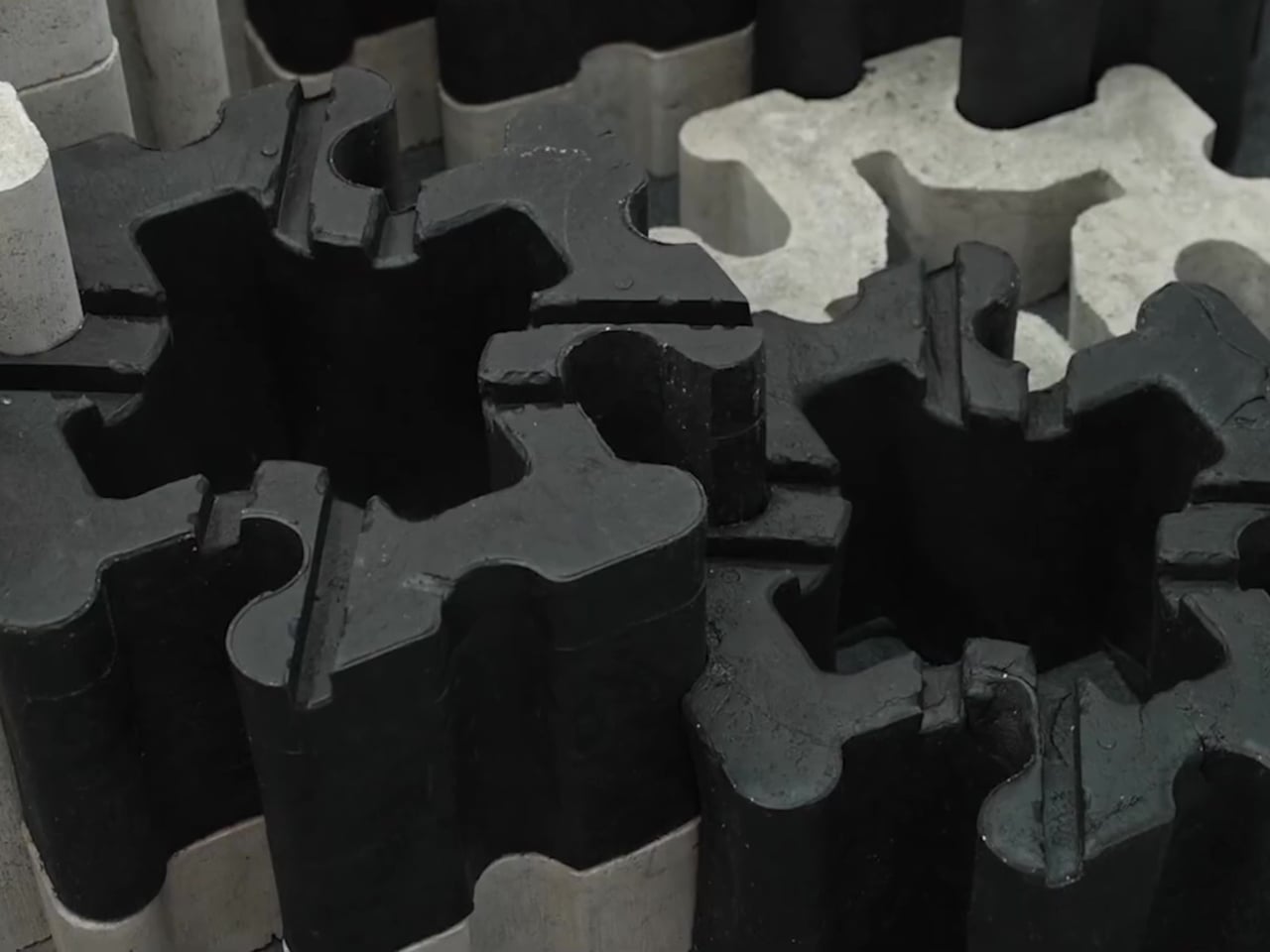
Eco-C CUBE treats those two problems as one solution. Developed by WES-Tec Global and the Korea Low Impact Development Association, it turns hard-to-recycle mixed plastic waste into a structural block for civil infrastructure. The New-Cycling process melts fishing nets, buoys, and film waste at low temperature without sorting or washing, then extrudes the material directly into three-dimensional interlocking blocks designed to hold back hillsides, stabilize slopes, and form solar panel bases.
Designer: WES-Tec Global
Picture a discarded fishing net or multilayer wrapper that normally has no second life. Instead of being shredded, washed, and downgraded into pellets, it goes straight into a controlled low-temperature extruder that preserves the polymer structure. What comes out is a dense, high-strength block with better tensile and compressive performance than concrete, which is what you want in a retaining wall trying to hold back a hillside after heavy rain or freeze-thaw cycles.
The three-dimensional interlocking design lets crews stack the blocks into buttress-style or box-style retaining walls without cement or adhesives. Gravity and geometry keep everything stable, which means faster installation, easier disassembly if something needs repair, and built-in drainage through hollow channels so water does not accumulate pressure behind the wall. That drainage feature also makes the blocks compatible with low-impact development strategies that manage stormwater on site.
Each kilogram of Eco-C CUBE reduces about 2.99 g of CO₂ compared to business as usual, verified by Life Cycle Assessment through the SDX Foundation. That reduction comes from avoiding incineration, skipping energy-intensive washing and sorting, and replacing concrete. Because the blocks use waste collected through extended producer responsibility systems, they plug directly into existing collection networks instead of requiring new infrastructure to gather and transport material.
A coastal town shoring up eroding slopes could use these blocks instead of pouring concrete, cutting carbon while handling weight and drainage. Solar farms needing stable panel bases that do not leach heavy metals can be built with Eco-C CUBE instead of traditional footings. To most people, these installations will just look like dark modular blocks, but underneath, they are turning plastic that would otherwise drift in oceans or burn in incinerators into long-term structural work.
Eco-C CUBE does not chase perfect purity or pretend mixed plastics can return to virgin resin. It accepts the messiness and turns it into something structurally useful. For designers and engineers, that shift from trying to eliminate waste to actually building with it might be the more interesting part, treating the worst materials we generate as a feedstock instead of an endpoint.
The post Fishing Nets and Snack Wrappers Just Became Retaining Wall Blocks first appeared on Yanko Design.