
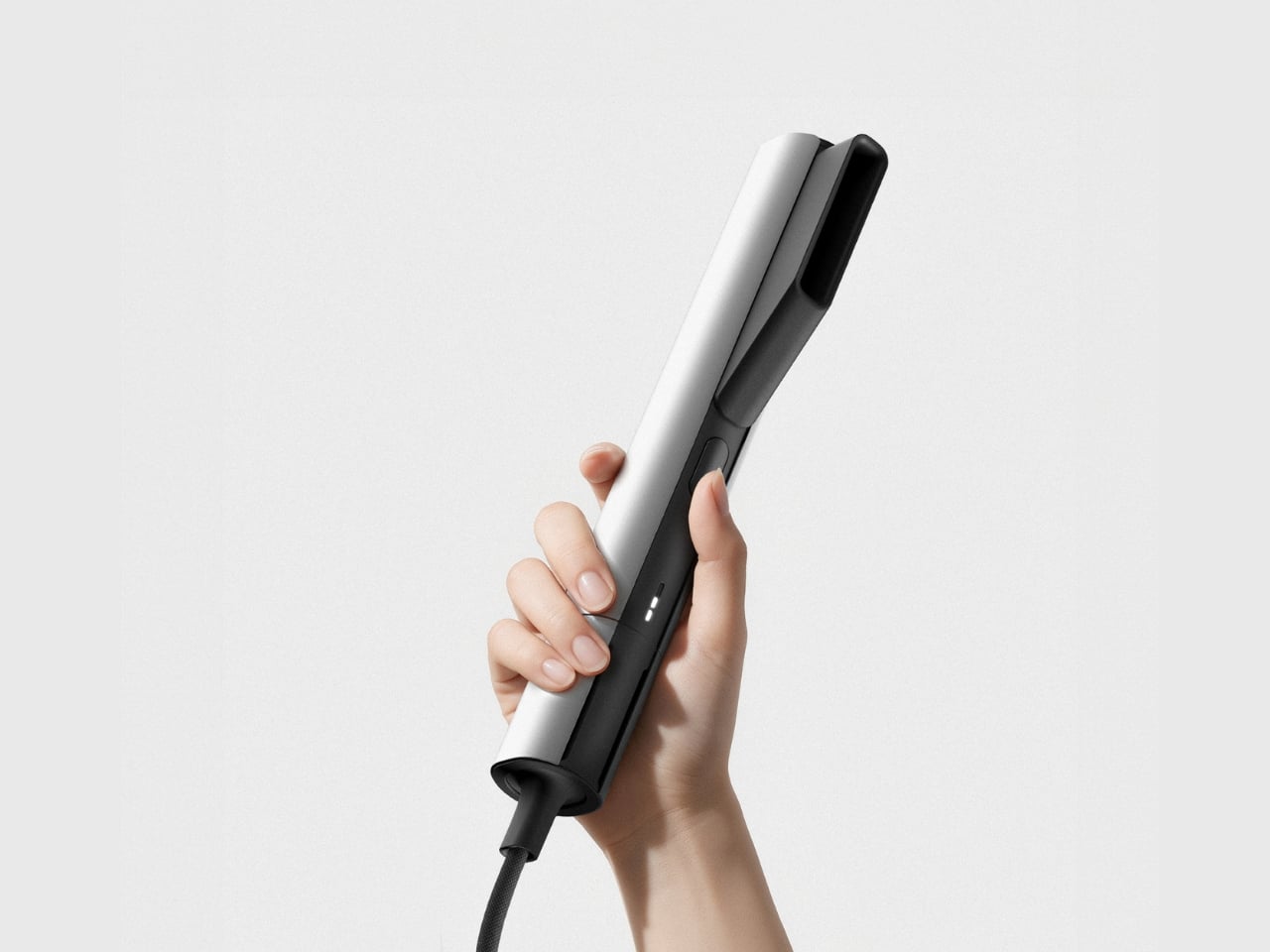
There’s something refreshing about a hair tool that doesn’t try to hide what it is. FloX, designed by Hyeokin Kwon, sits comfortably at the intersection of industrial design and everyday beauty routine, looking more like a precision instrument than another pink gadget drowning in curved plastic. It’s the kind of product that makes you stop and think about why we’ve accepted mediocre design in our bathrooms for so long.
At first glance, FloX reads as almost severe in its minimalism. The body splits into two distinct halves: a cool silver exterior paired with matte black accents that house the business end of the tool. This isn’t decorative contrast for the sake of looking expensive. The two-tone design actually signals function, showing you exactly where to grip and where the heat lives. It’s honest design that respects your intelligence.
Designer: Hyeokin Kwon
What really sets FloX apart lives inside that sleek body. Kwon has integrated 13 aluminum fan blades powered by a BLDC motor, the same type of brushless technology you’d find in electric vehicles or high-end drones. This isn’t just spec sheet bragging. Those fans actively cool the device while you’re using it, addressing one of the most annoying aspects of hair styling tools: the fact that they get uncomfortably hot to hold and can turn your bathroom into a sauna.
The technical sophistication continues with the temperature indicator system. Instead of a clunky digital display or vague heat settings, FloX uses a subtle LED strip that glows orange for hot and blue for cool. It’s intuitive without being childish, giving you the information you need without cluttering the design. The indicator sits flush with the body, maintaining those clean lines even when the device is active.
Look at the head of the tool and you’ll see Kwon has rethought the traditional straightener form. The plates have a gentle taper rather than being perfectly parallel, which means you can create straight styles or loose waves without needing a separate curling iron. It’s versatility built into the geometry itself, not added as an afterthought with a bunch of attachments you’ll lose within a month.
The ergonomics deserve attention too. FloX has this balanced weight distribution that makes it comfortable to hold at different angles, which matters more than you’d think when you’re working on the back of your head or trying to get volume at the roots. The grip area has a subtle texture that keeps the tool secure in your hand without resorting to rubberized grips that inevitably get grimy or sticky over time.
What strikes me most about FloX is how it treats hair styling as a legitimate design challenge rather than a frivolous women’s product that doesn’t deserve serious engineering. The hair tool market has been stuck in a pattern of adding more colors, more “technology” buzzwords, and more unnecessary features while ignoring fundamental issues like overheating, poor weight balance, and cluttered interfaces. Kwon strips all that away and focuses on what actually matters: precision heating, active cooling, and a form that makes sense for how people actually use these tools.
The monochromatic photography in the design presentation reinforces this approach. By removing color from the context, Kwon forces you to look at form, shadow, and proportion. It’s a confident move that shows the design can stand on sculptural merit alone. You could display this on a shelf next to a nice speaker or a piece of modern furniture and it wouldn’t look out of place.
This is industrial design thinking applied to personal care, and it points toward a more interesting future for everyday objects. When designers stop assuming that products for styling, beauty, or self-care need to be softened or feminized or hidden away, they can create tools that are genuinely better. FloX proves that a hair straightener can be as thoughtfully designed as a smartphone or a coffee maker, with the same attention to materials, mechanics, and user experience.
Whether FloX makes it to production remains to be seen, but as a design statement, it’s already succeeded. It challenges both the industry to do better and consumers to expect more from the objects they use every day. Sometimes the most radical thing a product can do is simply be well designed without apology.
The post FloX: The Hair Tool That Thinks Like a Tech Product first appeared on Yanko Design.