
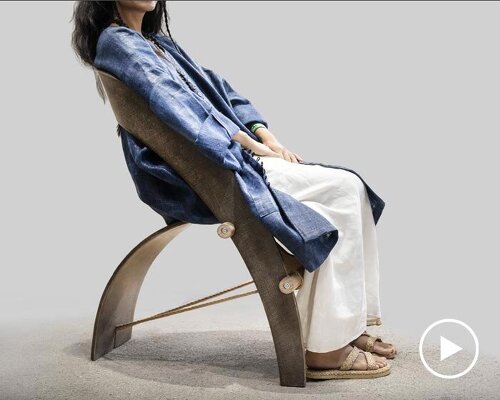
hemp and pineapple-leaf composites form a lightweight chair
Hemp Chair, developed in Thailand by Veronica Olariu, is a seating prototype that explores structural balance through plant-based materials and lightweight construction. The project combines hemp fabric with a pineapple-leaf fiber composite to create a system where stability is achieved through counterbalance and tension rather than mass. The chair supports two modes of use, upright and reclined, while its curved shells guide the alignment of the body.
The chair is constructed from renewable fibers and agricultural by-products. The seat shells are formed from a bio-composite consisting of layered hemp fabric and a core made from pineapple-leaf felt. This material was developed in collaboration with material engineer Dr. Jariyavadee Sirichantra, using pineapple leaves, a by-product of Thailand’s agricultural industry, as a structural component.
The shells are produced using resin transfer molding (RTM), a closed-mold process that enables controlled fiber saturation and consistent structural performance. This method also reduces material waste and limits emissions during fabrication. The current prototype uses epoxy resin, with ongoing development aimed at transitioning to fully bio-based resin systems.
all images courtesy of Veronica Olariu
Balance replaces mass in hemp chair, formed by rope tension
The chair’s structure is based on a system of counterbalance and tension. A hemp rope spans between slender wooden supports, holding the composite shells in equilibrium. This approach allows the structure to remain lightweight while maintaining stability, with all structural relationships visibly expressed. The design emphasizes legibility, allowing the interaction between tension and balance to remain evident rather than concealed within the object.
The seating is defined by two curved shells that support different postures. Rather than functioning as a soft lounge chair, the design engages the body through its geometry, encouraging an active sitting position. The form elongates the spine and distributes weight through the tensioned system.
The project continues the designer’s exploration of structural balance using renewable materials and composite fabrication techniques. The combination of hemp composite elements and slender wooden rods draws on principles associated with weaving, where tension and alignment define structure. Hemp Chair is set to be presented during Milan Design Week 2026 as part of the No Space for Waste exhibition at the Isola Design Festival.
the chair’s profile reveals the visible counterbalanced system holding the composite shells in equilibrium
hemp-composite shells, a pineapple-leaf fiber core, and slender wood supports are balanced with a tensioned rope
a structural system built on the relationship between the composite shells, wooden elements, and tensioned rope
counterbalance and tension define a lightweight structural system in hemp chair
the calibrated tension system holds the composite shells in equilibrium
the connection between bio-based composite shells, rope tension, and wooden elements
balance replaces mass in a chair structured through rope tension and curved forms
renewable fibers and composite molding techniques structure a tension-based chair
an interplay of tension and counterbalance informs a lightweight seating system
project info:
name: A Study in Counterbalance — Hemp Chair
designer: Veronica Olariu | @veronica_olariu
designboom has received this project from our DIY submissions feature, where we welcome our readers to submit their own work for publication. see more project submissions from our readers here.
edited by: christina vergopoulou | designboom
The post hemp fabric and pineapple-leaf fiber composite form a chair built on balance and tension appeared first on designboom | architecture & design magazine.