
Decomposition needs three things: moisture, airflow, and temperature, and those are hard to balance in an apartment. Most food waste ends up in landfills instead, where it generates methane and long-term damage. The wave of countertop composters mostly grind and dry scraps, reducing volume but not really closing the loop in a biological sense. They turn food waste into inert crumbs, not soil you can actually use in a garden or planter.
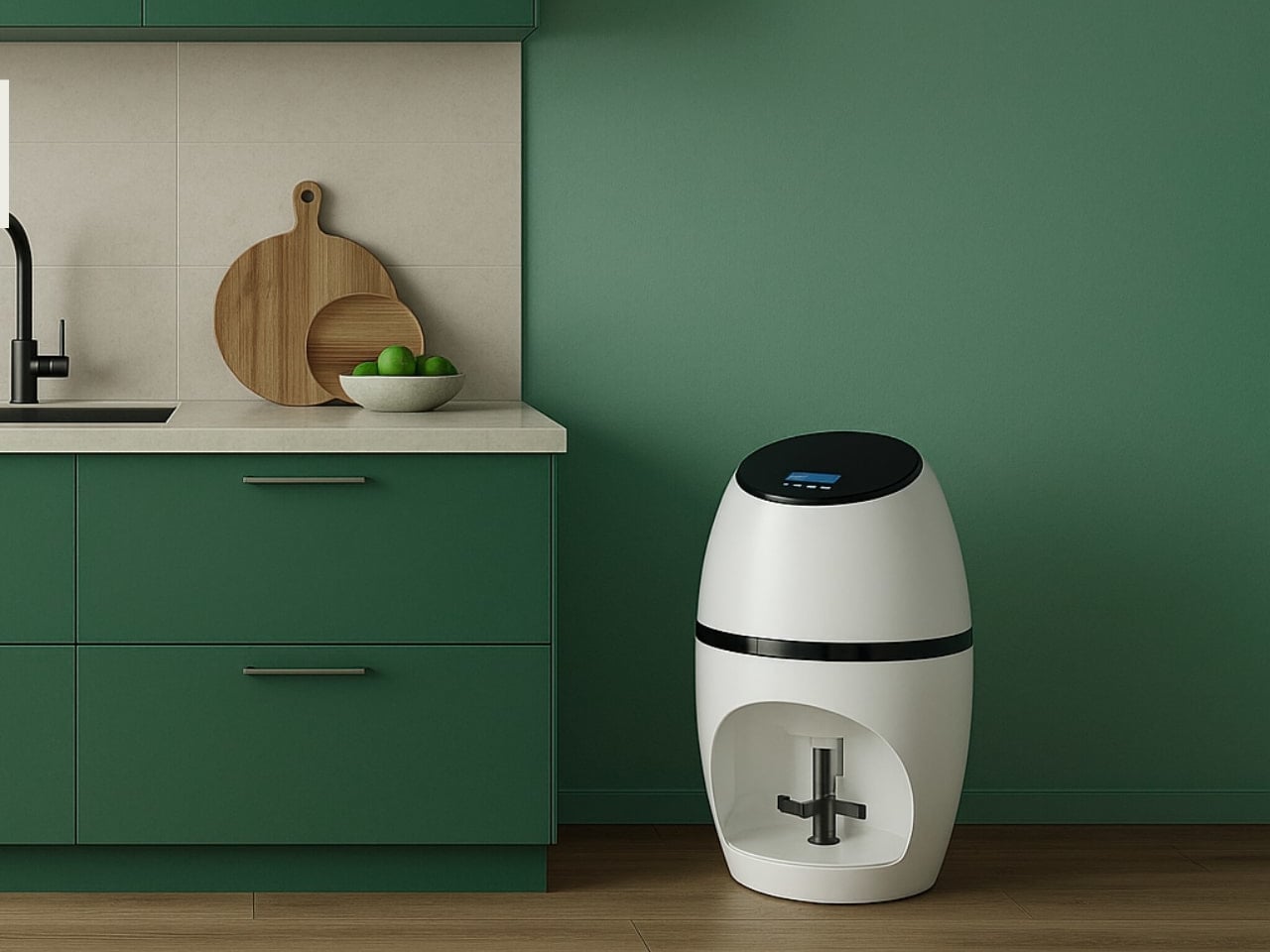
Vith is a compact, two-stage electric composter designed specifically for homes. It quietly shreds, dries, and then cures organic waste into usable compost in about two weeks, instead of just turning it into dehydrated flakes. The idea is to bring something closer to real composting into a kitchen-friendly appliance, so circular living does not require a backyard or a dedicated bin on a balcony that annoys the neighbors and attracts flies.
Designer: Chandra Vasudev
The journey starts in the upper processing chamber, the shredding bin, where fresh food waste is reduced to smaller, uniform particles and gently dehydrated. Reducing the size increases surface area for microbes later, and removing excess moisture creates a stable input that will not swamp the system. This preparation step means that what drops into the next stage is already optimized for decomposition instead of being a random mix of peels and leftovers with wildly different water content.
The lower chamber, the curing bin, is where composting actually happens in the mesophilic range. Microbial cultures are introduced along with a fine, controlled spray of water to dial in moisture. Rather than actively heating the system, the chamber holds onto the heat naturally generated by microbial activity, letting the biology do the work with minimal energy input while the appliance simply maintains the right conditions in the background.
Integrated sensors continuously monitor moisture, airflow, and temperature, adjusting as needed so users do not have to babysit the process. Every two or three days, the curing chamber gently churns the material, preventing anaerobic pockets and keeping oxygen distributed. Vith stays powered on, but only draws significant energy during active phases like shredding and periodic mixing, keeping consumption low while still delivering consistent results that smell like earth instead of rotting fruit.
The result is usable compost in roughly two weeks, which is fast compared to passive bins but slow enough to be real biology, not just a high-heat drying cycle. The output can go into houseplants, balcony gardens, or community plots, turning what would have been trash into a resource. For an urban kitchen, that predictability and cleanliness are what make the habit stick instead of becoming another abandoned gadget.
Vith fits into daily routines by sitting quietly in a corner of the kitchen, taking in scraps, and giving back soil. By combining mechanical preparation, mesophilic processing, and intelligent control, it makes composting feel like running a dishwasher rather than managing a science project. It is a small but meaningful way to close the loop on food waste without needing more space than a modern apartment can spare, turning composting from a chore you feel guilty about skipping into something that just happens while you sleep.
The post Home Composter Concept Makes Real Soil in 2 Weeks, Not Dehydrated Flakes first appeared on Yanko Design.