
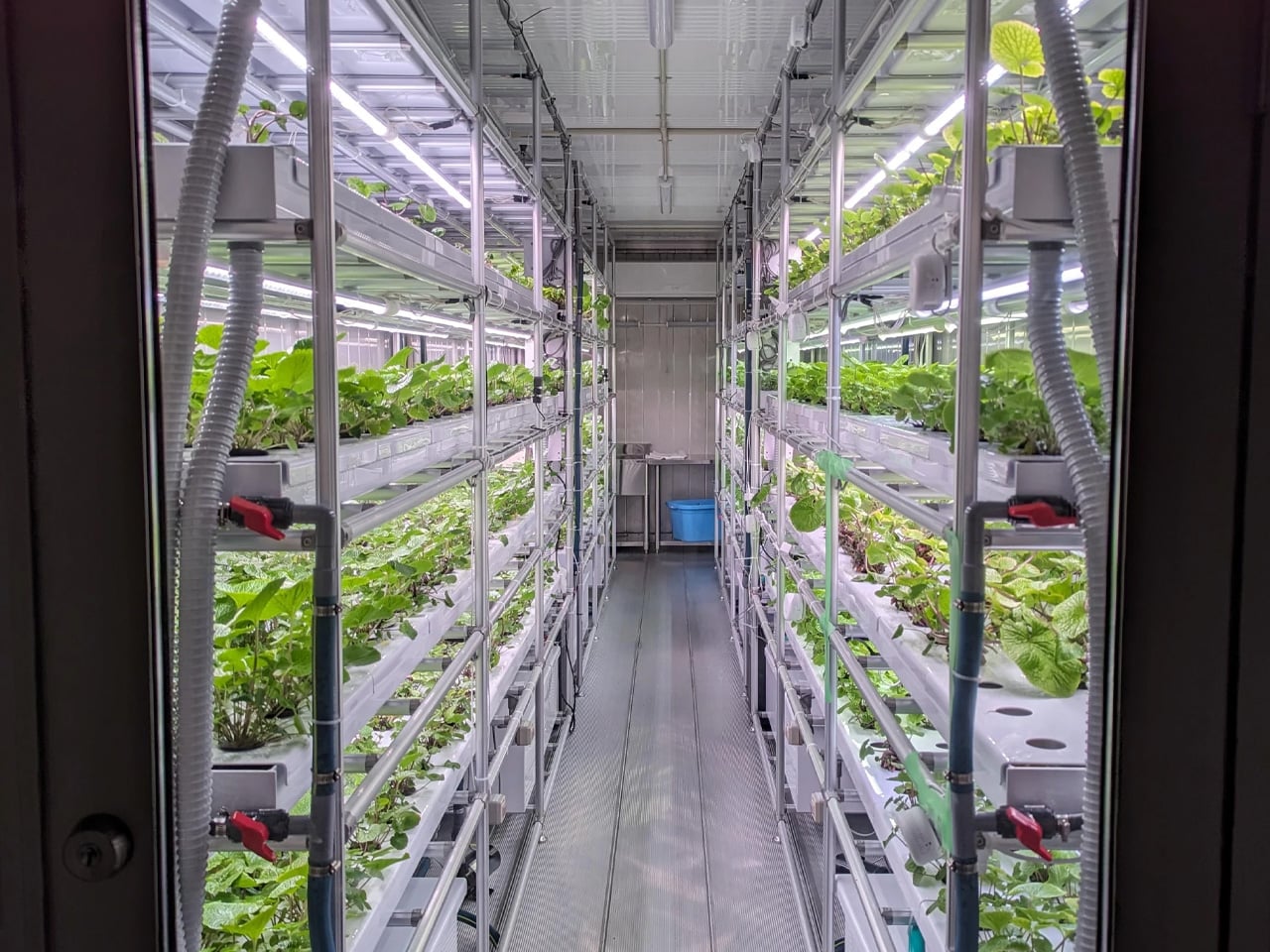
In a shipping container parked next to Macnica’s headquarters in Yokohama, an innovative revolution in Japanese agriculture is taking root. Inside the 40-foot steel box, 1,800 premium wasabi plants thrive under LED lights, nourished by circulating purified water and monitored by AI-powered sensors. This isn’t a futuristic concept. It’s a solution to a very real crisis threatening one of Japan’s most iconic flavors. Tokyo-based AgriTech startup NEXTAGE has partnered with global technology firm Macnica to develop the Wasabi Cultivation Module. This container-based plant factory allows wasabi to be grown anywhere in the world.
The innovation comes as Japan grapples with a growing wasabi shortage driven by multiple converging pressures. Climate change, declining agricultural workers, and the strict environmental demands of traditional cultivation have created a perfect storm for this notoriously temperamental crop. Wasabi has always required clean water, precise temperature control, and meticulous soil management. Traditionally grown in cool mountain streams, the plant is particularly vulnerable to typhoons and floods. Climate change has intensified these challenges, threatening the survival of historic wasabi farms that have operated for generations. Global demand continues to surge alongside the worldwide popularity of Japanese cuisine, but supply has struggled to keep pace.
The cultivation module addresses these vulnerabilities through total environmental control. Each container houses five-tiered shelves equipped with sophisticated systems, including air conditioning, dehumidifiers, LED lighting, water temperature controllers, and carbon dioxide management devices. Cameras and sensors throughout the container continuously monitor conditions, tracking everything from temperature fluctuations to door usage that might affect air circulation. This data feeds into an AI-powered remote monitoring system, allowing NEXTAGE experts to provide real-time cultivation guidance to operators who may have no prior farming experience. The technology packages decades of specialized knowledge into an accessible, turnkey solution.
Perhaps most impressive is the dramatic acceleration in harvest times. The module cultivates Matsuma Wasabi, a premium variety from Wakayama Prefecture that is highly prized in high-end restaurants for its balanced aroma, spiciness, sweetness, and distinctive flavor profile. In natural conditions, this exceptional variety requires 20 to 24 months to reach maturity. Inside the precisely controlled environment of the cultivation module, the time drops to approximately 10 months. This dramatic reduction doesn’t compromise quality but rather optimizes growth conditions that would be impossible to maintain consistently in traditional outdoor cultivation, where weather and seasonal variations create unavoidable challenges.
Macnica became the pioneering customer in December 2023, installing a module at its Shin-Yokohama headquarters as both a demonstration facility and agricultural innovation laboratory. The semiconductor and IT company brought substantial technical expertise to the partnership, contributing specialized knowledge in growth visualization systems, communication technology, and customized LED development specifically designed for plant cultivation. In January 2024, following months of refinement and testing, the two companies officially launched commercial sales of the modules to businesses and agricultural entrepreneurs. NEXTAGE founder Takuya Nakamura, who started the company after witnessing the devastation of traditional wasabi fields, secured Series A funding in October 2024 to accelerate development of the automated cultivation technology.
The vision extends far beyond Japan’s borders. NEXTAGE’s ambitious slogan, “bringing ALL JAPAN MADE plant cultivation technology to the world,” signals plans to export this innovation globally. For high-end sushi restaurants that have long depended on limited supplies of fresh wasabi, the implications are transformative. The day may soon come when chefs grate wasabi grown in a container just blocks away, preserving the pungent, complex flavors that define authentic Japanese cuisine while building resilience into a supply chain threatened by our changing climate.
The post Japanese Startup Brings Wasabi Farming to Shipping Containers first appeared on Yanko Design.