
There is a quiet but consequential shift happening inside creative agencies, one that has less to do with technology itself and more to do with how agencies are choosing to respond to it.
For the better part of the last decade, the creative industry has been preoccupied with scale: more content, faster production, broader reach. The rise of generative AI has only accelerated that trajectory, promising near-infinite output at unprecedented speed. But as that output begins to converge — visually, tonally, structurally — another priority is emerging in parallel: distinction.
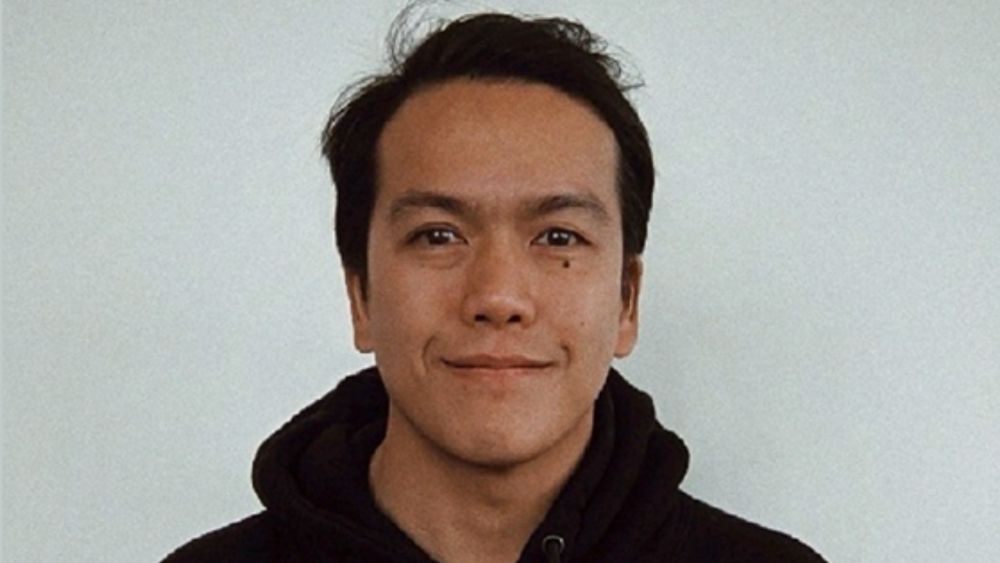
It’s within this context that M+C Saatchi North America’s appointment of Naz Kasim as its first Executive Creative Director of Art and Design becomes more than a leadership update. It reads as a structural signal. A decision about where creative value will live in the next phase of the industry.
The role itself is telling. Not simply Executive Creative Director, but specifically focused on art and design, a delineation that underscores a renewed emphasis on craft as strategy, not decoration. In an era increasingly defined by what can be generated, the differentiator shifts to what can be chosen, refined, and shaped with intention.
Kasim’s appointment arrives alongside the release of the agency’s 2026 Cultural Zine, a project that offers an early articulation of this thinking. Building on last year’s “Vibepocalypse” thesis, a diagnosis of cultural overload and fragmentation, the new report introduces the concept of “Mini Worlds”: smaller, self-defined communities that individuals retreat to in order to navigate instability. Especially in today’s cultural and global landscape framed by war, economic unsteadiness, and immigration hostility. It’s a framework that reflects a broader recalibration in culture from mass reach to meaningful belonging.
For brands, this shift presents a paradox. The tools available to reach audiences have never been more expansive, yet the audiences themselves are becoming more selective, more fragmented, and more resistant to sameness. Visibility is no longer the challenge. Resonance is.
Design, in this context, becomes one of the few remaining levers for distinction.
This is not a new idea, but it is newly urgent. As Stevie Archer, Regional Chief Creative Officer at M+C Saatchi North America, points out, we are living in an “increasingly visual world,” one where AI is capable of producing polished outputs at scale. The result is not a deficit of content but a surplus, with much being indistinguishable from the next. In that environment, craft is no longer a luxury; it’s a filter.
Kasim’s career trajectory reflects this tension. With experience spanning Asia, Europe, and North America, and a portfolio that cuts across industries from FMCG to finance, his work has consistently operated at the intersection of concept and execution. Not simply making things look good, but making them meaningful.
That distinction is critical. Because if AI has exposed anything about the creative process, it’s that execution was never the most valuable part.
The industry has long mythologized production, the shoot, the build, the polish, as the locus of creativity. But as those processes become faster and more accessible, the emphasis shifts upstream. Toward taste. Toward judgment. Toward the ability to translate cultural insight into something that feels specific rather than generic.
The Cultural Zine itself functions as a case study in this translation. Rather than presenting trends as abstract observations, it materializes them through a highly considered visual system — one that uses design not just to communicate insight, but to embody it. The concept of “Mini Worlds” is not only described; it is experienced through the fragmentation and cohesion of the design language itself.
This is where the appointment and the output intersect.
It’s one thing to produce a report about culture. It’s another to demonstrate, through design, how that culture might be engaged. In that sense, Kasim’s role is less about oversight and more about ensuring that insight and execution are not treated as separate phases, but as part of the same creative act.
There is also a broader organizational implication here. As agencies expand their offerings into experience, innovation, performance, and beyond, the risk of fragmentation increases. Different teams, different outputs, different standards. A role dedicated to art and design becomes a way to maintain coherence across that complexity. To ensure that as capabilities scale, the work doesn’t dilute.
This is particularly relevant for a network like M+C Saatchi, whose positioning is built around “Cultural Power.” If culture is the terrain, then design is the interface and the point at which brands meet audiences. And in a landscape defined by choice, that interface must do more than function. It must signal.
Kasim himself frames design as a “universal language,” one that connects strategy, storytelling, and craft across markets. It’s a familiar idea, but one that takes on new weight in a fragmented media environment. If audiences are retreating into smaller, more defined communities, then the challenge for brands is not to speak louder, but to speak more precisely.
Precision, however, is not something that can be automated.
It requires context. It requires perspective. It requires a point of view that understands not just what culture looks like, but what it feels like from the inside.
That may ultimately be the clearest takeaway from this moment. Not that AI is reshaping the industry — that much is already evident — but that it is forcing a re-evaluation of what cannot be automated. And in doing so, it is elevating disciplines like art direction and design from supporting roles to central ones.
In other words, the future of creativity may not be defined by how much we can produce, but by how well we can discern. And increasingly, that discernment has a designer’s eye.
The post M+C Saatchi Bets on Design in the AI Era appeared first on PRINT Magazine.