
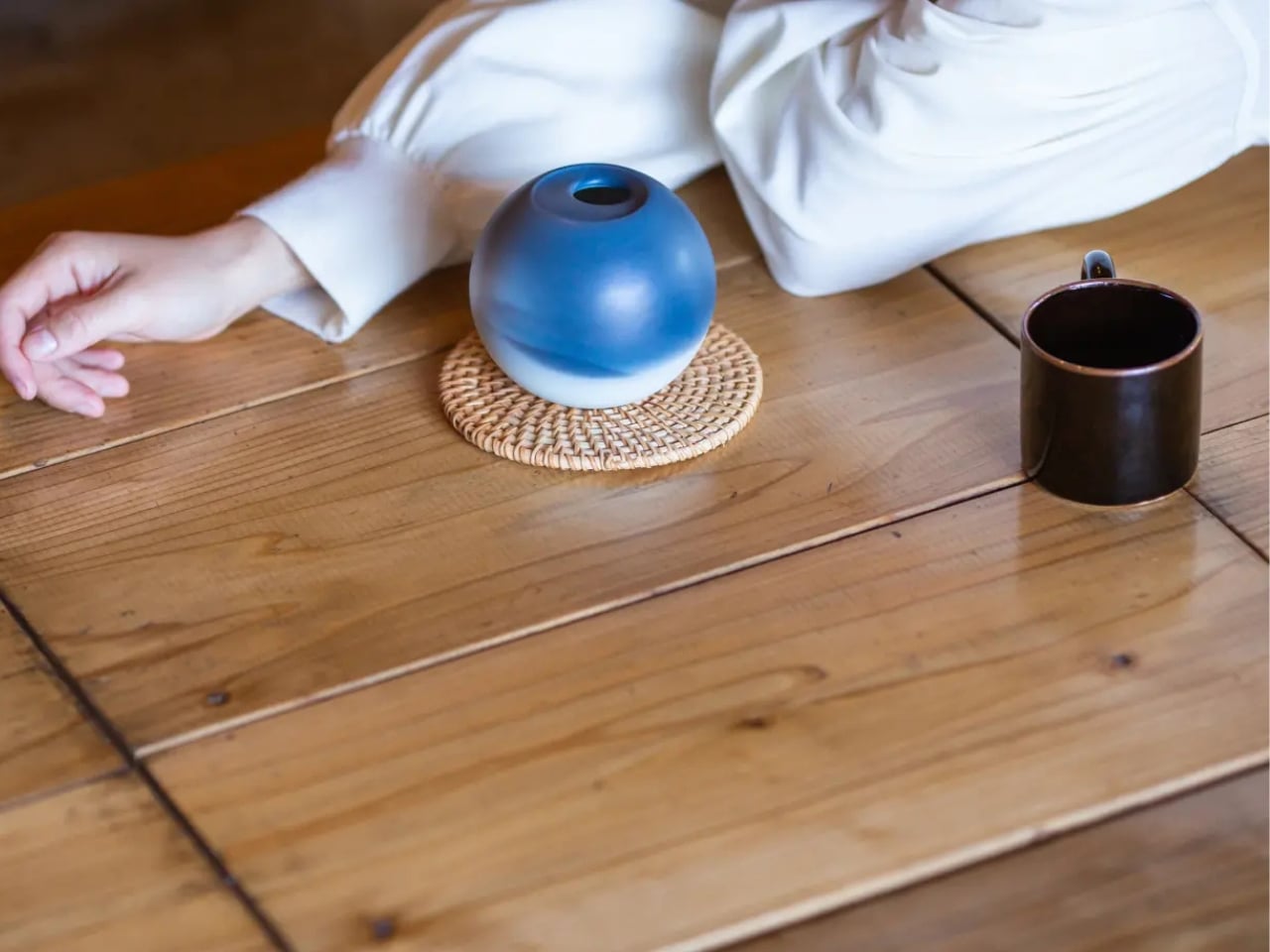
There’s something hypnotic about watching things change color. Remember those mood rings from the 90s? Or those hypercolor t-shirts that turned purple wherever you got warm? That same technology just got a serious upgrade, and it’s sitting on the cutting edge where centuries-old craftsmanship meets modern science.
Enter TimeVase, a collaboration between Pilot Corporation (yes, the pen company) and traditional Arita porcelain artisans in Japan. This isn’t your grandmother’s ceramic vase, even though it’s made using techniques that have been perfected over 400 years in one of Japan’s most historic pottery towns.
Designer: Pilabot
The concept is beautifully simple. The entire surface of the porcelain vessel is coated with Pilot’s thermochromic ink, the same temperature-reactive technology they developed for their erasable pens. At room temperature, the vase appears as a deep, rich navy blue. But pour in hot water, and something magical happens. The heat triggers a color transformation that gradually reveals a stunning celadon glaze underneath, one of the most prized colors in traditional Arita ware.
What makes this particularly fascinating is how the change unfolds. It’s not an instant flip from one color to another. The transformation is organic and unique each time, with different patterns emerging as the heat spreads through the ceramic. Then, over the next 30 to 60 minutes, you watch as the color slowly returns to its original deep blue state as the water cools. It’s like having a living piece of art that breathes with temperature.
Thermochromic ink has been around since the 1970s, initially showing up in novelty items. The technology works through leuco dyes that change their molecular structure when heated, typically becoming translucent or shifting to lighter shades. Pilot has been a pioneer in this field, particularly after developing erasable ink pens in 2006 that used thermochromic properties to create ink that disappears above 65°C.
But applying this technology to traditional ceramics required something different. The ink had to work at the right temperature range for hot beverages and withstand the demands of daily use while maintaining the aesthetic integrity of Arita porcelain. Arita ware has a reputation for its delicate beauty and that distinctive celadon color, a jade-like blue-green that has captivated collectors for centuries. Covering it entirely with color-changing ink and trusting it to reveal that beauty at just the right moment takes both technical precision and artistic courage.
The practical applications are surprisingly versatile. Sure, it works as a traditional vase for flowers, but it’s also designed to function as a tea vessel or even an aroma pot. Add a few drops of essential oil to the hot water, and you’ve got a piece that engages both sight and smell, creating what the designers call “luxurious blank time” for contemplation.
There’s something distinctly Japanese about this design philosophy. The concept of finding beauty in transience, of appreciating the moment as it unfolds and then lets go, feels deeply connected to traditional aesthetics like mono no aware (the pathos of things) or wabi-sabi (finding beauty in imperfection and impermanence). You’re not just using a vase. You’re watching time made visible through color.
This fusion of old and new, analog and digital, craft and chemistry represents a growing trend in contemporary design. We’re seeing more collaborations where traditional artisans partner with tech companies to create objects that honor heritage while pushing boundaries. It’s not about replacing one with the other but finding where they can amplify each other’s strengths. TimeVase launched in January 2026 through Pilot’s creative division, Pilabot, which focuses on experimental projects that explore new applications for their ink technology. It’s part of a broader movement where stationery and office supply companies are thinking beyond paper, asking what else their specialized materials can do.
For anyone interested in design, this piece sits at a fascinating intersection. It’s functional art that performs differently each time you use it. It’s tech that doesn’t scream its presence but quietly enhances the everyday ritual of making tea or arranging flowers. It’s a reminder that innovation doesn’t always mean adding more features or screens but sometimes means taking technologies we’ve mastered and applying them in unexpected ways. The TimeVase proves that magic doesn’t require batteries. Sometimes it just needs hot water and patience.
The post Pilot Just Turned a 400-Year-Old Japanese Craft Into Living Art first appeared on Yanko Design.