
Robots and AI assistants grab headlines, but the technology that actually changes daily routines lives in outlets, doorways, and kitchen counters. Global Connect’s January 5th showcase at CES 2026 puts that infrastructure-level innovation on display, bringing together brands that solve the unglamorous problems: keeping phones charged during power outages, filtering contaminants from tap water, protecting devices from drops, and securing entry points with biometric precision. These aren’t moonshot concepts waiting for venture capital; they’re products shipping to homes and businesses right now, refined through real-world use and customer feedback.
iMpact PR’s private villa format gives these utility-focused companies four hours to demonstrate what separates working technology from marketing promises. Bluetti’s portable power stations, Waterdrop’s reverse osmosis systems, Benks’ protective accessories, Xthings’ unified smart home platforms, Autel’s EV charging infrastructure, and Monai’s baby monitors represent the less flashy side of CES, where innovation means making essential tasks more reliable, more efficient, or simply less annoying. The villa setting strips away booth theatrics, letting journalists test whether these everyday solutions actually deliver on their practical claims when the promotional videos stop playing.
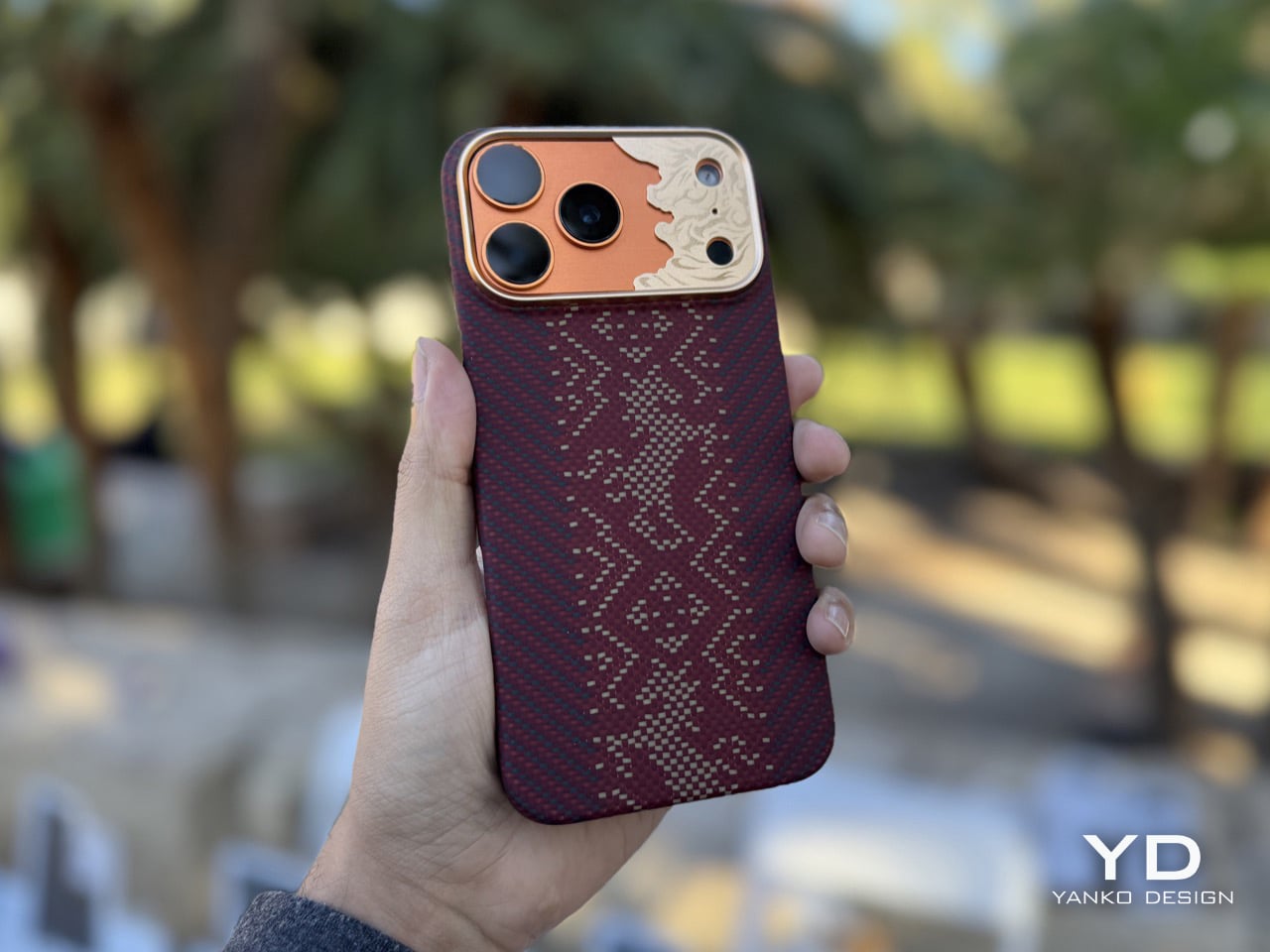
Benks Armor Series Kevlar Cases
Benks leans hard into Kevlar, but the Armor series is built to prove that impact protection does not have to look tactical or bulky. ArmorAir, ArmorPro, and ArmorLite all start with DuPont Kevlar fiber as the structural backbone, then layer on slim profiles, raised lens frames, and MagSafe friendly layouts. Within that, you get very different personalities: 600D for the classic woven look, Aurora and Montage with color-blocked stripes, ArmorGrid with a textured geometric pattern, Knight with a subtle motif that feels more fashion than industrial. The result is a family of cases that can shrug off everyday abuse while still looking like something you would actually want to put on a brand-new phone, not a rubber bumper from a hardware store.
Around that core, Benks fills out the ecosystem with GlassWarrior screen protectors, camera lens shields, magnetic power banks, wallet stands, and grips that echo the same material language. The accessories are there so you can build a full setup around a single visual theme, instead of mixing a rugged case with generic glass and a plasticky wallet. What stands out across the catalog is how consistently the brand chases a balance between aesthetics and strength: Kevlar shows up as color, texture, and pattern, not just a marketing bullet point. These are cases that read as design objects first, protective gear second, even though the material science quietly does the heavy lifting in the background.
Autel MaxiCharger Series and Avant Robots
Autel’s presence at Global Connect focuses on energy infrastructure rather than the aerial drones that carry the Autel Robotics name. This division concentrates on EV charging and ground-based autonomous systems, spanning from home installations to commercial-grade ultra-fast chargers with outputs from 12kW AC to 480kW DC. The MaxiCharger AC Compact Gen2 delivers 12kW for residential use, featuring 5-minute installation, bidirectional charging readiness, and automatic detection of solar and energy storage systems. For commercial applications, the DC50 compresses 50kW charging into a footprint under 0.2 cubic meters with whisper-quiet operation below 55 dBA, making it ideal for underground parking garages and space-constrained urban environments. The DC100 hits the mid-range sweet spot at 100kW for fleet depots, while the DH480 pushes 480kW with 96% end-to-end efficiency, delivering up to 1 kilometer of range per second.
The Avant robot platform applies autonomous technology to charging and inspection workflows that typically require human labor. The Avant Charging Robot handles 24/7 EV charging for fleet operations, using computer vision and precision robotics to locate charge ports, retrieve connectors, and complete connections with sub-millimeter accuracy. Its robot-on-demand architecture lets a single unit service multiple parking spots and charging stations, eliminating rigid cable management while maintaining native NACS compatibility for Tesla vehicles. The Avant Autonomous Inspection Robot navigates energy facilities and charging stations with sub-8 centimeter positioning accuracy to inspect gauges, buttons, and switches. With an 80% manipulation success rate for grasping and pressing physical controls, it reduces human exposure to hazardous environments while enabling consistent, repeatable inspection workflows across industrial facilities and mission-critical assets.
Xthings ULTRALOQ Bolt UWB, Bolt Mission, and Ulticam IQ Floodlight
Xthings brings three additions to its smart home ecosystem at Global Connect, led by two lock variants that push different aspects of hands-free access. The Bolt UWB uses Ultra-Wideband technology to unlock automatically when you approach the door, achieving sub-0.5 second unlock speeds with over 99% accuracy while maintaining built-in WiFi for remote access without additional hubs. The system supports NFC cards, passcodes, smartphone app control, and traditional mechanical keys, covering 50 users with ANSI Grade 1 commercial-level security that meets ANSI/BHMA A156.36-2020 standards. Eight AA batteries power everyday WiFi use, and the lock carries IP65 weather resistance plus 18-month electronic warranty with lifetime mechanical coverage. The Bolt Mission takes a Matter-certified approach to the same hands-free unlocking concept, emphasizing precision over simple proximity by verifying both distance and intent within 12 inches. It installs in about 5 minutes and runs for 12 months on battery, resisting relay attacks that plague generic proximity solutions while integrating with Apple Home, Google Home, Alexa, Samsung SmartThings, and Home Assistant.
The Ulticam IQ Floodlight combines 4K Ultra HD security monitoring with 2000-lumen integrated floodlights, covering a 160-degree diagonal field of view with advanced AI detection running on-device for privacy. Edge AI processes people and vehicle detection locally, while optional cloud analysis powered by Gemini-class multimodal AI provides human-like event descriptions and threat assessments. The camera offers color night vision, two-way audio, and weather-resistant construction, storing footage locally with seven-day rolling storage plus free cloud backup. All three products work within the U home app for automation scenarios like triggering lights off when the door locks or turning on specific lights during unlock events, tying access control directly to broader home automation routines across Xthings’ expanding device lineup that already includes cameras, plugs, and switches running on Matter, Zigbee, Z-Wave, WiFi, and Bluetooth protocols.
Cuneflow E-Ink AI Notebook
Typing on a laptop during face-to-face meetings creates a barrier between participants, turning collaborative sessions into exercises in divided attention. Cuneflow’s e-ink notebook addresses that social friction by letting users handwrite notes on a 300 PPI A5 display while AI processes everything in the background. The device uses a Wacom third-generation ceramic tip stylus on a responsive e-ink screen with 20-level adjustable lighting, delivering the tactile satisfaction of paper without the cognitive load of manual transcription. During meetings, it records audio synchronized with handwritten notes, delivers real-time analysis and summaries, then automatically archives and indexes everything to form a searchable knowledge chain. Circling a topic or underlining a keyword triggers AI assistance instantly, generating tasks, summaries, or decisions based on your marks. The structure recognition engine converts messy sketches into editable digital diagrams, turning analog creativity into shareable assets.
The hardware comes in a premium leather folio, thinner and lighter than an iPad mini, fitting comfortably on small café tables or crowded conference rooms. Integration with Notion, Slack, Microsoft 365, and Google Workspace happens automatically, syncing meeting records and handwritten insights without extra steps. Before meetings, Cuneflow generates relevant materials; during sessions, it provides live summaries; afterward, it builds complete knowledge chains from what was discussed, written, and recorded. The founding team from Peking University and Harvard bridges ancient writing systems (the name references cuneiform) with AI-powered creation, targeting executive meetings, workshops, brainstorming sessions, and hybrid work environments where screen-based note-taking disrupts human connection. The device prioritizes thinking over data entry, letting users stay present while the system handles transcription, organization, and retrieval.
Monai Baby Monitor
Baby monitors have existed for decades, but Monai applies over ten years of AI research specific to infants and toddlers to create a system that monitors actively rather than passively. The camera doesn’t just stream video; it identifies covered-face situations that signal suffocation risks, learns individual cry patterns to distinguish hunger from discomfort, tracks sleep cycles for detailed reports, and automatically captures developmental milestones without requiring parents to record manually. Auto-tracking keeps babies centered in frame as they move, danger zone detection alerts caregivers when infants approach unsafe areas, and smart voice notifications eliminate the need for constant screen-watching. The system comes in three configurations (Standard, Nest, and Pro) with video resolution ranging from 2960×1666 to 3840×2160, plus 350-degree horizontal and 65-degree vertical pan-and-tilt capability.
Security architecture prioritizes local processing and encrypted transmission, with on-device AI detection and local data storage protected by triple-layer encryption. The system complies with U.S. CPC requirements and EU RoHS specifications, using baby-safe, environmentally certified materials throughout. Up to five family members can access live streams across phones, tablets, and televisions, creating a private Family Circle where automatically captured milestones get organized chronologically with the baby’s age displayed. Monai recently won the CBME Award for Outstanding Brand Innovation and earned designation as a registered advanced AI parenting technology platform, both in 2025. The approach reflects a shift from passive video streaming to intelligent monitoring that understands context, distinguishes between normal activity and potential hazards, and documents growth without requiring parents to anticipate every meaningful moment.
PixVerse V5.5 AI Video Platform
PixVerse has built a user base exceeding 100 million across 175+ countries, serving more than 16 million active users monthly. The V5.5 release introduces multi-shot cinematic narrative capabilities that interpret user prompts to craft complete stories rather than single-shot outputs, autonomously handling shot progression, frame changes, dialogue, ambient sound effects, and background music generation from a short natural-language prompt. The platform can create an entire narrative from a single sentence, and its Modify feature uses key-frame editing technology to let users update entire videos with simple text commands. The Remix feature allows video editing while preserving motion, pacing, and scene structure, and when combined with the Swap feature, it leveraged the viral Turkish Shake trend to create customizable templates that generated millions of views from creators in Brazil, Turkey, and the Middle East.
Motion quality has improved with more lifelike movement, smoother transitions, stronger scene coherence, sharper details, richer textures, refined lighting, and greater prompt accuracy for closer alignment with intended characters, environments, and styles. Improved audio-video sync ensures motion and sound synchronization reaches professional-level storytelling quality. The platform recently ranked #1 in “Image-to-Video” on the Artificial Analysis Global AI Video Model Leaderboard in September and Top 5 overall in mid-October. PixVerse V6, launching around the end of 2025, will enable real-time video generation with full multi-shot cinematic storytelling, seamlessly handling multiple characters and scenes while synchronizing motion and audio across all elements for instant film-quality sequences. Powered by proprietary Diffusion + Transformer architecture, V5.5 is available across web, mobile apps, and open API platforms, enabling both novice and advanced creators to produce polished cinematic-quality videos.
Waterdrop A1 Countertop RO Purifier
Waterdrop’s A1 is pitched as a “reinventing water” device, but in practice it is a countertop reverse osmosis bar that behaves more like a smart coffee machine than a traditional filter system. It sits on a counter with a 200 oz tank, no plumbing, and a plug, then delivers RO purified water anywhere between 41°F and 203°F. Six preset temperatures cover iced water, baby formula, tea, coffee, and near-boiling water for oatmeal, so you are not boiling kettles or juggling separate chillers. Inside, a 7 stage filtration stack with dual UV sterilization tackles contaminants and then keeps the stored water clean, while a 2:1 pure to drain ratio tries to keep wastewater in check for a countertop RO unit.
An OLED front panel shows TDS, temperature, and filter life, which matters because the carbon filter is on a 6 month cycle and the RO membrane on a 12 month cycle. The whole thing is clearly designed for renters, offices, RVs, and anyone who cannot or will not drill into cabinetry. It is less about winning a spec race and more about collapsing three or four kitchen objects into one box: chiller, kettle, filter, and dispenser. For a Global Connect lineup full of concept hardware, the A1 reads as an immediately livable product, the kind of upgrade that quietly changes how often you reach for bottled water or a stovetop kettle.
Beetles Ophiuchus Gel Polish Kit
Beetles brings zodiac aesthetics to at-home manicures with the Ophiuchus Lucky Box, a six-color gel polish kit themed around the controversial 13th zodiac sign. Ophiuchus, the Serpent Bearer that sits between Scorpio and Sagittarius in astronomical terms (though astrologers largely ignore it), gets translated into a palette mixing black and white base gels with purple, green, and gold cat eye polishes. The kit reflects Beetles’ broader approach: making salon-quality gel manicures accessible for home users without requiring professional equipment or technique. Since launching in 2017, the brand has built its reputation on cruelty-free formulas and straightforward application processes that work with basic UV lamps. The Ophiuchus set follows their established Lucky Box format, packaging coordinated colors with thematic inspiration that gives casual users a starting point for cohesive nail art.
The zodiac angle isn’t just marketing; it taps into the ongoing fascination with astrology-themed beauty products while acknowledging Ophiuchus’s status as the overlooked constellation that occasionally resurfaces in viral astrology debates. The cat eye finishes in the kit require magnetic polish techniques that create shimmering, dimensional effects resembling celestial phenomena, which fits the cosmic branding without requiring advanced skill. Beetles positions these kits at $108.99, targeting the space between drugstore nail polish and professional salon services. The company has released similar zodiac-themed sets for traditional signs like Scorpio, building a collection that lets users match their manicure to their astrological identity (or the identity they wish they had). For Global Connect’s audience, it represents the consumer beauty tech category where innovation shows up in formulation chemistry and user experience design rather than flashy electronics.
Bluetti Elite 100 V2 Bio-Based Edition and Charger 2
Bluetti claims a sustainability first with the Elite 100 V2 Bio-Based Edition, the first portable power station built from bio-circular-attributed plastics developed in partnership with materials giant Covestro. The chassis uses a PC/ABS blend derived from renewable waste like recycled vegetable oils and agricultural residues, cutting carbon emissions by 25% compared to conventional plastics while maintaining ISCC PLUS certification. The company insists the green materials compromise nothing: the bio-based edition retains the same ruggedness, flame retardancy, and 10-year lifespan as the standard model. Finished in an exclusive “Earth Deep Blue” with a signature green leaf accent, the unit makes its environmental credentials visible rather than hiding them inside generic black enclosures that dominate the portable power category.
The Charger 2 tackles a different problem entirely, acting as a unified vehicle energy hub that combines alternator and solar inputs to deliver 1,200W output for RVers and vanlifers. It charges portable power stations 13 times faster than standard cigarette lighter ports by simultaneously harvesting energy from the vehicle’s alternator and solar panels mounted on the roof. The plug-and-play design integrates starter batteries, solar input, and DC loads into a single intelligent ecosystem, with bi-directional technology that can maintain vehicle batteries or provide emergency recharges when needed. While the Charger 2 doesn’t incorporate bio-based materials like the Elite 100 V2, it addresses energy efficiency through smarter power management rather than material substitution, reflecting Bluetti’s multi-pronged approach to reducing environmental impact across different product categories.
Gravity Universe Time Sci‑Fi Clock
Universe Time is Gravity’s attempt to turn a desk clock into a piece of science fiction that happens to tell time. Instead of hands sweeping across a dial, you get a levitating pointer that orbits around a tilted, planet-like base, using the company’s 720 degree Free-Floating Technology to move without the usual visible support columns or rails. The effect is closer to watching a miniature celestial system than glancing at a clock, with the floating element able to simulate both rotation and revolution in three-dimensional space. It is battery powered, with a 5000 mAh cell inside a 904 gram body, so it can sit cleanly on a desk or shelf without cables messing up the illusion.
A companion app lets you treat Universe Time as more than a gimmick. You can adjust motion modes, pick time zones, and tune the ambient light ring that runs around the base so it matches a workspace or living room. That light turns the clock into a subtle mood piece at night, while the levitating pointer continues its orbital path. Gravity is framing this as “fiction to function,” and in this case that pitch lands: the object behaves like a practical desktop clock, but the way it occupies space, moves, and glows feels closer to a prop from a sci‑fi film brought into everyday life.
The post Portable Power, Smart Doors, AI Baby Eyes: The Most Underrated Tech From CES 2026 Global Connect first appeared on Yanko Design.