
COVID-19 memorial proposal for new york city’s public cemetEry
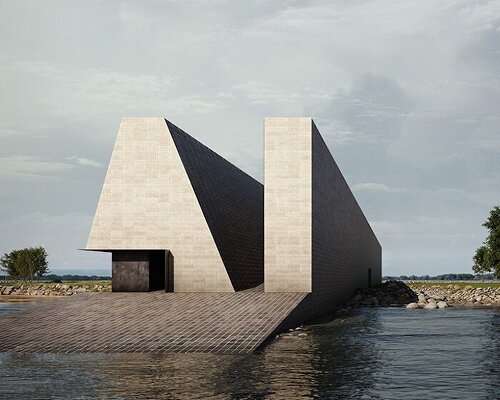
The Hart Island Tumulus is an architectural work of fiction by Wrot Studio that proposes a rammed-earth burial mound and memorial to the lives lost in the COVID-19 pandemic in New York City’s public cemetery on Hart Island. The project explores the concept of an architecture openly vulnerable to the elements, embracing the impact of time and change, while protecting the memory of those it is erected to honor. Constructed above a mass burial plot for Covid victims, it places a marker on the earth to honor both those entombed below, and to memorialize the greater toll exacted on humanity by the virus.
Four large pillars rise just beyond the shore. Within the interstitial gaps, four distinct passages invite visitors to choose their route, each path providing a unique route to traverse the structure. At inception its edges are sharp, well defined, and familiar. Two opposing materials principally make up the entirety of the tumulus. The primary material is rammed earth, found in two use cases: solid walls (interior) and brick/blocks (with grout). Varied amounts of cement added to the different typologies of rammed earth create a designed hierarchy of strength and longevity. Tension builds in the weak zones where surfaces meet, influencing paths for erosion. The opposing material is a thick gauge steel plate. Subject to the elements it is prone to corrosion, but the loss of material is far slower than the rammed earth construction. These steel walls provide relative stasis when contrasted to the weaker rammed earth elements.
four pillars at the ferry landing for the memorial | all images @wrot.studio
wrot studio embrace changing materials with time
The strength of the materials used gives the illusion of stability, but change is ever present and unavoidable. The intent of WROT Studio’s Hart Island Tumulus design is how it returns to the earth. With the passage of time, the studio‘s minimalist form gives way to those more commonly found in nature. As steep surfaces lose their pitch, vegetation takes root. Details are lost, but the overall mass remains. Stepping into the central memorial chamber visitors view what appears to be an endless expanse of vertically strung steel cables. Over 45,000 cables vanishing into the distance, one for every death attributed to COVID-19 in New York City fill the volume. Passing nearly 200 cables with each step, if this memorial represented the estimated 1.2 million lives lost in the United States in the first 3 years of the pandemic, it would extend 2.7 miles.
The Tumulus, even as an unrealized concept, can provide a place for reflection and mourning. The studio describes conceiving and developing this concept as a cathartic act, used as a means of expression to come to terms with a personally unresolved chapter. While life moves forward and the years continue to pass, WROT puts emphasis on revisiting the past; reflecting on how lives were forever changed and taking the time to remember.
ramp ending at the water’s edge
long wall detail
within interstitial gaps, four distinct passages invite visitors to choose their route
with the passage of time, minimalist form gives way to those more commonly found in nature
memorial’s edge water entry 40 years after construction
hart island tumulus 80 years after construction
a submerged section of the memorial five years after construction
long wall detail after 10 years of erosion
long wall detail after 80 years of erosion
memorial gallery section after 80 years of erosion
the covered passage after 80 years of erosion
a rear view of the memorial gallery at night
project info:
name: Hart Island Tumulus
architects: WROT Studio | @wrot.studio
location: New York City, United States
designboom has received this project from our DIY submissions feature, where we welcome our readers to submit their own work for publication. see more project submissions from our readers here.
edited by: claire brodka | designboom
The post rammed earth makes up wrot studio memorial proposal for new york city public cemetery appeared first on designboom | architecture & design magazine.