
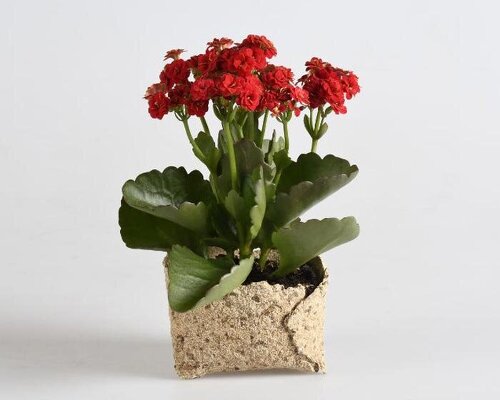
Biodegradable Pots as Circular Alternative to Plastic Containers
Biodegradable Pots is a material research project addressing the widespread use of plastic containers in horticulture, floriculture, and gardening. In response to the environmental impact of single-use plastics, the project proposes an alternative production model aligned with the United Nations Sustainable Development Goal 12: Responsible Consumption and Production. The research focuses on waste reduction, material reintegration, and circular design strategies through the development of biodegradable plant containers.
The project investigates the reuse of organic waste from three primary sources: discarded natural fibers and plant matter from floriculture, food residues such as eggshells from restaurants, and wood waste, including sawdust, from carpentry workshops. Rather than being treated as disposable byproducts, these materials are repositioned as raw resources capable of re-entering the production cycle.
pot made from rose flower waste | all images by Bruno de Almeida unless stated otherwise
Adonis Evangelista Prototypes Organic Waste Into Plant pots
Collected materials were sorted, cataloged, dried, and processed as part of a series of experimental trials. Multiple material combinations were tested using different fabrication methods, including molding, industrial sewing, and folding techniques applied to biomaterials. Each iteration evaluated key performance criteria such as structural resistance, durability, water drainage, and compatibility with plant growth requirements.
The research by designer Adonis Evangelista, supervised by Lígia Lopes, emphasized the use of natural binders compatible with plant pH, ensuring that the resulting containers support healthy plant development while remaining fully biodegradable. Prototyping and testing demonstrated that organic residues could be effectively transformed into functional plant pots capable of replacing conventional plastic alternatives.
pot made from sunflower stem waste
Reducing Plastic Dependency Through Circular Material Design
By converting organic waste into usable planting containers, the project illustrates how design-led material experimentation can contribute to reducing plastic dependency while supporting circular economy principles. The outcomes indicate a viable and scalable approach to biodegradable pot production, with potential for further development in material optimization, manufacturing processes, and production scale.
Through its focus on waste as a resource, the project contributes to more sustainable production and consumption patterns, positioning biodegradable materials as practical components within horticultural and gardening systems.
pot made from eggshells, produced using a folding method
pot made from rose flower waste, produced using a stitching method
pot made from eggshells, produced using molds
types of pots produced
types of pots produced
a plastic-free alternative to plant pots
Portuguese chestnut waste – biomaterial created from chestnut waste | image by Adonis Evangelista
1: flower waste, 2: sunflower stem waste, 3: pampas fiber, 4: eggshells, 5: soy waste, 6: wood waste | image by Adonis Evangelista
industrial waste | image by Adonis Evangelista
project presentation at the University of Porto | image by Lígia Lopes
project info:
name: Biodegradable Pots
designer: Adonis Evangelista | @adonissouza
supervisor: Lígia Lopes
photographers: Bruno de Almeida, Adonis Evangelista, Lígia Lopes
designboom has received this project from our DIY submissions feature, where we welcome our readers to submit their own work for publication. see more project submissions from our readers here.
edited by: christina vergopoulou | designboom
The post reclaimed organic waste composes plastic-free biodegradable plant pots appeared first on designboom | architecture & design magazine.