
public art pavilions in vietnam feature recycled materials
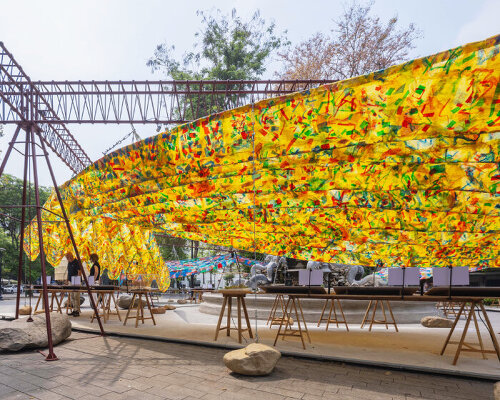
ODDO architects shape the public art pavilion T10A in Hanoi, Vietnam using over 40,000 recycled plastic bags as well as handmade paper. Developed as a temporary exhibition space for Vietnamese architecture projects, the design team draws inspiration from Hanoi’s craft heritage. The structure includes traditional handmade paper, known locally as Giấy Dó, alongside the recycled plastic. Alongside the public art pavilions, there are paper domes within which visitors can explore the architectural drawings and information of the exhibitions from inside.
The children from a local kindergarten were invited to decorate the paper domes with drawings showing how they imagine their city. Their work adds a personal and playful layer to the public art pavilion in Vietnam, turning the space into both an exhibition and a community artwork. A lightweight steel frame holds the structures together, a reference to the method that mirrors the construction practices common in some Vietnamese urban neighborhoods.
all images courtesy of ODDO architects | photos by Trieu Chien
wing-like roof sections shelter different exhibitions
The local community plays a central role in the ODDO architects’ project because it is the volunteers who helped gather plastic waste and took part in the construction process, turning the public art pavilions in Hanoi, Vietnam, into a collective building effort. Visually, the pavilions stand out through three large wing-like roof sections, each representing different exhibition themes: residential architecture, interior design, and sustainability projects. The recycled plastic panels filter daylight, creating shifting patterns of colored light inside the pavilion, and after sunset, internal lighting allows the structures to glow, transforming them into a luminous landmark within the urban setting.
After the exhibition ends, the materials used by the design team for T10A aren’t discarded but instead reused to produce new objects, including bags and design products, extending the life cycle of the materials and reducing waste. In the end, it is the aim of the project organizers to encourage architects, designers, and the public to reconsider how materials are valued. In these public art pavilions in Hanoi, Vietnam, plastic waste, which is often viewed as pollution, becomes a revived resource that makes way for reusable design.
recycled plastic roofing filtering daylight and casting vibrant shadows
the construction involves the help of the local community volunteers
the structure includes traditional handmade paper, known locally as Giấy Dó
view of the three public art pavilions in Hanoi, Vietnam by ODDO architects
the exhibition space lies beneath translucent plastic wings
a lightweight steel frame holds the structures together
lantern-like pavilion glowing within the urban landscape
at night, the structure are illuminated by warm lighting
each section represents different exhibition themes
after the exhibition ends, the materials are reused
project info:
name: Pavilion T10A
design: ODDO architects | @oddoarchitects
photography: Trieu Chien | @trieuchien
designboom has received this project from our DIY submissions feature, where we welcome our readers to submit their own work for publication. see more project submissions from our readers here.
edited by: matthew burgos | designboom
The post recycled plastic bags and handmade paper form public art pavilion T10A in vietnam appeared first on designboom | architecture & design magazine.