
tela architettura reinforces existing geometry and materials
Set in the countryside of Ostuni, Italy, Casa nell’agro di Ostuni by Tela Architettura reinterprets an unfinished rural dwelling into a calm and continuous architecture. When the owners discovered the site, they found an abandoned concrete shell, an unfinished house that had never been completed. Instead of demolishing it, they decided to preserve what was already there and used its geometry as the foundation for a new project rooted in restraint and permanence.
The intervention reconfigures the interior spaces while extending the existing volume with subtle precision and wrapping it in materials of the surrounding landscape. The project draws its identity from the dialogue between construction and terrain. Large glazed openings dissolve the threshold between inside and out, pulling the countryside into the domestic space. Natural lime plaster and sand-colored microcement form a continuous, tactile skin that defines every surface.
all images by Nicolo Panzeri
Abandoned shell is transformed through texture and light
These materials, shaped into essential geometries by Tela Architettura, generate a sequence of offset planes that become steps, benches, and built-in furniture. The staircase leading to the pool doubles as seating for the outdoor lounge, the fireplace emerges from the living room wall, and the master bed rises from the floor in seamless continuity. The Italian architecture studio defines space mostly through material, but light completes it. Soft northern light spreads evenly across the pale walls, while the eastern side glows with warmer tones in the morning. Iron window frames trace a thin brown line against the plaster, guiding the gaze toward the monumental trunks of olive trees. Within this quiet geometry, walnut doors and joinery introduce warmth and texture, forming a tactile vocabulary immediate to the eye and to the touch.
The living room centers on the fireplace, around which low horizontal planes extend to shape circulation and furniture. A walnut screen filters the entrance without interrupting light, defining spaces through density rather than separation. The continuity of the microcement floor is softened by natural fiber rugs that define areas for rest and gathering. Wood maintains a muted brown tone in dialogue with the iron details, reinforcing the atmosphere of measured intimacy.
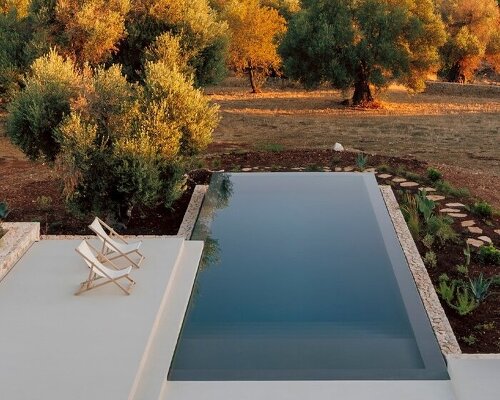
at the edge of the site, an infinity pool finished in anthracite microcement extends toward the sea
indoor-outdoor living highlights mediterranean vegetation
The sleeping quarters contain three bedrooms, each with its own bathroom and large openings framing the Apulian landscape. The windows, meanwhile, act as measured cuts in the thick envelope to bring in light while preserving privacy and shade. To the east, a slender pergola and the natural canopy of the olive trees temper the summer heat, creating pockets of filtered light. Outside, the house settles into the topography through dry-stone walls built with local stone. These layered terraces guide the movement of the visitor, articulating access through ramps and steps. Mediterranean vegetation wraps the perimeter with shades of green and grey. At the edge of the site, an infinity pool finished in anthracite microcement extends toward the sea, turning the water into a still mirror that reflects the tones of the surrounding land.
outside, dry-stone walls built with local stone and layered terraces guide the movement of the visitor
the staircase leading to the pool doubles as seating for the outdoor lounge
white stone and microcement delineate the pool area, creating a relaxation zone amidst Mediterranean plants
large glazed openings dissolve the threshold between inside and out, pulling the countryside into the domestic space
natural lime plaster and sand-colored microcement form a continuous, tactile skin that defines every surface
the master bed rises from the floor in seamless continuity
large openings frame the Apulian landscape in the en-suite bathrooms
the project draws its identity from the dialogue between construction and terrain
the continuity of the microcement floor is softened by natural fiber rugs that define areas for rest and gathering
natural materials and light punctuate the open space
wooden furniture acts as a natural anchor in the otherwise monochrome interior context
project info:
name: Casa nell’agro di Ostuni
architect: Tela Architettura | @tela_architettura
location: Ostuni, Italy
photography: Nicolo Panzeri | @nicolopanzeri
designboom has received this project from our DIY submissions feature, where we welcome our readers to submit their own work for publication. see more project submissions from our readers here.
edited by: claire brodka | designboom
The post tela architettura revives abandoned concrete shell into italian countryside refuge appeared first on designboom | architecture & design magazine.