
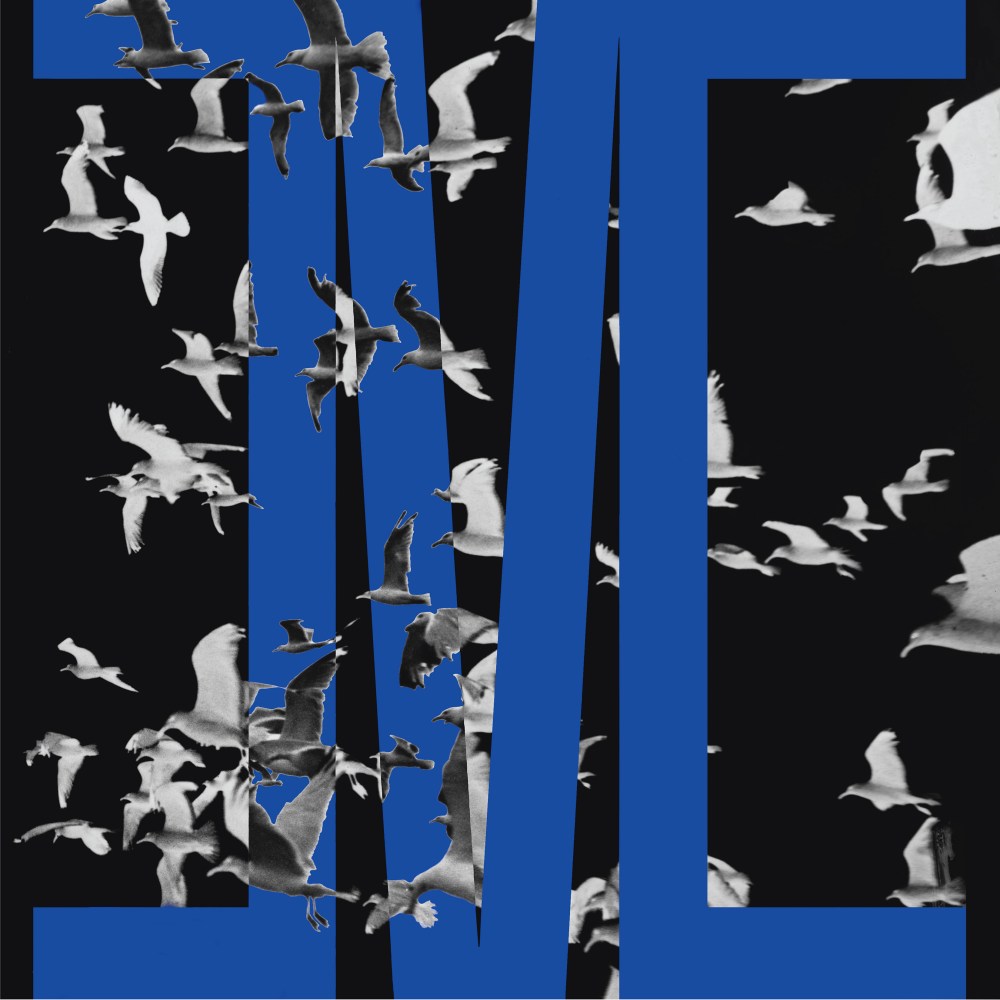
2011 marked the debut of an excellent documentary film by Reto Caduff. At that time a completed monograph was waiting for release but it was never printed owing to a permissions conflict that apparently was never resolved. Finally, this month marks the release of a different yet long awaited Herbert Matter: Artist Magician by Peter Hill (October Works) and it is a masterpiece.
Hill was Matter’s friend and teacher, so this is not a critical monograph but it is a critically important record of the vast output of Swiss-born designer, photographer and iconic poster maker. The title comes from the first line of a poem written by Paul Rand, a Matter friend, that introduced a 1977 Yale exhibition catalog (excerpt below):
Herbert Matter is a magician.
To satisfy the needs of industry, that’s what you have to be,
industry is a tough taskmaster.
Art is tougher.
Industry. plus art, almost impossible.
Some artists have one the impossible.
Herbert Matter, for example . . .
What follows are over 300 pages of Matter’s exemplary art, graphic design, photography, film and more under rubrics including Matter Tea Room, Matter on Motion, Fashion, and Magazine Covers, showing the wide range of his practice in a beautifully designed volume that promises to inspire and influence.
I wrote the Foreword when the book was first conceived years ago. Opening the finished copy and seeing unknown work, for the first time last week was as much of a revelation for me as it will be for you, whether you know Matter’s work or not.
Below is an excerpt of my piece for you to snack on while awaiting the tour de force that is Herbert Matter: Artist Magician.
Like many émigré modernists, Herbert Matter’s (1907-1984) most emblematic work was done in Europe in the vortex of modernism. His signature posters for the Swiss Tourist Office (1935–36) are among the most familiar of the photomontage genre or typo-foto images of that era. While the posters successfully communicate their immediate messages through a skillful application of photomontage, on a more lasting note, they transcend a momentary promotional campaign through dramatic scale and perspective shifts that imply a timeless quality.
Matter’s work is well known, though less familiar is the photographer/designer himself. This lack of notoriety is not surprising, since Matter was exceedingly modest. “The absence of pomposity was characteristic of this guy,” noted Paul Rand, a friend for four decades and fellow Yale Design School professor. Although throughout Matter’s creative life he was devoted to narrowing the gap between so-called fine and applied arts, the deed is often best stated through works rather than through words.
Matter was born in 1907 in Engelberg, a Swiss mountain village that was the subject of a few of his posters. There he was exposed to the treasures of one of the two finest medieval graphic art collections in Europe. In 1925, he attended the Ecole des Beaux-Arts in Genf, but after two years, the allure of modernism brought him to Paris where he attended the Academie Moderne under the tutelage of Fernand Leger and Amédée Ozenfant. While the former became a close lifelong friend, both encouraged Matter to expand his artistic horizons.
In Europe during the late Twenties and early Thirties, the creative scope of graphic design was boundless; it entered daily life in meaningful and visible ways. Journalistic, imaginative and manipulative photography were revolutionary influences, and since he was smitten with the camera, Matter began to experiment with the Rollei as both a design tool and an expressive form—a relationship that continued throughout his time in the United States.
Inspired by the work of El Lissitzky and Man Ray, Matter was intrigued by photograms, as well as the perceptual magic of collage and montage. In 1929, his entry into graphic design was completed when he was hired as a designer and photographer for the influential foundry and typeface developer Deberny and Piegnot. There he learned the nuances of fine typography, while he assisted A.M. Cassandre and Le Corbusier. But in 1932, abruptly expelled from France for not having the proper papers, he returned from Switzerland to follow his own path.
“Herbert’s background is fascinating and enviable,” recalled Rand. “He was surrounded by good graphics and learned from the best.” Therefore, it is no wonder that the famed posters designed for the Swiss Tourist Office designed soon after his return had the beauty and intensity of Cassandre and the geometric perfection of Corbu, wed to a very distinctive personal vision.
In 1936, Matter was offered roundtrip passage to the United States as payment for his work with a Swiss ballet troupe. He spoke no English, yet traveled with the touring company across the United States. When the tour was over, he decided to remain in New York. At the urging of a friend who worked at the Museum of Modern Art, Matter met Alexey Brodovitch, who had been collecting Matter’s travel posters (two of which were hanging on Brodovitch’s studio wall). Matter soon began taking photographs for Harper’s Bazaar and Saks Fifth Avenue. Later, he affiliated himself with a photographic firm, “Studio Associates,” located near the Condé Nast offices, where he produced covers and inside spreads for Vogue.
During World War II, Matter made posters for Container Corporation of America, which at the time was among the more progressive designcentric corporations. In 1944, he became the design consultant at Knoll, molding its graphic identity for over twelve years. “Herbert had a strong feeling for minute details, and this was exemplified by the distinguished typography he did for the Knoll catalogues,” explained Alvin Eisenman, former head of the Design Department at Yale and long-time friend.
In 1952, he was asked to join the Yale faculty as professor of photography and graphic design. “He was a marvelous teacher,” says Eisenman. “His roster of students included some of the most important names in the field today.” …
The post The Daily Heller: Herbert Matter Matters appeared first on PRINT Magazine.