
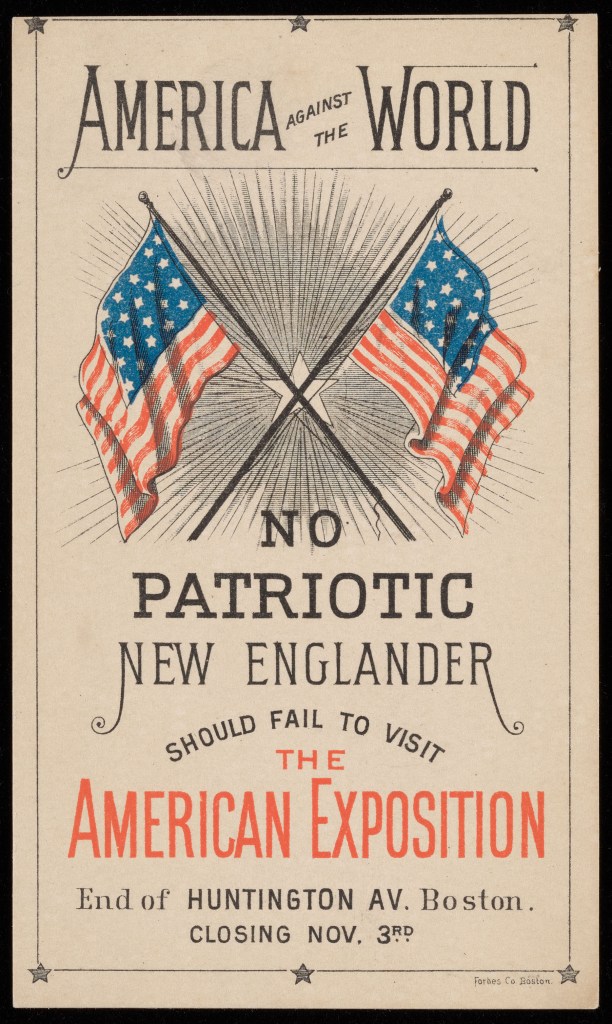
American patriotism demands more than displaying a flag lapel pin. To be patriotic is acceptance of the fundamental moral, ethical and legal principles without which the United States would cease to exist. On the occasion of the 250th anniversary of the founding of this nation, Unfurling the Flag: Reflections on American Patriotism at the Beinecke Rare Book and Manuscript Library (March 16–Sept. 27), will explore what this charged word and concept means.
Mark these dates on your “must-see” calendar. The show is a unique exploration of the ideological underpinnings and print manifestations of patriotism, from the nation’s founding to the present day. The exhibition comprises approximately 80 artifacts of Americana—ranging from political speeches to comic strips, maps and posters from Yale Library Special Collections to investigate the concepts of national identity, patriotism, loyalty and dissent.
Thanks to Joshua Cochran, curator for American History and Diplomacy at Beinecke Rare Book and Manuscript Library, we get a sneak peek at the exhibition. In the midst of preparing it, Cochran generously took the time to answer my queries about how the materials on display might serve as a user’s guide to illuminate a plethora of patriotic messages that define the United States for its citizens and the world.
Patriotism is not monolithic—it has a positive and negative connotation. How do you address this duality?
Indeed, patriotism is not monolithic, either in how it is conceived or in its expression. This is one of the key takeaways of Unfurling the Flag, and the exhibition is structured in two parts to emphasize this. The first half takes the historical approach—recognizing that even at the earliest moments of U.S. history, there were different conceptions, interpretations and expressions of patriotism. Ideas about national belonging were shaped by conversations over national priorities, character, professed values and purpose as well as historic events and new technologies.
United States Declaration of Independence. Printed by John Dunlap, Philadelphia: 1776. Beinecke Rare Book and Manuscript Library
The second half of the exhibition invites visitors to interrogate monolithic conceptions and think about the meanings and origins of the stereotypes and symbols they encounter. There are symbols, images and moments, but what is just below that surface—how is patriotism being deployed, and for what purpose? Is patriotism used as an appeal for unity? Is it being used to illuminate shortcomings in the social contract? Is it being used to exclude? Who is using the symbols, and why?
Thomas Hobbes, Leviathan, or, The Matter, Form, and Power of a Common-Wealth Ecclesiastical and Civil. London: Printed for Andrew Crooke, at the Green Dragon in St. Pauls Churchyard. Beinecke Rare Book and Manuscript Library
What have you discovered is the common ground between the polls of patriotic expression?
I think there is a shared understanding across the political spectrum that patriotism and its invocation have power. Patriotism resonates with the public in ways that other ideologies don’t. In the exhibition, visitors will also see how proponents and opponents of the same issue both use patriotism to frame their arguments, and in doing so, advance specific views of American exceptionalism. For some, that exceptionalism led to a patriotic view that justified a culture of manifest destiny, which advocated for westward expansion to conquer the land and subjugate nonwhite and foreign peoples to advance progress, pursue prosperity, maintain security and preserve that exceptionalism. America, in this view, was constantly under threat, and patriotism justified forced assimilation, mandated segregation and/or outright extermination. But just as rooted in exceptionalist thinking was a patriotism deployed to urge the country to be better and to live up to its founding ideals, so that it could be an exemplar to the rest of the world.
Saul Steinberg, cover drawing for The New Yorker, Jan. 5, 1976. Beinecke Rare Book and Manuscript Library, Saul Steinberg Papers, Yale Collection of American Literature. © The Saul Steinberg Foundation/Artists Rights Society (ARS), New York. Photo courtesy of Yale University Library
Can dissent and exceptionalism exist as patriotism?
Yes. This exhibition features many examples of how dissent, exceptionalism and patriotism are interwoven. For example, U.S. citizens during the 19th century invoked patriotism to make visible the chasm between the promises in the founding documents and the realities of the early republic—and that tradition has continued in modern efforts to remedy prolonged injustices. Invocations of patriotic symbols and historical landmarks enabled citizens to align their causes with the history of the nation. Abolitionists used patriotic rhetoric to expose the brutality of slavery. Suffragists at Seneca Falls cited patriotism and the exceptionalism of ideas in the founding documents to question the exclusion of women from legal and civic life. Immigrants invoked patriotism to counter claims regarding their suspected disloyalty. Seeing these expressions can be reaffirming that there remains belief in the system—a chance and opportunity for reform.
Commission of Nathan Hale as Captain in Colonial Army, Jan. 1, 1776. Beinecke Rare Book and Manuscript Library, Nathan Hale Collection
What determined the choices of objects in the exhibition? Was it the stereotypes and cliches of patriotism, or the uniqueness of individual expression?
I started planning this exhibition two-and-half years ago. At the time, I was thinking about Walter Lippmann’s book Public Opinion, published in the early 1920s, in which he writes that we imagine most things before we experience them. Lippmann considers how a “great blooming, buzzing confusion” of ideas, agendas and motivations within the emerging mass communication landscape required individuals to pick out the parts that culture has already defined for us to create a shorthand version of complex concepts. I wanted to explore this through the items—what about patriotism has been stereotyped for us already and has become a deeply enmeshed part of our understanding, and how have individuals used, adapted and/or resisted those abbreviated notions of patriotism?
Report of the Woman’s Rights Convention, held at Seneca Falls, N.Y., July 19 & 20, 1848. Rochester: Printed by John Dick at the North Star office, 1848. Beinecke Rare Book and Manuscript Library
What does it mean to be unpatriotic? Are there certain taboos inherent in the concept?
That’s a good question, and I don’t know if there is an easy answer. The U.S. Constitution, in Article III, Section 3, is very clear about what constitutes treason, but it seems that there is a lot of middle ground, and I think the Declaration of Independence itself (a Dunlap printing is featured in the exhibit) underscores this point very well. The document provides the foundation of a new political community but does so by undertaking an act of treason against the political community to which they belonged.
March on Washington for Jobs and Freedom, Aug. 28, 1963: Lincoln Memorial Program. Beinecke Rare Book and Manuscript Library, James Weldon Johnson Memorial Collection in the Yale Collection of American Literature
What do you hope the viewer will take away from this exhibition?
I hope the items in this exhibition will encourage visitors to think critically about these boundaries and frontiers of patriotism. The goal of this exhibition is to create a space for critical reflection for anyone who visits the Beinecke Library. I hope visitors come away with a more nuanced understanding of patriotism’s power and its origins, evolution, and uses in the United States over the past 250 years. If we as citizens can, as Walter Lippmann notes, carefully consider the origins of these visions and the “gullibility with which we employ them,” we may be more willing to “hold them lightly and modify them gladly.”
What to the Slave Is the Fourth of July? Frederick Douglass, typescript version, undated. Beinecke Rare Book and Manuscript Library, Walter O. Evans Collection of Frederick Douglass and Douglass Family Papers, James Weldon Johnson Collection in the Yale Collection of American Literature
The post The Daily Heller: Mixed Messages of American Patriotism appeared first on PRINT Magazine.