
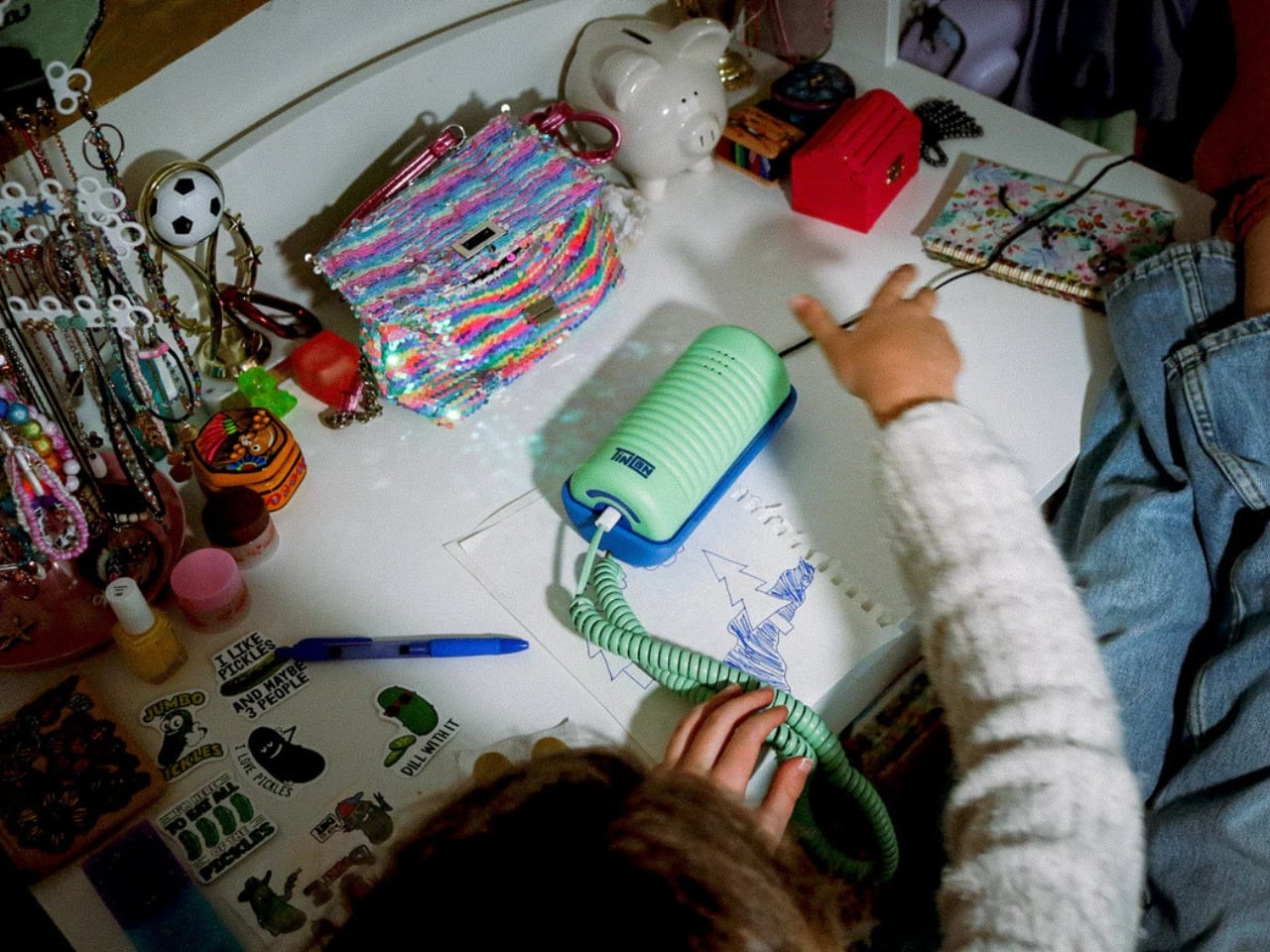
The moment you see the Tin Can, you know exactly what it is and also what it isn’t. It’s a landline phone, complete with a handheld receiver and a curly cord, designed to sit on a countertop or mount on a wall. It isn’t a smartphone. It isn’t a tablet. It doesn’t have a screen. And that’s entirely the point.
Tin Can is the brainchild of three Seattle-based dads: Chet Kittleson, Max Blumen, and Graeme Davies, who created it after hitting the same wall millions of parents run into. Their kids were at that in-between age, old enough to want independence and social connection, but too young to be handed a device with unrestricted internet access. The options available were either too much or not enough. As the founders put it: “Everything out there felt like a compromise, too much tech, too much access, or just another screen to manage.” So they built something else entirely.
Designers: Chet Kittleson, Max Blumen, and Graeme Davies
The Tin Can works through Wi-Fi but without any browsing capability, social media, or texting. Children can only call and receive calls from a parent-approved list of contacts, managed through a companion app that only parents can access. Quiet hours and Do Not Disturb can be scheduled. Voicemails are supported. That’s it. That’s the whole phone. And it turns out, that’s more than enough.
From a design standpoint, the product is refreshingly considered. The cylindrical Tin Can model has a playful, almost cartoonish quality that looks deliberate rather than dated. Its colorful palette, with names like “Answer Me Aquamarine,” signals that this wasn’t designed to collect dust in a hallway. The other model, the Flashback, leans harder into nostalgia, styled after the wall-mounted phones of the 1980s and connecting via ethernet cable rather than Wi-Fi. Both feel like products made by people who actually thought about what a child’s first phone should feel like, not just what it should do.
I’ll be honest, my initial reaction to this was mild skepticism. We’ve seen “screen-free” devices for kids before, and they tend to be clunky, joyless compromises that kids tolerate for about two weeks before losing interest. Tin Can feels genuinely different. Part of that is the design, which doesn’t try to mimic a smartphone and fail. It commits fully to being a phone, a beautiful, strange little object that sits in your home and rings. Part of it is the clarity of the concept. The product makes no attempt to sneak in “just a little” content or add a casual app or two for good measure. That restraint is its biggest strength.
The market response has been telling. Since launching, Tin Can has reached users in all 50 US states and across Canada, raised $3.5 million in funding, and sold through its first batches fast enough to crash at Christmas. The founders have described the reception as overwhelming, and it’s not hard to see why. Parents have been waiting for exactly this, a middle ground between total dependence on mom’s phone and a fully connected smartphone, and no one had bothered to build it yet.
What also makes Tin Can compelling is that it re-centers something communication technologies quietly stripped away: the social ritual of calling someone. You pick up the receiver, you dial, you wait, and you talk. No typing, no video filters, no leaving someone on read. It’s a more focused, more present kind of connection, and kids who grow up with it might just develop a better instinct for actual conversation.
The Luddite movement has spent years arguing that smartphones reached kids too early and too fast. Tin Can doesn’t join that argument. It sidesteps it entirely by offering something genuinely useful, beautifully designed, and completely free of the features that make smartphones so hard to put down. Whether you call it nostalgia or just good design thinking, the result is the same: a phone worth answering.
The post The Kids’ Phone With No Screen, No Apps, and Only $100 first appeared on Yanko Design.