
At some point, music stopped being an event and became wallpaper. You don’t really choose what plays anymore. A playlist starts, an algorithm decides what comes next, and before you know it, three hours have passed and you couldn’t name a single song. We used to sit with albums. We used to commit to them. That shift in how we listen is so gradual, so seamless, that most of us didn’t even notice it happening.
Arindam Kalita noticed. The multidisciplinary industrial designer, based in New York City and currently studying at Parsons School of Design, is betting that plenty of us miss that older, more intentional way of engaging with music. His project, called Analog, is a transparent CD player, and it is one of the more quietly compelling design statements to emerge from the current wave of nostalgia around physical media.
Designer: Arindam Kalita
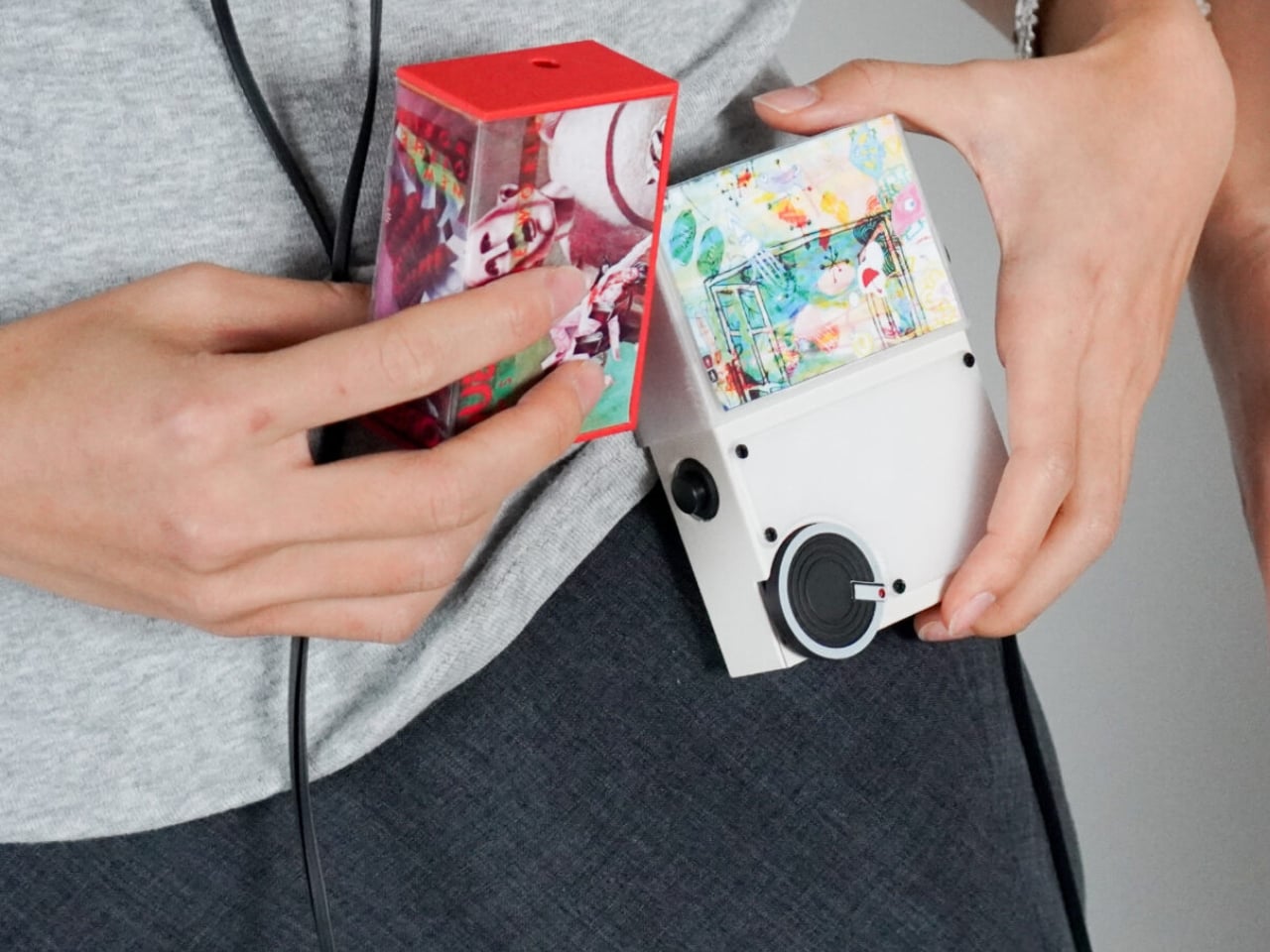
The premise is almost aggressively simple. Analog has a power button and a volume knob. That’s it. No screen, no algorithm, no shuffle function, no “Up Next” queue pulling you in six directions. You put in a CD and you listen to it. The whole thing. In order. The way the artist intended. Kalita describes it as a “distraction-free music listening device designed to restore intention and commitment to the act of listening,” and that framing matters because it isn’t merely a product description. It is a design philosophy made physical.
The transparency is what makes Analog visually arresting. The casing is clear, which means you can watch the disc spin, follow the mechanics working in real time, and see the whole process of recorded sound become something tangible. Kalita calls it “a sculptural window into your sound,” and that description earns itself. You watch the CD move and you’re suddenly reminded that music is a material thing, that it exists somewhere beyond a server farm. That reminder turns out to be surprisingly moving. It’s the kind of design detail that rewards you for paying attention.
The timing of this project feels deliberate. The vinyl revival has been going strong for years, and CDs are quietly following a similar arc. Sales have been steadily climbing, thrift store bins are getting picked over with real intention, and people are rediscovering what it feels like to have a physical relationship with music they love. Analog fits right into that conversation, but it isn’t trying to be retro for the sake of aesthetics. The design is clean and modern, and the transparency gives the whole thing a contemporary, almost scientific quality that keeps it from sliding into nostalgia bait.
The more interesting argument Analog makes is about constraint. Most of us have a streaming library that is effectively infinite, and that abundance, paradoxically, makes both choosing and listening more passive. When you only have the album you put in, you pay attention differently. You stop skipping. You let the slow tracks breathe. You remember that albums have pacing and arc, and that the track you used to fast-forward through is actually one of the best ones. You start actually listening instead of just having music on. Kalita’s design is making a case through form alone that fewer options can create a richer experience.
Kalita believes that humans connect to objects and experiences through tangibility and sight, placing designers in a position of great power and responsibility. Analog is a direct expression of that. It asks you to see your music, to physically interact with it, to be present for it. That feels almost radical in 2026, and I think that’s precisely the intention.
Whether or not Analog ever goes to market is, in a way, beside the point. The best concept design doesn’t just propose a product. It poses a question. What do we actually want from music? Convenience or connection? Background noise or something you can recall the next day? I know my answer, and I suspect if a lot of people stopped to think about it, they’d know theirs too.
The post The ‘Transparent CD Player’ That Makes Streaming Feel Lazy first appeared on Yanko Design.