There’s something almost rebellious about spending serious design energy on a pencil. We’re constantly told that screens are the future and handwriting is obsolete but Korean design studio BKID went all in on the opposite direction. Their project “Write Draw Think” asks a question nobody knew they needed answered: what if we stopped taking the pencil for granted?
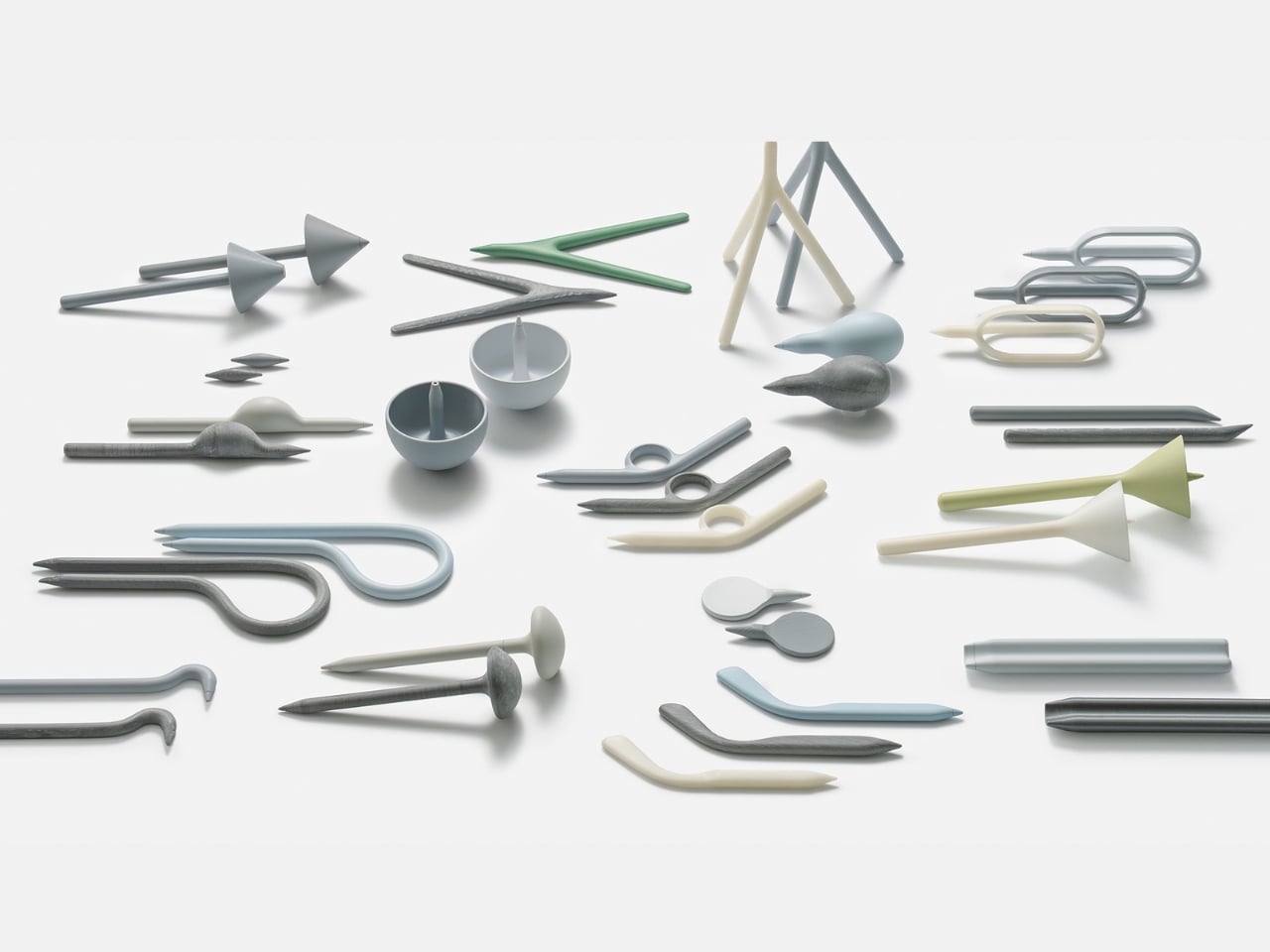
Created as research for the Hangeul Museum in 2025, this isn’t your standard stationery lineup. BKID developed sixteen experimental writing tools by deeply studying how we actually use pencils, the gestures we make, the habits we develop, the way our hands move when we’re focused versus when we’re exploring. The result is a collection that transforms writing from a mundane task into something physical, sculptural, and weirdly thought-provoking.
Designer: BKID
What makes this project fascinating is how BKID completely reframes what a writing tool can be. Instead of treating pencils as simple recording devices, they positioned them as bridges between our minds and our bodies. Each of the sixteen tools creates a different writing experience, which sounds abstract until you start thinking about what that actually means.
Some tools are designed for solo deep work, helping you sink into that flow state where writing becomes almost meditative. Others flip the script entirely, letting multiple people draw a single line together. Imagine trying to write collaboratively with someone, not taking turns but literally guiding the same mark at the same time. That’s the kind of weird, wonderful territory this project explores.
The design choices get granular in ways that reveal how much attention BKID paid to the actual mechanics of writing. Sharp writing tools emphasize the tension in letter structures, making you hyper-aware of angles and pressure. Round tools evoke something softer, tapping into the breathing quality of Korean vowels. These aren’t metaphors. They’re intentional formal decisions that change how your hand moves and how marks appear on paper.
What’s clever here is that BKID managed to make experimental design work that’s also genuinely functional. These aren’t precious art objects meant to sit behind glass (though they’re certainly sculptural enough for that). They’re meant to be used, tested, experienced. The project lives in that sweet spot where form follows function, but function also reveals new forms.
This also feels like a love letter to Korean typography. Hangeul, with its geometric clarity and systematic structure, offers rich territory for exploring how letterforms and tools influence each other. The project acknowledges that writing systems aren’t just abstract symbols but physical acts shaped by the tools that create them. By reimagining the tools, BKID opens up possibilities for reimagining the marks themselves.
In our current moment, where AI writes essays and voice memos replace handwritten notes, there’s something quietly radical about paying this much attention to analog tools. “Write Draw Think” doesn’t make arguments about the superiority of handwriting or romanticize the past. Instead, it proposes that the physical act of making marks still has untapped potential, that there are experiences and ideas accessible only through the direct connection between hand, tool, and surface.
The project also hints at something bigger about how we approach design problems. Rather than starting with aesthetics or jumping straight to solutions, BKID began with research into behavior and gesture. That grounding in actual use makes the experimental forms feel purposeful rather than arbitrary. It’s design that respects both craft tradition and avant-garde exploration without getting stuck in either mode.
For anyone interested in the intersection of design, culture, and everyday objects, “Write Draw Think” offers a reminder that innovation doesn’t always mean adding more technology or features. Sometimes it means stripping something down to its essence and asking what else is possible. It’s the kind of project that makes you look at your own pencils differently, wondering about all the ways you could write, draw, and think if only your tools invited different gestures.
The post These Experimental Pencils Treat Writing as Performance Art first appeared on Yanko Design.