
Productivity apps have become one of the more ironic problems of modern work life. The tools meant to keep us focused are apps that live on the same devices responsible for most of our distractions. Switching to a timer app means unlocking a phone, and unlocking a phone means notifications, messages, and a dozen other things competing for your attention before you’ve even started the clock.
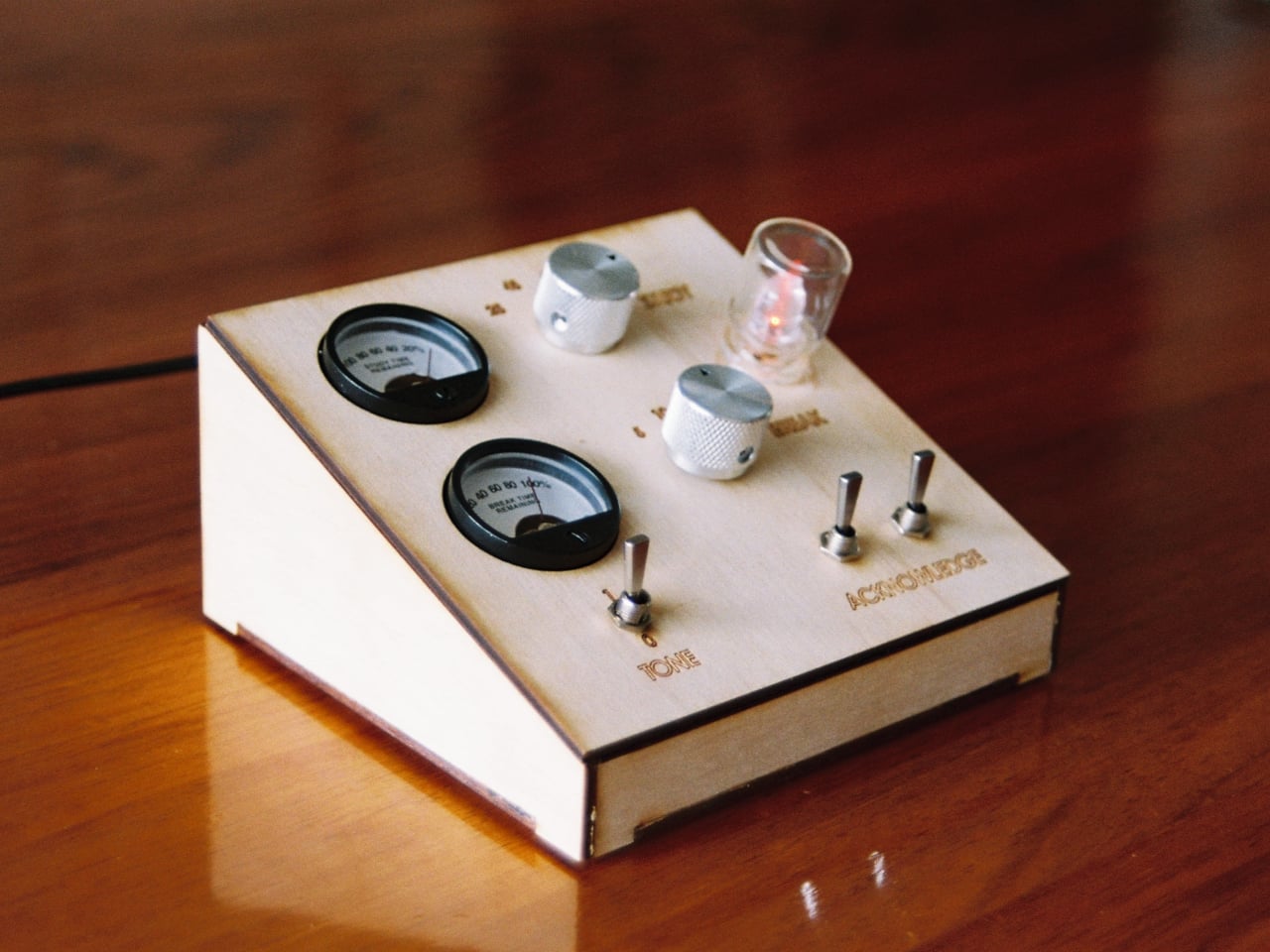
Thomas Curnow of Tomato Clocks had that contradiction in mind when he created the Roma Mk. 1, a purely analog study timer built around the Pomodoro Technique. The method is simple and widely used, working in focused intervals broken up by short rests, but it works best when the timing happens completely off-screen. The Roma Mk. 1 is designed to make that as easy and satisfying as possible.
Designer: Thomas Curnow (Tomato Clocks)
At the center of the design are two analog gauges, one for tracking a work interval and one for the break that follows. There are no menus to navigate and no app to open. You set the dials, get to work, and let the timer do the rest. The whole interaction takes a second, and that simplicity is precisely the point. It keeps the focus on the task at hand rather than the device managing it.
The build quality reinforces that philosophy. Each unit is laser-cut from premium Australian timber and assembled by hand in Melbourne, giving it a warmth and solidity that’s hard to find in mass-produced productivity gadgets. The brass switches used for input have a tactile snap to them, the kind of satisfying physical feedback that makes the act of starting a session feel deliberate rather than incidental.
It’s the sort of object that belongs on a desk permanently, not tucked into a drawer. A wooden timer with analog dials sits comfortably alongside notebooks, pens, and other tools that don’t demand your attention when you’re not using them. That’s a quality digital devices rarely manage, and it matters more than it might seem when you’re trying to build a consistent work habit.
The Pomodoro Technique has been around since the late 1980s, and the basic premise hasn’t changed much since then. What has changed is the environment in which most people try to use it. Screens are everywhere, and the pull of notifications is relentless. A dedicated physical timer doesn’t connect to the internet, doesn’t send alerts, and doesn’t tempt you with anything outside the task you’re working on.
The Roma Mk. 1 is currently available for pre-order at $145, which puts it well above a basic kitchen timer but firmly in the range of a thoughtful, long-term desk tool. It’s handmade, uses real materials, and is designed to last rather than be replaced. For anyone who has tried and failed to stay off their phone during a work session, a well-made analog alternative might be worth far more than what it costs.
The post This $145 Wood and Brass Timer Finally Gets Your Phone Off the Desk first appeared on Yanko Design.