
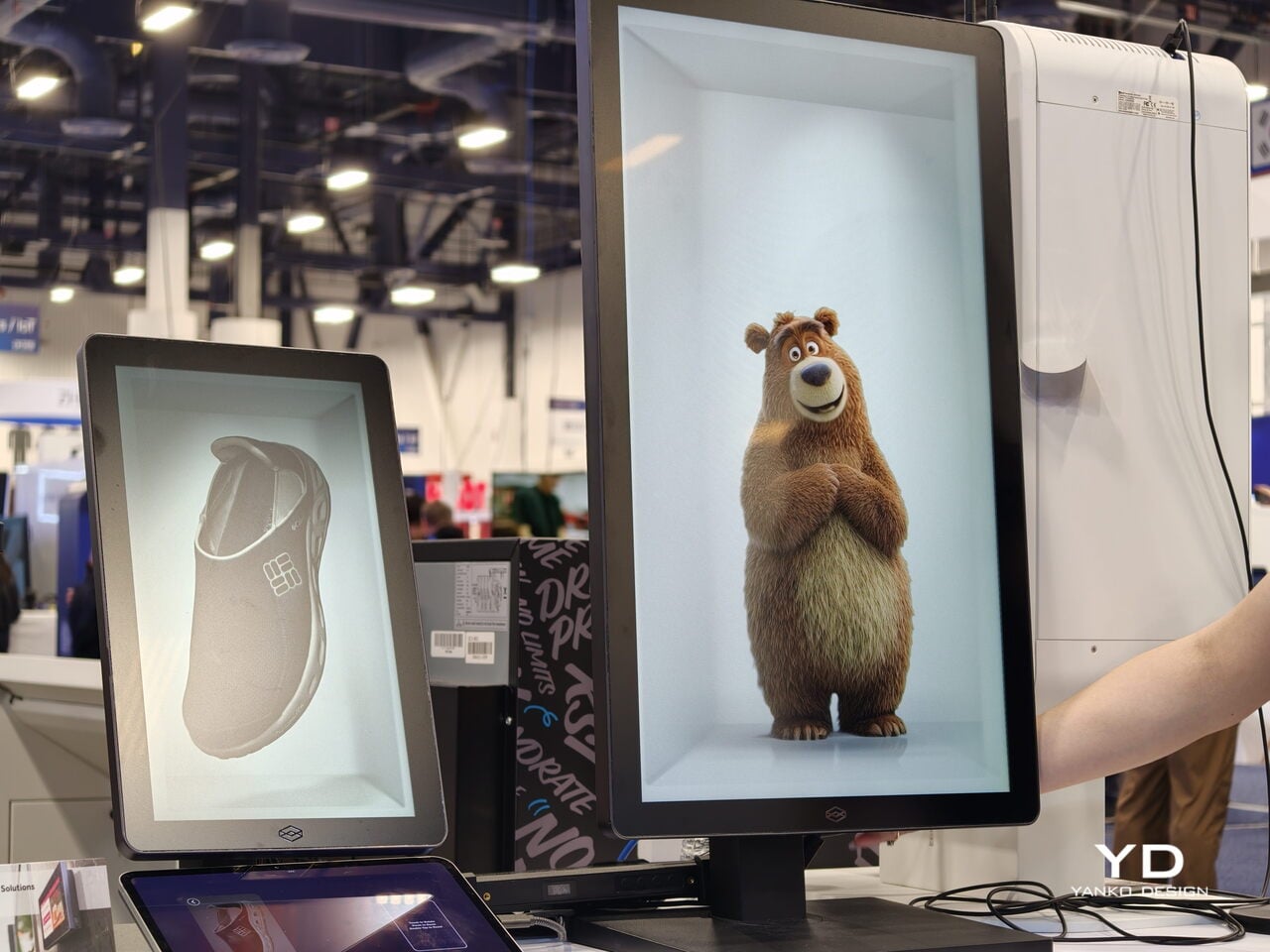
Do you remember that scene from Minority Report when Tom Cruise’s character was walking around and there were 3D hologram ads being served to him after scanning his eyeballs? You might think we’re decades away from this, but the technology is actually already being developed. Well, we still won’t get that kind of personalized marketing just yet, but the holographic structure of these displays may already be here sooner than we thought.
The Hololuminescent Display (HLD) is a revolutionary razor-thin holographic display that transforms standard 2D video content into three-dimensional, spatial experiences. Basically, it can display virtual space from your ordinary videos to make it seem like the people, products, and characters in them are floating in mid-air on the display screen. So those scenes from sci-fi movies with hologram videos in public spaces won’t be sci-fi anymore in the very near future.
Designer: Looking Glass
The HLD has a built-in holographic layer inside the LCD/OLED panels that creates what they call a “holographic volume.” There’s a 16″ model that is perfect for your desktop or counter, and there’s an 86″ model that can be used in retail stores, public installations, and as signage. It has an ultra-slim design, so you can display it anywhere you could put a regular 2D screen. It uses patented technology (with some patents still pending) for both the hardware and software, with worldwide protection.
Unlike some of the VR/AR devices out there, this one doesn’t need any glasses or additional devices. Viewers can experience these 3D holograms with just their naked eyes, making it completely accessible and barrier-free. What’s more, it can transform standard 2D videos into holographic displays, so you don’t need to pay for expensive 3D modeling or complex production pipelines. Of course, there may probably still be some expense involved in optimizing these videos, but it will likely not be as expensive as the usual methods.
There are many uses for this kind of device. For retail stores, it can be used to catch passersby’s attention without blocking sightlines. Imagine walking past a storefront and seeing a gorgeous piece of jewelry or a designer handbag floating in the air, rotating to show every exquisite detail. Point-of-sale displays can also now be more dynamic if you have this holographic display, potentially increasing customer engagement and dwell time.
For collectors, this opens up fascinating possibilities. Imagine showcasing your most prized collectibles, whether it’s limited edition art, rare figurines, or vintage fashion pieces, in holographic format. You could create a digital gallery that brings your collection to life in ways traditional display cases never could. The technology could revolutionize how we preserve and share precious memories too, transforming video messages from loved ones into immersive, lifelike experiences.
This display is also incredibly useful for remote presentations, brand experiences, and entertainment venues. Since it works under normal lighting conditions (no dark rooms required), it’s also perfect for outdoor public spaces like bus shelters, museum installations, and trade show booths.
The 86″ model is currently priced at $18,000 (down from $20,000) and is set to ship in Spring 2026. While that might seem steep for individual consumers right now, early adoption by businesses and institutions will likely drive innovation and eventually make smaller, more affordable versions available for home use.
What’s truly exciting is that we’re witnessing the birth of an entirely new display category. The Hololuminescent Display bridges the gap between our current flat-screen world and the immersive future we’ve only seen in movies. As the technology matures and becomes more accessible, we might soon find ourselves surrounded by holographic displays in our daily lives, from shopping malls to our living rooms. The future of visual communication is literally taking shape before our eyes, and it’s more tangible than we ever imagined.
The post This $18,000 Holographic Display Needs No Glasses to See 3D Videos first appeared on Yanko Design.