
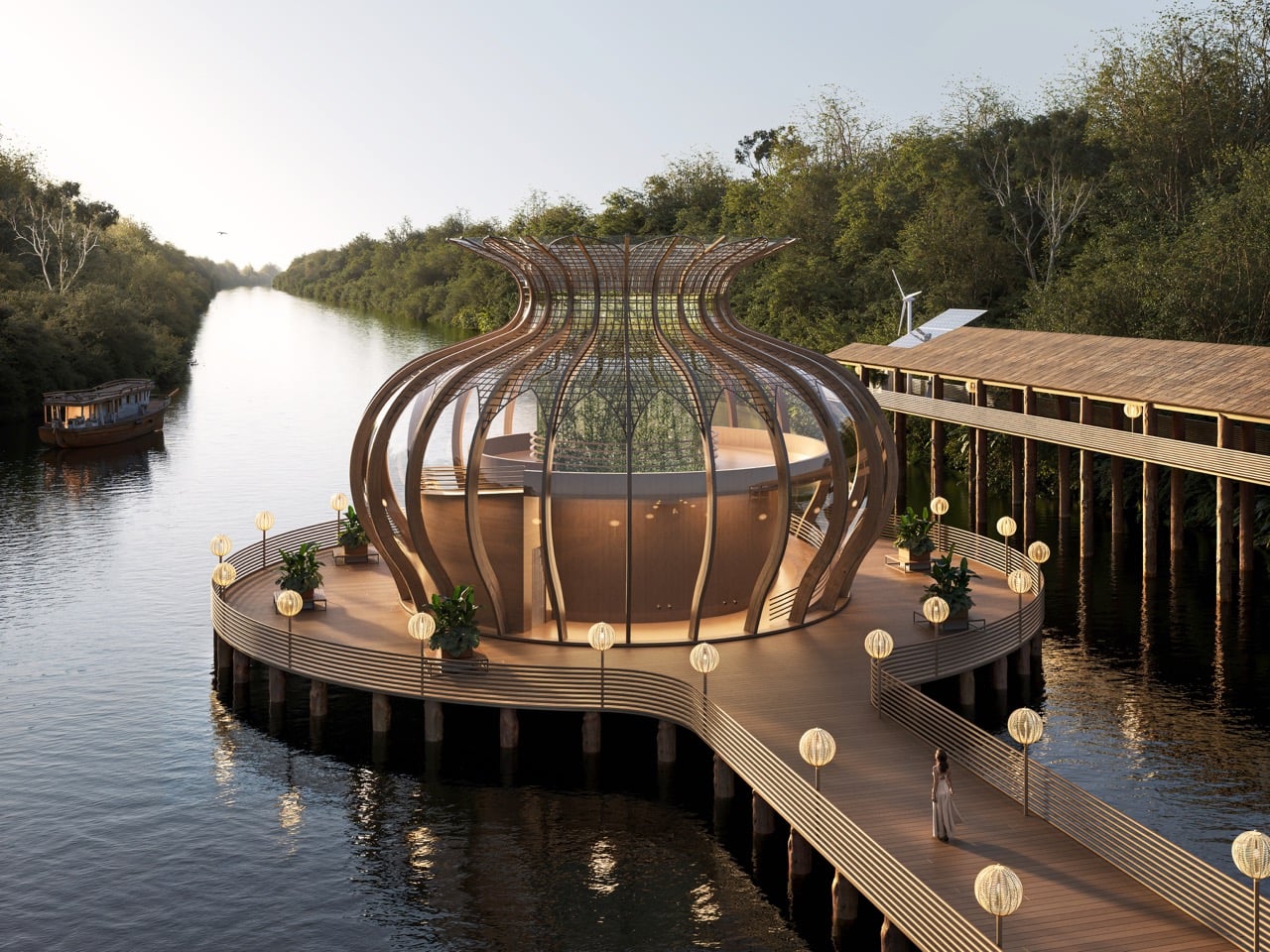
As technology accelerates and daily life becomes increasingly disconnected from the natural environment, the Amazon Immersion Pavilion offers a quiet counterpoint grounded in presence, atmosphere, and ecological respect. Conceived as a conceptual project for Iquitos, Peru, the pavilion proposes a gentle architectural intervention that allows visitors to experience the rainforest through sound, texture, light, and movement. It approaches the Amazon as a living partner rather than a backdrop, inviting visitors to rediscover a relationship with nature through deliberate sensory engagement.
The pavilion centers on the idea that architecture can heighten awareness when it blends into the rhythms of a landscape. The design seeks to create a space that listens to the environment and responds through form, materiality, and environmental intelligence.
Designer: Nathalia Cristina de Souza Vilela Telis
The project began with a desire to create deeper dialogue between humans and the forest. The Amazon provides constant motion and sound, and the design team wanted a structure that would reveal these qualities rather than compete with them. The result is an organically composed pavilion shaped by biomimicry, sustainable material thinking, and an understanding of local ecosystems. Bamboo was selected as the primary material because it is strong, flexible, and deeply rooted in regional construction traditions. Its use affirms the project’s commitment to low-impact building and ecological responsibility.
The sensory experience is structured as a gradual unfolding across two levels; the first floor establishes a calm and introspective atmosphere. The circular base, measuring 31,500 mm in diameter, creates a grounded platform for the structure. A partially enclosed volume captures natural light from an overhead opening, allowing soft illumination to guide the visitor. Water flows gently along the walls, creating a rhythmic soundscape similar to a small waterfall. Lush plantings soften the edges of the space, allowing architecture and vegetation to blend into one continuous environment. Humidity, aroma, and sound work together to create a cocoon-like experience.
As visitors move upward to the second floor, the atmosphere changes. The space opens outward and offers a wide view of the Amazon River as it stretches toward the horizon. The architecture recedes to make room for the scale of the landscape. The main body, with a diameter of 17,000 mm and a height of 14,000 mm, supports natural ventilation and introduces a sense of elevation within the forest canopy. The contrast between enclosure and openness creates a clear emotional arc: grounding, expansion, and renewed connection.
Sustainability shapes every design decision. The pavilion uses a biomimetic approach informed by natural growth patterns and the fluid movement of the river. Bamboo construction reduces environmental disruption and reflects local building culture. Passive ventilation works with the natural breezes of the rainforest, while carefully directed natural light reduces reliance on artificial systems. Low-impact assembly techniques help protect the forest floor and the delicate ecosystems surrounding the site. Together, these strategies allow the pavilion to behave like a companion to the landscape, quietly aligning itself with the rhythms of the forest.
The project draws from research on environmental design, indigenous construction knowledge, sensory behavior, and Amazonian ecology. The methodology included a bibliographic study, environmental impact evaluation, and an examination of the social context surrounding Iquitos. The goal was to create an architectural experience that supports ecological understanding and deepens a sense of environmental awareness.
Although the pavilion remains fictional, the design process revealed the challenges of creating architecture for remote natural settings. The limits of bamboo in large spans, the logistics of transporting sustainable materials, and the need for construction methods that respect ecological cycles were key considerations. Crafting an immersive sensory environment within such constraints required careful problem-solving and adaptation.
The post This Amazon Rainforest Pavilion Uses Bamboo and Biomimicry to Reconnect Humans With Nature first appeared on Yanko Design.