
This Architect’s Country Home Is The Perfect Canvas For Family Life
Architecture
Inside the Woodend family home.
Arches and creamy white walls add character to the new build.
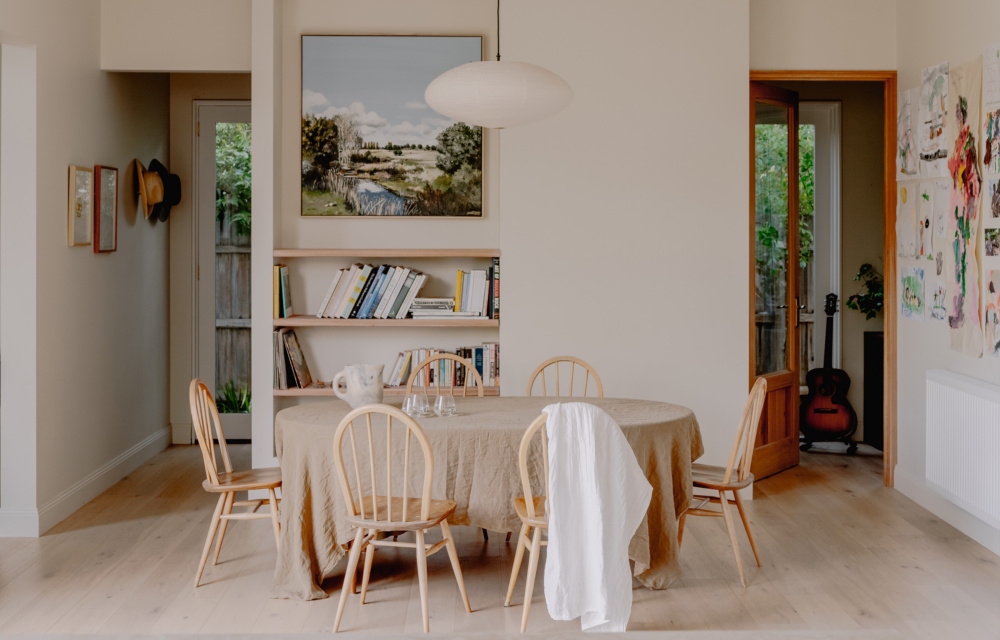
The dining room is decorated with the kid’s artworks.
Architect Stefanie Richards and designer Andrew Woodhead in their family home.
The kitchen features exclusively natural materials.
Windows look out into the surrounding gardens.
Doors open to the pergola and dining space.
The bathroom.
A timber door leads to the bathroom.
The interiors were designed with plenty of space for the family to grow their artwork and furniture collections.
The garden will continue to grow into the hero of the house.
The charming weatherboard exterior has a heritage-inspired feel.
Green vines will eventually cover the pergola structure.
Passive house principles ensure the house is oriented to maximise solar gain and natural ventilation.
The street view, with the entry is now concealed at the rear of the home.
After years of living overseas in big cities like Paris, New York and Madrid, architect Stefanie Richards and designer Andrew Woodhead found themselves craving the slowness of family life back in Australia.
They set their sights on the Macedon Ranges, finding a run-down brick veneer property in Woodend — a regional town an hour outside of Melbourne — to call home.
While initial plans sought to salvage the 1960s house, its poor condition prompted them to pivot to a rebuild in pursuit of building a more sustainable and efficient home from scratch.
‘Designing and building our own home became a deeply personal project,’ Stefanie says.
‘It was an opportunity to apply everything we value about good design: restraint, longevity, and comfort.’
Both being designers, Stefanie and Andrew (who launched his own menswear label Woods Point) knew the importance of the client-designer relationship, and committed to maintaining these roles.
‘For this project, I was the architect and Andrew was my client, we even scheduled in formal presentations instead of casual conversations around the kitchen table,’ she adds. ‘He was a great client!’
Passive design principles and high-quality materials shaped the foundation for the new build, which also determined how they spent a significant portion of the ‘small’ budget.
They decided to ‘splurge’ on practical elements like the extra thick timber framing, an insulated concrete slab, and custom double-glazing to minimise the need for artificial heating and cooling.
Prioritising high-quality materials and climate-responsive design also meant cutting back spending on other areas: ‘The house has very minimal joinery, which is something I do feel is exploding in projects these days, and often seriously affecting project feasibility.’
The kitchen serves a modern take on a country-style kitchen, with solid timber used across the limited cabinetry, natural marble for the benchtop, brass pulls, and a sink perfectly positioned for a leafy outlook.
In the nearby dining area, a wall showcases artworks by Stefanie and Andrew’s sons, while the bedrooms and bathrooms are also relatively pared-back, with a pedestal basin as the main flourish.
There’s an elegance to this simplicity, with Stefanie noting she deliberately allowed space for the house to evolve into a heartfelt home with the years to come.
The garden was also a large part of this vision. At the rear, a pergola frame outlines space where thick vines will eventually grow above the outdoor dining area.
‘As we have more and more springs seasons since the build was completed we are adding more and more to the garden, which was always meant to be the main star of this property.’
Subscribe to The Design Files newsletter to get our best stories sent directly to your inbox.